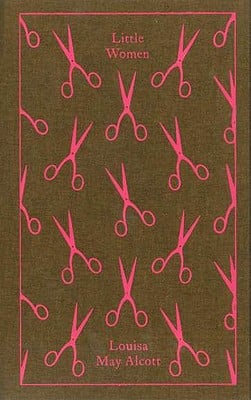
Little Women, by Louisa May Alcott

Meg, Jo, Amy, Beth: Those of us who grew up with the March girls didn’t know that what we were reading was not what Alcott originally published in 1865.

Book One of this classic novel covers a year in the life of the four March girls, from one Christmas to another. The sisters try to be good so as not to worry Marmee, Father being away with the war. Mostly they succeed, despite the usual sisterly feuds and jealousies sparked by four very different temperaments. Book Two was an afterthought, following them as they grow up and marry (or not).

Being only ten or so when I first read it, I didn’t pay much attention to Book 2. Of course, Jo was the only one who mattered to me, rebellious Jo with her apples and writing, her reading in the attic, her desire for  some privacy. Like Jo, I hid away to read. I made up plays for my (too) many siblings to enact. I devised outdoor games for us and the other neighborhood children. All my friends also identified with Jo—no surprise given that we were climbing trees and wearing pants which were all a bit shocking still in the 1950s.

I can draw a straight line from Jo, who was based on Alcott herself, to my later obsession with Emily Brontë. I moved quickly from the books by the Brontë sisters to their lives in that lonely stone house in Haworth. Of course I was drawn to rebellious Emily, independent Emily who loved the moors and being alone and refused to behave like a proper girl. Writing about her as a child, Emily’s father described her strong will. I hid mine to stay out of trouble, but it was there all right.

With their brother Branwell, the three sisters carved into two pairs: Charlotte and Branwell, Emily and Anne, just as the March sisters did: Meg and Amy, Jo and Beth. There are other parallels: delicate and good Anne like Beth, practical Charlotte like Meg. However, the Brontë siblings did not have a wise and loving Marmee. With their mother dead and their father cold and righteous, they were cared for by their aunt Elizabeth Branwell. She’s usually described as a stern disciplinarian, but now there’s some evidence that she was actually a devoted and caring parental figure.

Although we know Alcott drew on incidents from her own life, I wonder if she was thinking of the Brontës when she started drafting Little Women. The Alcotts were assiduous readers, and the dates fit. Wuthering Heights came out in 1847 and the first U.S. edition was a year later. Alcott started writing Little Women in May of 1868 and sent it to her publisher in June. Book One was published October 1868 and Book Two a few months later (January, 1869).

It is with the 1880 version, combining the two books into a single volume, that the mischief occurs. Her publisher asked Alcott to make certain changes designed to make it—especially the depiction of Jo—more bland and acceptable. In her brilliant introduction to the recent reissue of the original version, Elaine Showalter suggests that later editors probably made additional changes. She explains that many of the literary references were removed, Jo’s speech was smoothed out, and her behaviour made more ladylike. Even the description of Marmee was romanticised.

Original: “. . . a stout, motherly lady, with a ‘can I help you’ look about her, which was truly delightful. She wasn’t a particularly handsome person, but mothers are always lovely to their children…”

Revised: “. . . a tall, motherly lady, with a ‘can I help you’ look about her, which was truly delightful. She was not elegantly dressed, but a noble-looking woman, and the girls thought the grey cloak and unfashionable bonnet covered the most splendid mother in the world.”

Interesting, eh? The original, with Showalter’s introduction is available from Penguin Classics (2010). Showalter has also added footnotes, some of which identify the sources of those pesky literary references. I was tickled to stumble upon a reference that she hadn’t footnoted: In Chapter 21, Jo backs away from one of Laurie’s wild schemes and says “ ‘Prunes and prisms’ are my doom, and I may as well make up my mind to it.”

That’s from Charles Dickens’s Little Dorrit:

“Papa is a preferable mode of address,” observed Mrs General. “Father is rather vulgar, my dear. The word Papa, besides, gives a pretty form to the lips. Papa, potatoes, poultry, prunes, and prism are all very good words for the lips: especially prunes and prism. You will find it serviceable, in the formation of a demeanour, if you sometimes say to yourself in company—on entering a room, for instance—Papa, potatoes, poultry, prunes and prism, prunes and prism.”

What do you think? Is it so weird to see both Jo and Emily as my wild sisters? Should girls stick to prunes and prisms? Is a part of you still in an attic reading books and eating apples with Jo?

What do you carry with you from an early reading of Little Women?
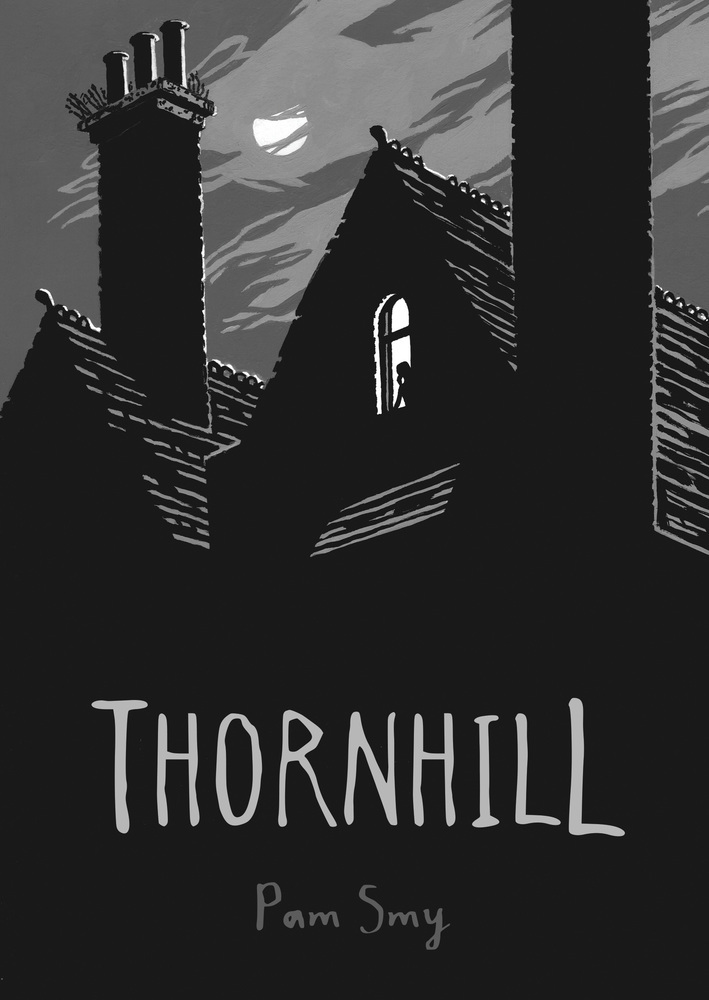
Thornhill, by Pam Smy

This unusual Young Adult (YA) novel is perfect end-of-October reading: stark, a little sad and a lot spooky. Part graphic novel and part journal, it’s a stunning portrayal of what many people experience, especially those on the tender, unpredictable cusp of adolescence.

Lonely Ella has just moved to town, her modern-day story told in striking black-and-white graphics, the only words being those occasionally written on items in the scene. We see an upstairs room, packing boxes, a window—and through that window a strange gothic ruin of a house buried in an overgrown garden.

The Thornhill Institute for Children, a boarding school for abandoned and orphaned children, closed in 1982. Mary is one of the last to leave, and it is her journal that runs parallel to the silent pictures depicting Ella’s life. Mary writes of terrible goings-on at Thornhill, especially the bullying directed at her. She takes refuge in her attic room, locking the door against the nightly bangings of her chief persecutor. There she makes puppets and dolls—creating her own friends—and reading.

Ella’s mother has apparently died, and her busy father seems to have little time for her. Sometimes we see through a crow’s eyes; is it the crow or Ella who first sees a shadow in an attic window of the dilapidated Thornhill? Ella finds a way into the property and begins exploring.

The book made me consider what we see and what we don’t see. The adults at Thornhill don’t see Mary’s suffering, nor does Ella’s father see her loneliness and her grief for the loss of her mother. Mary’s diary reveals her uncertainty about whether to trust what she sees, such as overtures of friendship from her persecutor. It also shows her hiding from view in her room, more and more as the story continues.

We readers see only Mary’s words and the pictures of Ella’s life. I found this distancing  effective because it made me create their stories myself. That happens with the best traditional novels, of course, but I felt newly challenged here. I was reminded of what writer/teacher/agent Donald Maass has said about creating emotion in our stories. Just describing the emotion doesn’t make the reader feel it. Instead, we have to set up a situation that invites the reader to remember feeling that emotion themselves; their own memories then supply the emotional heft.

I certainly found that to be true here. I was flooded with memories of that awkward, in-between time. Mostly I remember glorious days, enchanted moments, etc. but I was reminded that there were some bullying and loneliness; there was the need for a friend.

Another part of my thinking about what we see and how we see it was remembering a show of Andrew Wyeth’s paintings at the National Gallery entitled “Looking Out, Looking In.” His paintings of windows and doors made up the exhibition and sent me down a path considering point of view in a way that had nothing to do with first or third person but everything to do with where we are standing, whether we are inside or outside.

In Thornhill, we have windows and doors, walls and secret gardens, mysteries and ghosts. It’s a quick read, but the story may stay with you a long time.

What are some of your favorite spooky reads for October?

Lost in the Never Woods, by Aiden Thomas

In this retelling of Peter Pan, Wendy Darling lives in Astoria, Oregon, a small town where children have begun disappearing. People turn to her because she and her brothers also went missing five years earlier. She has no answers because when she did turn up in the woods, she remembered nothing of what happened. Michael and John have never returned.

When Wendy, on her eighteenth birthday, almost runs over a boy lying in the middle of a forest road, she discovers that the Peter Pan of the childhood stories her mother told them is real. He’s left Neverland to recruit Wendy’s help in finding the missing children.

It’s clear that Thomas put a lot of thought and imagination into how to adapt the magic of the J.M. Barrie original to the modern world. I especially like how he characterises the antagonist. Also, he’s done a good job of understanding issues such as grief, guilt, and PTSD. The damage to the Darling family, in particular, struck me as genuine.

Unfortunately, I came near to setting it aside unfinished, despite so much I liked about it and my own fascination with Peter Pan. Only the fact that I was listening to it as an audiobook while doing chores and commuting enabled me to stay with it. So what lessons can I as a writer draw from this Young Adult novel and NYT bestseller?

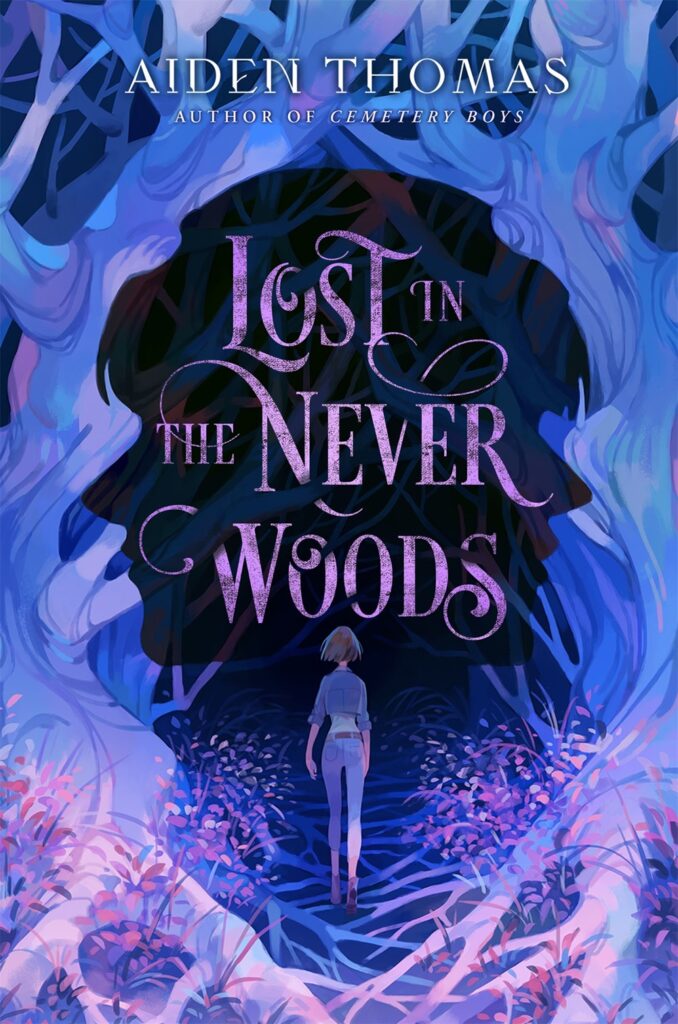
Go for broke with the cover. The book’s cover is fabulous! It draws you in to the tangled woods with their tempting flowery path and threatening blue and mauve trees. And the mysterious faces in silhouette. Who wouldn’t want to pick up a book with a cover like this?

Take time to describe your main characters with surprising sensory details. The early descriptions of Peter charmed me, with so many wonderful details such as twigs in his hair, the woodsy scents that accompany him, the oddball clothes that he’s picked up in Wendy’s world. I loved this aspect of the story.

Make sure your characters feel like real people. Sadly, after the wonderful description of Peter, he and Wendy, not to mention her family and best friend, come across as one-note characters. This is especially problematic with Wendy, since she is our point-of-view character.

Vary your pacing. The whole story is at fight-or-flight level. Wendy starts the story freaking out and, aside from one or two brief moments of connection, she spends the entire story at the same panicked level. Many Goodreads reviewers complained about slow pacing. I attribute this reaction to the pedal-to-the-metal emotional level, the absence of character development, and the scarcity of actual actions Wendy and Peter take to solve the problem.

These problems could be attributed to a rush to publish a second novel in 2021 after the big success of Thomas’s debut novel Cemetery Boys in 2020. Most writers labor for years on their first novel trying to make it perfect in this difficult marketplace. Then the follow-up doesn’t have a chance to get as much attention.

I’m impressed by Thomas’s productivity. I’m also taking a lesson from the way he interacts with his fans online, from his fun bio to the way he addresses them directly.  Given the very positive reviews for Cemetery Boys, I will give that one a try. I’m also looking forward to seeing how this promising writer develops over his next few books.

What Young Adult book laced with a bit of magic have you enjoyed?

Reprise: The Dark Is Rising, by Susan Cooper

During the solstice season, I’m rereading this favorite series.  Here’s my earlier post about it:

This time of year, when the sun begins to return even though winter is just beginning (in the northern hemisphere), has been celebrated with rituals throughout the centuries. Prehistoric monuments such as Stonehenge, the building of which is believed to have begun around 3100 BCE, identify the precise moment of the winter and summer solstices. They probably had other uses as well; certainly Stonehenge was also a burial site and may be been used for religious ceremonies, a healing site, and/or as an astronomical observatory.

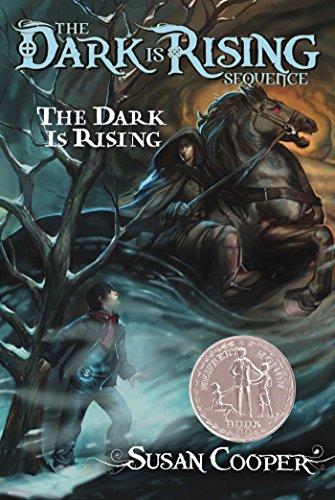
My favorite books about the solstice are The Dark Is Rising sequence, five fantasy novels by Susan Cooper for young adults. The author draws on Arthurian legends, Celtic and Norse mythology, and English folklore to tell the story of the struggle between good and evil.

In keeping with the season, these are identified as the Light and the Dark, which raised no cultural sensitivity concerns when the books were published in the 1960s and 1970s. Whatever we might think today of the persistent identification of dark colors with evil, these are still the best terms to describe the turmoil at the time of the winter solstice, when the sun tries to return and the darkness resists.

In these stories Will Stanton discovers that he is one of an ancient mystical people called “Old Ones” who are gifted with magical powers. He is the seventh son of a seventh son, and his eleventh birthday is the moment when he comes into his powers, including the ability to move through time. He is tasked to find the four Things of Power which the Old Ones need in order to vanquish the Dark.

Cooper’s five books are truly wonderful, especially for someone like me who grew up with these myths and legends. I can still picture that corner of my neighborhood library, just to one side of the front door, that held the books that captured my imagination as a child and put me on the path to become a writer.

The return of the sun inspires us with hope. Whether you are celebrating the winter solstice, Christmas, Kwanzaa, Diwali, Hanukkah, St. Lucia’s Day, the Lunar New Year, Las Posados, or another festival, I wish you joy, health, love and peace, now and in the coming year.

What are your favorite books of the season, however you celebrate it?

The Quiet and the Loud, by Helena Fox

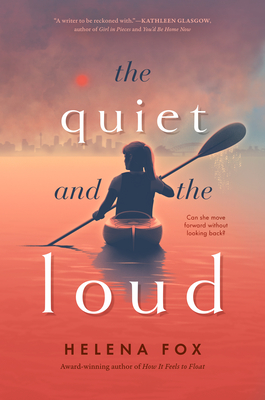
In this Young Adult novel, Georgia at 18 is barely holding it together. Taking a gap year at home in Sydney, Australia, before college, she keeps getting texts from her alcoholic father who lives in Seattle, Washington. He has been a danger to her for her whole life, but she feels duty-bound to help him. The story opens with a vivid flashback to one such occasion.

Her best friend Tess, also 18, has deliberately gotten pregnant, determined to become a teen mom, and assumes that Georgia will not only bring her smoothies and wait attendance on her, but will also help her raise the child. They’ve been best friends forever, so Georgia feels she must support Tess, even as her attention is being drawn in other directions.

Such as her rewarding part-time work teaching art to children, which offsets her friend Laz’s despair about the climate crisis. Her grandfather, who lives with them, may be losing his marbles, or at least his teeth, but adds comic relief with his relentless pursuit of elderly women.

Georgia’s mother is happily married to successful artist Mel, whose brusque demeanor hides a penetrating insight. She is the one who gifts Georgia with two successful coping mechanisms: kayaking and painting.

Suspense grows as we learn more about how her father’s alcoholism has affected her. As he spirals and Tess becomes mired in post-partum depression, 2019’s wildfires come ever closer, sending Laz into an apocalyptic frenzy and Georgia to the brink of despair.

I loved Fox’s previous novel How It Feels to Float, and am myself overly sensitive to loud sensory input, so I was eager to read this one. I was not disappointed. While the themes can be difficult, Georgia’s voice is a welcome companion.

Much of the writing is gorgeous, especially lyrical passages out in the kayak. And Georgia’s burgeoning feelings for her new friend Calliope are handled with grace and compassion.

Can you recommend a Young Adult novel that you’ve enjoyed?

The Dark Is Rising, by Susan Cooper

Dark-is-Rising

This time of year, when the sun begins to return even though winter is just beginning (in the northern hemisphere), has been celebrated with rituals throughout the centuries. Prehistoric monuments such as Stonehenge, the building of which is believed to have begun around 3100 BCE, identify the precise moment of the winter and summer solstices. They probably had other uses as well; certainly Stonehenge was also a burial site and may be been used for religious ceremonies, a healing site, and/or as an astronomical observatory.

My favorite books about the solstice are The Dark Is Rising sequence, five fantasy novels by Susan Cooper for young adults. The author draws on Arthurian legends, Celtic and Norse mythology, and English folklore to tell the story of the struggle between good and evil.

In keeping with the season, these are identified as the Light and the Dark, which raised no cultural sensitivity concerns when the books were published in the 1960s and 1970s. Whatever we might think today of the persistent identification of dark colors with evil, these are still the best terms to describe the turmoil at the time of the winter solstice, when the sun tries to return and the darkness resists.

In these stories Will Stanton discovers that he is one of an ancient mystical people called “Old Ones” who are gifted with magical powers. He is the seventh son of a seventh son, and his eleventh birthday is the moment when he comes into his powers, including the ability to move through time. He is tasked to find the four Things of Power which the Old Ones need in order to vanquish the Dark.

Cooper’s five books are truly wonderful, especially for someone like me who grew up with these myths and legends. I can still picture that corner of my neighborhood library, just to one side of the front door, that held the books that captured my imagination as a child and put me on the path to become a writer.

The return of the sun inspires us with hope. Whether you are celebrating the winter solstice, Christmas, Kwanzaa, Diwali, Hanukkah, St. Lucia’s Day, the Lunar New Year, Las Posados, or another festival, I wish you joy, health, love and peace, now and in the coming year.

What are your favorite books of the season, however you celebrate it?

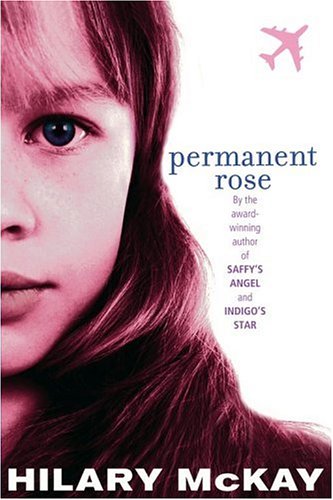
Permanent Rose, by Hilary McKay

rose

I’ve been taking refuge in YA books from the depressing ugliness of some of my adult reading. This series about the Casson family started out fun. It’s a rather madcap family where the mother, flighty Eve, is too busy painting in the garden shed to feed the children, while the father Bill lives in London where he can do his “real art” without being bothered by children underfoot.

Yes, I should have know then.

However, at first it’s rather fun. As in the best MG and YA books, the children take charge. Indigo makes hearty meals to keep Caddy’s strength up while she studies for exams and takes ridiculous driving lessons. She’s a heart-stoppingly incompetent and distracted driver but her teacher , “darling Michael”, is too enamoured to care. Saffy becomes friends with the wheelchair girl who lives nearby when they have an encounter that is half a battle and half a recognition of soulmates, before hatching a daring plan to find Saffy’s inheritance.

In the first book, Saffy’s Angel, we learned that the children are named after colors on the paint chart posted in the dining room: Cadmium is the oldest; then the boy Indigo, with the youngest being Permanent Rose who was so very impermanent at the time of her birth. Saffron, however, can’t find her name on the chart and thus learns that she is adopted.

My irritation with Bill grew, but what kept me reading was my fascination with Rose, a belligerent, truth-speaking child who is—through some trick of genes and chance—a born artist, more of an artist than either parent. She’s fierce in her passions and honesty, and utterly blunt in her exposé of the Casson family dynamics.

In this, the third book in the series, she writes letters to her father—“Darling Daddy,”—describing the desperate happenings at home, hoping that they will persuade him to come home, something that he has ceased doing since acquiring a new girlfriend. Bill, happy in his London life, spending the money he earns on trips to Paris and New York and on Samantha rather than on his cash-strapped family, chooses to believe that Rose is making things up.

She isn’t.

Indigo also pulled at my heartstrings. I have too often seen children bravely take up the slack and act as parents when their own irresponsible and self-indulgent parents prove useless. Sent to buy groceries—“Real food!” as one child demands—Eve returns with cherries and tubes of paint.

I know it’s all meant to be jolly fun and aren’t the children clever to manage on their own, but frankly, it’s all too real to me. I find it heart-breaking. Tempted to strangle Bill and smack Eve, I wanted—if nothing else—to call child services on the pair of them. They obviously “love” the children, but how empty is a declaration of love without a meal behind it or even just noticing that a child is struggling?

My only consolation is the other adults who step in to help the children with a meal or a timely helping hand. And the competence of the children themselves.

The theme of all these books seems to be that quirky families are far more interesting and wonderful than those boring families with regular meals and clothes and parental attention. For me, though, the only thing that matters in these stories is the love—as in care and attention—each child has for the other.

I learned long ago, when still very young myself, that “love is not some wonderful thing that you feel but some hard thing that you do.” As always, I learned that from a book, in this case one by Elizabeth Goudge. In these stories of the Casson family, I don’t see anything I would call love from the parents, only between the children. And that—the absence of parental love—seems to me a tragedy. No wonder Permanent Rose is so belligerent, demanding what she needs and brooking no denial.

Have you read a novel where you had mixed feelings about the characters and the theme?

Abigail, by Magda Szabó

abigail

Szabó‘s novel The Door made a strong impression on me so I leaped at the chance to read this newly translated book, also set in Hungary. Originally published in 1970, it is the story of 15-year-old Gina who in 1943 is exiled from Budapest by her beloved father, sent to boarding school near Hungary’s eastern border.

Gina is bewildered and furious at being sent away from her father and her social life in the city, which ranges from her friends at school to the more sophisticated people she encounters at the home of her aunt, especially a young lieutenant. The General’s sister may be flighty, but she is Gina’s only other relative. Yet Auntie Mimó is not allowed to know where Gina is going. No one is.

Headstrong, a little spoiled, Gina rebels, finding creative ways to break the rules at the strict academy. When her clothing and few possessions are taken from her, she finds a way to secret a few. She mocks the games and traditions of her fifth year class and later leads them in a series of pranks.

She can only talk to her father by phone once a week in the presence of the humorless Director and the Deaconess; Gina’s forbidden to complain to him. Only later does she come to understand his motives in hiding her away. The war is not going well for the Axis countries and there are fears that Germany will occupy its supposed ally. Thus, this book complements my recent nonfiction reading about WWII.

While having many characteristics of a traditional coming-of-age story, and echoes of books like Jane Eyre, Gina’s story is unusually perceptive and complex. My book club read this, as we had The Door, and we discussed the significance of the title. Abigail is the name of a statue of a woman holding a vase in the school’s garden. The girls believe that the statue comes alive to help them, so when they are in trouble they leave a note in the vase. This legend lends a magical touch to the story.

We wondered why this statue, significant as it is in the story, should be the title. I believe it’s for the same reason the author includes several flash-forwards, brief messages from a future Gina telling us how a particular thread will turn out. At first I was surprised that the author would give away these endings; surely the goal should be to build suspense rather than deflate it. Then I realised that the author didn’t want these threads to run away with the story. She wants us to stay with Gina and how she learns to recognise and admit when she is wrong, not least about the Abigail legend which works as a symbol of Gina’s arc.

One of my book club friends asked if this book is for adults or young adults. Publishers and bookstores may categorise it as a Young Adult book simply because of the protagonist’s age, but I would say it is also for adults.

While it’s obviously a book that would appeal to young adults, there’s plenty to interest those of us who are no longer in that age group. There’s the vivid reminder of what it was like to be 15, so sure of things and so often wrong. There’s the vivid evocation of time and place: an ancient monastery turned boarding school in remote Árkod in the last years of WWII.

There’s also the experience of a mind gradually opening to new ideas, to seeing her own mistakes, adjusting her worldview, understanding people from their own point of view rather than what we think they must be feeling.

I can’t think of anything more relevant to this particular moment we find ourselves in. This book has made me recognise how my own outlook and opinions have hardened as I’ve aged. As a result, I’m trying to cultivate again the kind of mental resilience that Gina demonstrates—not an easy task!

There is much more to this book—the subtle use of symbols, the remarkable shifts in characterisation, the minimal yet effective evocation of setting—all of which I plan to examine more thoroughly in hopes of improving my own writing. Still, Abigail is a fun and poignant story for non-writers, adults and teens alike.

Have you read a story set in a boarding school that lingers in your mind?

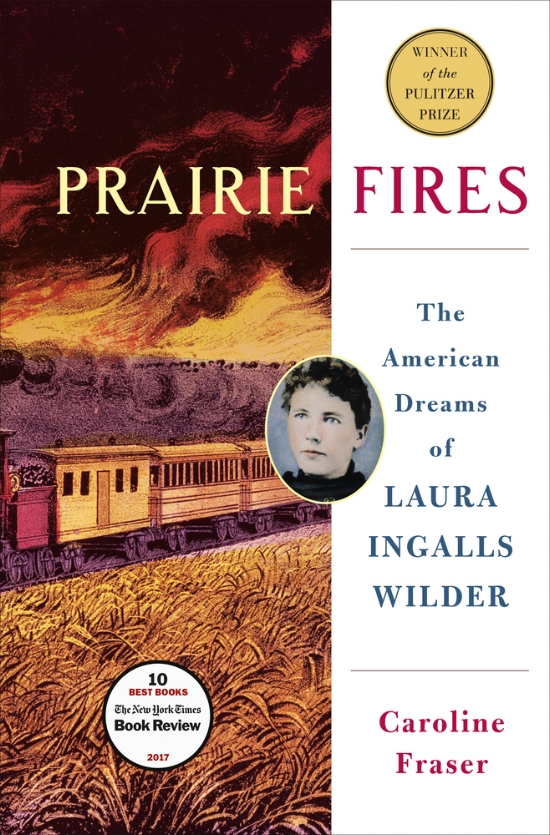
Prairie Fires, by Caroline Fraser

PF+Pulitzer+sticker

A friend recommended this book so vehemently that she actually sent me a copy. As I mentioned before, I’d never read the Little House books, so I’ve been catching up on them as I read this biography. Wilder always maintained that her stories were true, but questions arose even as the books were taking the world of children’s literature by storm. Now Fraser’s meticulously sourced account shows what is fact and what is fiction in those books.

That is not a criticism of Wilder. She was writing for children and wanted to spare them the most devastating details. She was also writing to memorialise her parents, her father in particular, so of course she managed the details to show them in a good light.

For example, one thing that was obvious to me reading the books as an adult, even without Fraser’s clarification, was that Wilder’s father was not above stealing, as when he knowingly tried to homestead on land that belonged to the Osage. He was also terribly reckless, constantly dragging the family away from security to chase a dream of a self-sufficient farm far from other people.

Fraser makes clear the near impossibility of achieving that dream, given the lack of federal programs at the time, the uncertain and often disastrous natural conditions—drought, storms, locusts—and the unsuitable land set aside for homesteaders. There is much here for us to consider looking at today’s situation: ongoing ecological damage that has put us on the edge of another Dust Bowl, the difficulty of making a small farm work even with boutique vegetables and the growth of farmers’ markets, and the near takeover of agriculture by enormous farms run by corporate agribusinesses with large federal handouts.

Yet, as the book’s subtitle, The American Dreams of Laura Ingalls Wilder, asserts, that image of the self-sufficient pioneer pulling himself up by his bootstraps is a big part of the U.S.’s mythology. Much of the credit for that goes to Wilder’s books, as Fraser’s account shows.

As an adult, however, I could glean even from Wilder’s idealised stories that the family often depended on the help of others. The truth is even more substantial, not only during Wilder’s childhood, but even as an adult when she somehow didn’t see the hypocrisy of decrying government assistance while receiving federal money herself. Just as many of the people today who hate the government are the ones themselves receiving the most assistance.

Before reading Fraser’s book, I was unaware of the influence of Wilder’s daughter, Rose Wilder Lane, on the books and on her mother. It was Lane, already a journalist, although one who larded her stories with fictional elements, who pushed her mother to write the books. It was Lane who first edited them, with the two wrangling over changes. Lane also wrote her own books, appropriating some of her mother’s stories and penning a thinly-veiled Mommy Dearest novel.

Fraser treats Lane fairly, acknowledging her strengths while not hesitating to point out her weaknesses. She presents her as emotionally unstable, with several nervous breakdowns, and increasingly prone to paranoid conspiracy theories. Lane was part of the triumvirate of Founding Mothers of the Libertarian movement, along with Ayn Rand and Isabel Paterson. She also pushed her mother to join her in her angry rants against the government, adding political screeds to some of her mother’s later books.

Of course, we are still struggling with the effects of Lane’s work. Many of today’s politicians criminalise the poor, condemning them for needing assistance. Many demand that the federal government be downsized, if not disbanded, while living high on the hog on federal money themselves, ignoring the hypocrisy. An egregious example is Maryland Republican Andy Harris who campaigned on doing away with the Affordable Health Care Act, which would take away heath care from up to 10 million citizens, complaining when elected that his taxpayer-funded health care wouldn’t take effect for a month.

It is no wonder that during the Great Depression and WWII people flocked to Wilder’s simple tales of a loving family, enduring hard times together, as embodied by a line from a hymn that recurs in the books: “We are all here.”

The Little House books are lovely fairy tales for children, but not something to base a nation on. However, even if we question the myth of a self-sufficient, rugged individual, many of us today embrace other values extolled in Wilder’s books: the importance of family, being happy with simple things, pulling together and being brave when things go wrong.

Even if you’ve never read the children’s books, this biography is essential to understand how we in the U.S. have gotten to where we are today.

What book have you read that illuminated an historical era and its effects on us today?

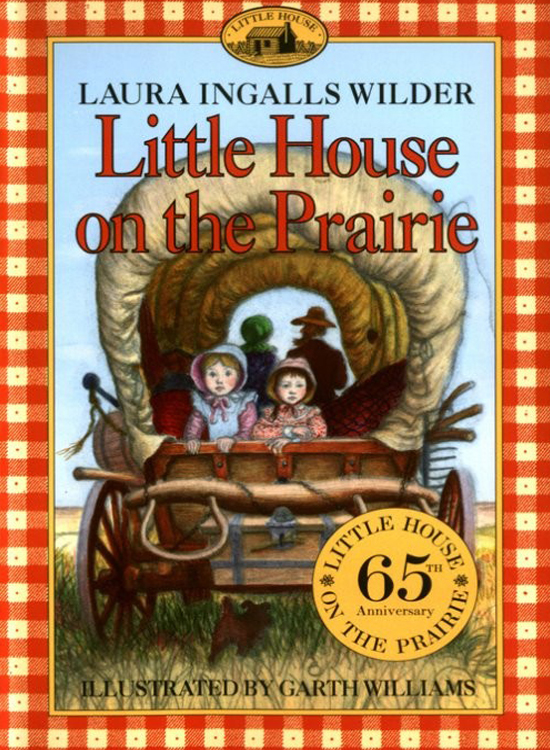
Little House on the Prairie, by Laura Ingalls Wilder

little-house-prairie

I never read these books as a child, being too busy with fairy tales and Arthurian stories, and never saw the television series. However, Caroline Fraser’s biography of Wilder, Prairie Fires, came highly recommended to me, so I thought I’d better catch up on these children’s books.

In this, the third book in the loosely autobiographical series, Laura and her family leave their beloved Wisconsin house in the big woods, described in the first book, and set out for Kansas. The experience of traveling in a covered wagon is vividly conveyed, seen from young Laura’s perspective, though the discomforts are minimised. Laura, her older sister Mary, and baby Carrie get restless sitting in the wagon all day, and Laura worries about the dog Jack who has to run the whole way, but she’s also fascinated by all she sees and comforted by the sound of the horses feeding as she goes to sleep.

As in the other books, the small family encounters hazards and setback, but Ma and Pa can always be relied upon to keep the girls safe and feeeling loved. Eventually they find themselves on an open, seemingly uninhabited prairie near Independence, Kansas. The descriptions of the grasslands—their shy colors and scents, their creatures and breezes—show a genuine love of this land.

Reading this book as an adult gives me a curious double perspective. I know too well the ecological damage done by farmers like Pa plowing up the fragile prairie. I know too much about blatant lies of the government and railroads that lured homesteaders onto lands not appropriate for wheat farming, and of course about the injustice and genocide visited upon the Osages who in fact inhabited this land.

There has been some outcry about the depiction of the Osages in these books, but at least in this one I found it pretty even-handed. Remember that it is from a child’s point of view, one who knows nothing of the larger picture or the history. When the Native Americans do turn up on their seasonal migration, Ma and some of the other nearby homesteaders are afraid of them, but Pa treats them as neighbors, with courtesy and respect. Young Laura describes the ones she actually meets as beautiful and awe-inspiring.

I also know too much about poverty, and do not take at face value the nostalgic recreation of life in a one-room cabin with sometimes only potatoes for dinner. If I’d read this book as a young child, in a bedroom well-stocked with toys and books, nourished on three balanced meals a day, I wonder how I would have reacted to young Laura’s blissful descriptions of her single doll, a rag doll made by Ma, and the comfort of a single potato or turnip for dinner and Pa’s fiddle afterwards.

As an adult, I was fascinated with her detailed description of the house Pa built: the way he notched the logs, put on the roof, built the door, and crafted leather hinges for it. Laura’s childish pursuits are charming, but what captured me was Ma and Pa’s endless toil, the heartbreak of lost harvests, the impossibility of breaking even.

It was not a simpler time; it was an infinitely more difficult time. I’ve chopped wood for winter fuel and washed clothes with a washboard. I’ve tried to live off what I can raise. The hardships of frontier life, of homesteading don’t seem romantic to me. Perhaps they might have if I’d read these books as a child, unaware of all that was being glossed over.

Have you read or reread a children’s book that seems different to you as an adult?