Reprise: Diamond in the Window, by Jane Langton

In one of my book clubs, we decide on a theme for the month and then each talk about the book we read. Our choices inspire great conversations and often end up on each other’s to-be-read lists. Our last theme was a favorite childhood book, so of course I chose this one which I wrote about in the early days of my blog. Here’s my earlier post about it. Note: the previous week I’d written about March, by Geraldine Brooks.

…………………………………

Before leaving the Transcendentalists, I wanted to reread this young adult book where I first heard about them.  I found it one cold, rainy day at Whippoorwill Girl Scout camp where—having escaped from the prescribed activities—I was poking around some bookshelves in a dark corner of the hall.  Behind some mildewed Readers Digest Condensed Books, I found one with corners of the cover frayed by mice and the pages brown-spotted with damp.  I hid behind a chair to read it and got through the first few chapters before being discovered by one of the leaders and told to put it back.

It took me almost two years to find the book again and finish it.  I couldn’t remember the title or the author’s name, only the story, and after a while I began to believe that I had dreamed it.  When I finally came across it on my local library’s shelves, I couldn’t believe it.  It was as though a fantasy had suddenly become real.

Ned and Nora live in a Gothic monstrosity of a house in Concord, Massachusetts, with their aunt and uncle.  Aunt Lily teaches piano lessons to support the family because Uncle Freddy—who used to be a famous scholar—has lost his mind and spends his days arguing with marble busts of Thoreau and Emerson.  The children have a run-in with a couple of town worthies who consider the house and the family a blot on their sacred soil and threaten to take it for unpaid taxes and burn it down.

The children discover a mysterious room at the top of the house with some dusty toys and two twin beds.  Confronting Aunt Lily, they learn that Lily and Freddy’s youngest sister and brother had gone missing from that room as children, followed by Lily’s sweetheart, Prince Krishna.  Ned and Nora decide to sleep in the room themselves.  However, in their dreams, they are plunged into magical adventures, adventures which turn dangerous.

There are a few books I read as a child whose images have become so ingrained in my thoughts that they have become part of my private mythology.  This is one of them.  It wasn’t until I was grown and had read Emerson and Thoreau for myself that I recognised that each adventure embodies one of the Transcendentalist ideas and images, such as the rough wooden harp they found while climbing in an elm tree, an aeolian harp, although it is not named in the book.  The wind blowing across the harp strings translated the voices of nature into sounds they could understand:  “ ‘These trees and stones are audible to me,’ ” as Uncle Freddy quoted Emerson.

The adventure that I think about most often, though, is the one where they go into a mirror and find two statues of each of them, a little older than their current age.  Ned and Nora separate, each choosing one of their statues.  Behind that one stand two more.  Their choices eventually lead them to statues of themselves as adults, at which point they are able to see if they have chosen wisely.  Unlike real life, though, they are able to go back and make different choices.

What was one of your favorite books as a child?
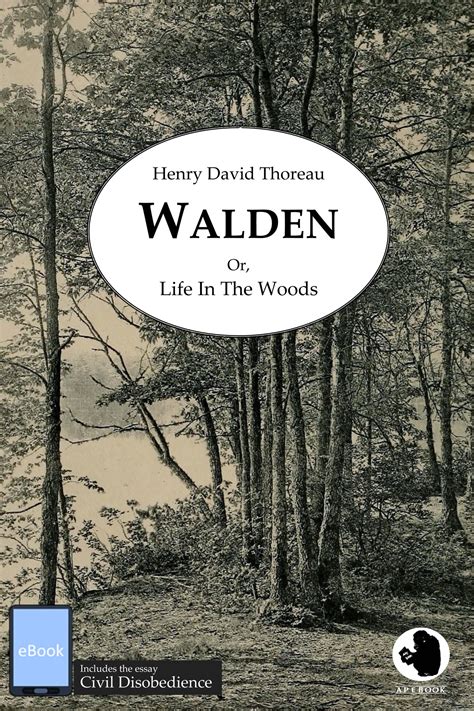
Walden, by Henry David Thoreau

walden

I have read Walden a few times since I first encountered it in high school. Back then I was charmed as so many are by the idea of going to the woods to live, and thrilled by his bits of philosophy. Despite a heavy load of schoolwork, I still spent as much time as I could outside, among the trees, so it’s no surprise that I adopted as my lifelong personal motto “To be awake is to be alive.”

Later readings brought more informed insight. I learned how close his retreat was to town, for example, and paid more attention to his many visitors. I found that he had pulled together parts of his other essays which explained the resulting crazy quilt structure. The first chapter, though, remains a bit of a slog.

On this reading what struck me most was the chapter titled “The Ponds.” It’s mostly about Walden, of course, but he also briefly describes other nearby ponds: Goose Pond, Flint’s Pond (also known as Sandy Pond), White Pond, and Fair Haven.

When I first read the book as a teenager I lived by and loved the Chesapeake Bay, so I was not terribly impressed by his pond. However, all these decades later, it turns out that I have spent a good part of my life in a small cabin by a pond in Massachusetts. Now I can appreciate his beautifully observed descriptions of the water and woods.

“Walden is blue at one time and green at another, even from the same point of view. Lying between the earth and the heavens, it partakes of the color of both.” Being surrounded, like my pond, by pine and oak woods and blueberry bushes makes it seem like “an amphitheater for some kind of sylvan spectacle.” I recognise his descriptions of the “blue flag (Iris versicolor)” growing along the shore and the hummingbirds in June. He speaks of the transparency of the water and of the stones along the shore, recounting stories of how they came to be formed.

As a naturalist, he traces the pond’s rise and fall, its fluctuating temperature, and its various colors. He also worked as a surveyor and his map of Walden could still be used today. He names the kinds of fish and waterfowl, and detects traces of ancient paths “worn by the feet of aboriginal hunters, and still from time to time unwittingly trodden by the present occupants of the land.” He says of being out on his boat “In such transparent and seemingly bottomless water, reflecting the clouds, I seemed to be floating through the air as in a balloon.”

There is something about a pond, a humble one like mine and his, that invites contemplation. Often I set my books and papers aside just to watch the way the light glints on the water or to listen to the rustle of leaves and pine boughs and the sparkling bird calls. Many evenings I have left the lamp off, preferring instead to watch the way the light fades behind the far woods, the water and sky holding the last of the light, the dark band of trees between.

A field of water betrays the spirit that is in the air. It is continually receiving new life and motion from above. It is intermediate in its nature between land and sky. On land only the grass and trees wave, but the water itself is rippled by the wind. I see where the breeze dashes across it by the streaks or flakes of light.

He speaks of fishing during the midnight hours “from a boat by moonlight, serenaded by owls and foxes, and hearing, from time to time, the creaking note of some unknown bird close at hand.” And of “communicating by a long flaxen line with mysterious nocturnal fishes which had their dwelling forty feet below.”

It was very queer, especially in dark nights, when your thoughts had wandered to vast and cosmogonal themes and other spheres, to feel this faint jerk, which came to interrupt your dreams and link you to Nature again. It seemed as if I might next cast my line upward into the air, as well as downward into this element, which was scarcely more dense. Thus I caught two fishes as it were with one hook.

In the second chapter “Where I Lived and What I Lived For” he says

For the first week, whenever I looked out on the pond it impressed me like a tarn high up on the side of a mountain . . . and, as the sun arose, I saw it throwing off its nightly clothing of mist, and here and there, by degrees, its soft ripples or its smooth reflecting surface was revealed, while the mists, like ghosts, were stealthily withdrawing in every direction into the woods, as at the breaking up of some nocturnal conventicle.

I too have watched the way the mist drifts across the surface or sometimes rises in columns. I’ve heard a loon calling in the twilight and watched otters play by the bank.

He tells of an old man who lived by the pond before the revolution who told him that there was an iron chest at the bottom of the pond. Similarly, we have stories of the pond next to mine where somewhere near the center there is a piano resting on the bottom. We have searched for it, but never found it.

Thoreau says, “A lake is the landscape’s most beautiful and expressive feature. It is the earth’s eye; looking into which the beholder measures the depth of his own nature.” Just as I return again and again to my pond with its mysterious depths and sparkling surface, so too I treasure books like this where I can find something new each time I return.

How has your reading of this book changed over the years?