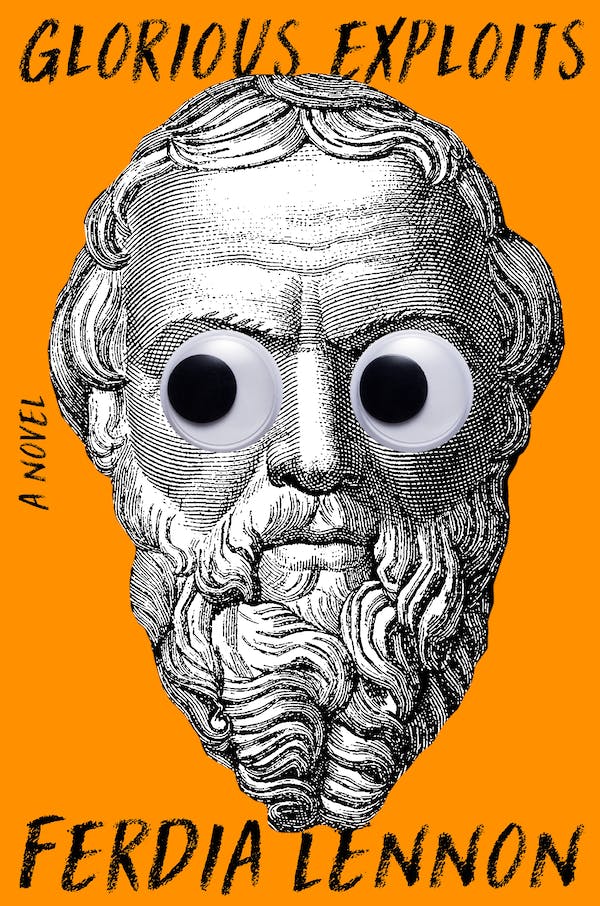
Syracuse, 412 BCE: The Athenians’ invasion has surprisingly been defeated and the surviving invaders stuck in an old quarry where they are dying in droves from malnutrition and ill-treatment. According to Plutarch, some of their captors so loved the plays of Euripides that they offered prisoners food in exchange for lines of verse.
Lennon, with degrees in History, Classics and writing, takes this morsel of history and creates something both fantastic and deeply human. Two out-of-work potters—Gelon who loves Euripides’ plays and Lampo who loves wine and fun times—make their way into the quarry armed with olives, bread and wine in search of verse. Eventually they decide to put on a fully staged performance of two plays by Euripides: Medea and The Trojan Women.
Lampo narrates the story in full-blown Irish vernacular, which is a little startling at first. He’s illiterate and doesn’t share his friend Gelon’s devotion to Athenian tragedy, but why not go along with it? He has nothing else to do. “Gelon says that’s what the best plays do. If they’re true enough you’ll recognize it even if it all seems mad at first, and this is why we give a shit about Troy, though for all we know, it was just some dream of Homer’s.”
It does all seem mad. But Lampo’s voice is irresistible. His wisecracks and pranks contribute much of the promised humor. However, as members of my book club said, for a book advertised as a comedy, most of it isn’t funny at all.
At first Lampo gloats about the prisoners’ suffering, saying of the stink in the quarry: “Ah, and I like the way they smell. It’s awful, bult it’s wonderful awful. They smell like victory and more. Every Syracusan feels it when they get that smell. Even the slaves feel it.” Yet, as they proceed with the plays, he cannot ignore the prisoners’ humanity. For me the most interesting aspect of the book is how the characters, especially Lampo, deal with setbacks and successes, finding parts of themselves they never knew existed and looking at others in ways they never thought possible.
I don’t think I’d have read this book if one of my book clubs hadn’t selected it. The premise didn’t seem like something I’d choose, especially in this time of too many stupid wars and inhumane concentration camps. I’m glad I did.
This story surprised me in ways that few novels do these days and moved me even when I didn’t want to be moved. It’s oddly light-hearted despite the grim circumstances. It seems to me to be a buddy caper like Butch and Sundance with a bit of Mickey Rooney/Judy Garland hey-let’s-put-on-a-show’s energy. Lennon doesn’t press his themes hard but leaves us to take what we will from this remarkable story.
What novel have you read that surprised you?