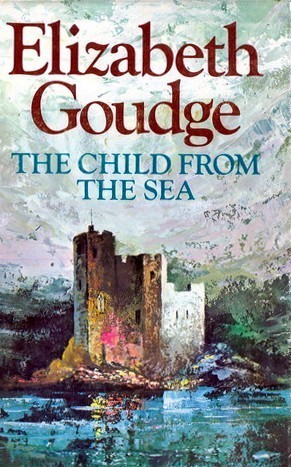
Little is known of Lucy Walter whose son James was the oldest child of King Charles II. From those few facts, Goudge has spun an entrancing story of a vibrant girl whose great love for the prince—whose father ruled England, Scotland and Ireland as King Charles I—lasted a lifetime. We first meet Lucy as a child in Wales, where she lived with her family in Roch Castle and thought herself part buccaneer, roaming the countryside experiencing all of creation with a dazzling joy.
It was then she became aware of the birds. They were coming down from the sky like drifting autumn leaves, martins, chaffinches, goldfinches and linnets, finding their way to the bracken-sheltered hollows and the warm dry hedges and the safe crannies of the rocks. Lucy had watched the bird migrations before but she had never seen one halted like this, halted as the warning sounded along the shore.
She stood still, scarcely breathing, her arms out and her face turned up to the darkening sky, and they had no fear of her. A wing brushed her cheek and just for a moment some tired little being alighted on her hand, putting on one finger for ever the memory of a tiny claw that clung like a wedding ring. It was for her a moment of ecstasy, of marriage with all living creatures, of unity with life itself, and she whispered in Welsh, ‘Dear God, this happiness is too great for me!’
In London she glimpses the young prince from a bridge over the Thames, and they seem to have even in that brief moment a special connection, one that grows naturally over the years as they encounter each other, until they finally discover the wonder of first love. Though lost in their mutual fervor, Lucy insists on marriage first which, in this historical fiction, was performed by her beloved local parson before the marriage was consummated. It had to be kept secret because the political situation had become fraught.
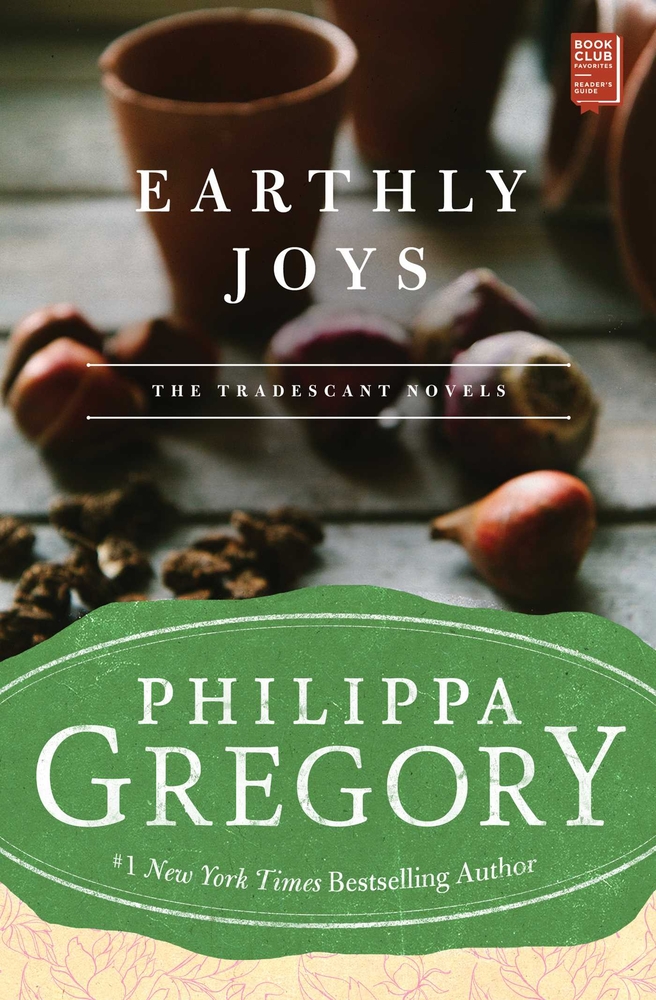
However, this book is so much more than a love story. Charles’s father, Charles I, was under attack for his belief in the divine right of kings. He argued with Parliament by illegally levying taxes without their consent and alienated others during this time of religious disputes by marrying a Catholic and trying to enforce high-church Anglican practices. Charles I was successor to his father James I both of whom I encountered recently in Phillipa Gregory’s Earthly Joys.
The reader stays with Lucy as she tries to navigate these tumultuous times of civil unrest and debates over the power of the king and Parliament while staying true to her own Prince Charles. As we move between revolution and exile and betrayals, Lucy’s story illuminates themes of forgiveness, loyalty and enduring love. Given our own fraught times, her story is a welcome reminder of these virtues. They may not protect us from harm, but we can stay true to ourselves.
This final book from the beloved author of adult and children’s books abounds in such hard-won wisdom. I read it when it first came out in 1970 and at the time was absorbed in the romance of these two young people and of the Stuart kings about whom I’d read so much.
On this reading, though, I was looking for and found insight from Goudge, who was 70 at the time and had lived through both World Wars and the great changes and horrors of the Twentieth Century, as recounted in her memoir The Joy of the Snow. For example, the description of Elenor Gwinne, Lucy’s grandmother, the peace she had attained and how, struck me as a genuine example of wisdom one might come to in the course of a long life.
The other advantage of this late-in-life novel is that Goudge is writing in the fullness of her powers, as shown in the richness of the story, the interweaving of fact and fiction into a story that keeps the reader enchanted from first page to the last. We move from place to place but each one comes to life because we encounter them through Lucy’s eyes.
I was especially taken by the way Goudge uses description to evoke a response, everything from the smallest image to passages that capture your heart. A particularly thoughtful image is spoken by one of Charles’s friends: “ ‘ . . . loyalty is one of the most difficult of virtues, a flower with all its petals pointing in different directions.’ ” And a passage that thrilled me is:
The birds sang for joy of the growing light, and when Lucy opened her window to hear them, the air smelt of violets, though as yet she had found none under the dead leaves in the unicorn wood. But she found minute buttons of coral buds on the brambles and the green of dog’s mercury among the leaves, and when she left the wood and looked back from the far end of the field, she saw how the trees in the silvery sunshine were clothing themselves in pale amethyst and paler coral, in faint crimson and dun gold, one colour fading into the other as the colours do on the iridescent breast of a bird.
Lucy never loses her thrilling response to the world, whether it’s a sailing vessel or a homely fire. She is no saint but is constantly reminded—and reminds us—that there are good people in the world and that even in the midst of danger we can keep a loving heart.
What historical fiction or nonfiction have you read that gives you courage in our dark times?