The Next Ship Home, by Heather Webb

Two sisters from Sicily arrive at Ellis Island in 1902 after a nightmare ocean journey. Fleeing their abusive father, they hope to build a new life together in the U.S. However, Francesca worries that her beloved sister Maria will not pass the health exam; she has become ill in the crowded and unsanitary third-class compartment where they were confined. They might both be sent back to Sicily on the next ship.

Meanwhile Alma, a second-generation German-American, lives in a tenement in the Lower East Side’s Little Germany where her stepfather owns and runs a bierhaus in the basement. He thinks Alma is worthless and mocks her interest in learning languages spoken by their Irish and Italian neighbors. Deciding her unpaid labor in the bierhaus and home is not enough, he forces her to take a job at Ellis Island processing new arrivals telling her she must give her pay to him to help support the household.

Although Alma starts her new job filled with the prejudice against immigrants she’s learned at home, her compassion is stirred by the fear and suffering she encounters, and she gradually learns that these are just people like herself. Becoming especially close to Francesca and Maria, Alma works hard at her language skills so she can help by translating for those who don’t speak English. She also tries to find ways around the roadblocks put in place by the bureaucracy and some corrupt officials.

At first Alma doesn’t believe the whispered stories of extortion and abuse at Ellis Island—carefully researched by the author and based on real events—but Francesca has first-hand knowledge of them. The courage of two women and the growing friendship between them are inspiring.

Unlike some historical fiction that glosses over the practical details of everyday life, the author gives us a full picture of these women’s lives. I love that Webb has chosen to portray this neglected but important part of history: the corruption at Ellis Island, the mutual support of the downtrodden, and the dreams that women fight for despite the forces arrayed against them.

The story also follows Francesca after she leaves Ellis Island, providing unusual insight into this critical phase, including the hoops that new immigrants—especially women—must jump through and the traps they must avoid. I’m learning so much these days about the immigration process as I follow the news, so I appreciate the author’s depiction of the inner lives of both Francesca and Alma.

As we confront and protest against the atrocities visited upon legal immigrants in this country by a rogue regime, I found both comfort and inspiration in this story. Corruption and the abuse of immigrants have a long history in the U.S. and Webb’s portrait of the Ellis Island bureaucracy shows the range of workers, from those who actively abuse arriving immigrants to those who look the other way to those who try to help the new arrivals as best they can. At the same time, Webb shows what seemingly powerless people can accomplish by working together.

Can you recommend a fiction or nonfiction book about the history of Ellis Island?
A Good Neighborhood, by Therese Anne Fowler

In Oak Knoll, a diverse and modest North Carolina neighborhood full of trees and ranch houses,  professor of forestry and ecology Valerie Alston-Holt is concerned about the people who’ve just moved in next door. Flush with new money, the Whitmans have ignored the character of the neighborhood and instead cleared all the trees from their plot and built a McMansion complete with in-ground pool.

Although Valerie is worried about the health of her beloved and historic oak tree, its root system disrupted by all the digging, she tries to find a way to get along with her new neighbors, inviting Ms. Whitman—Julia—to a book club meeting. Then Valerie’s bright and talented biracial son Xavier meets Julia’s teenaged daughter Juniper.

In order to shield her daughters Juniper and young Lily from the hardscrabble life she led until marrying her boss, the up-and-coming millionaire Brad Whitman, Julia had the family join an evangelical church. Juniper agreed to take the church’a purity vow in which she agreed that her virginity belongs to God and, until she marries, to his representative on earth: her stepfather Brad. Having just watched the Neflix documentary Trust Me, this vow gave me the creeps. Already Julia’s purity vow has opened her up to bullying at her new school.

Meanwhile, Xavier, a classical guitar prodigy, is off to college in the fall on a music scholarship. He has close friends to hang out and play music with. He’s had two brief relationships with classmates, but his heart wasn’t really in either. When he meets Juniper, though, he discovers the power and glory of love. And miracle of miracles: she, too, falls for him.

Fowler makes this familiar story both urgent and utterly engaging with a relatable setting, masterful pacing, and vivid characters. I like that she works against stereotypes with some characters, but wonder if she doesn’t go too far, making them either too good to be true or too evil.

What really makes the book stand out, though, is the use of the neighborhood itself to narrate the novel. They say right on the first page: “[W]e never wanted to take sides.” They come back as a chorus throughout the story, reminding me of Euripides’ plays and other Greek tragedies. Just as the main characters are changed in the course of the story, so too is the collective group.

Using the first person plural “we” as the point of view in a novel is unusual and difficult to do well. I loved Then We Came to the End, by Joshua Ferris, where he maintained that point of view until near the end of the book. Here the chorus appearing between more traditional third-person scenes adds to a sense of looming tragedy. Even more importantly, it includes the reader as part of the “we,” making us complicit in their attitudes and opinions.

What a brilliant way to work issues of class, race and women’s lives into an old story! Because of our involvement, we readers are put on the spot: What we really think it means to be a good neighbor? How can we share our community with those who may be different from us?

Fowler’s story is more important than ever during this time when resurgent racism is polluting our  society. We may not want to take sides, but standing aside while tragedy unfolds carries its own consequences.

Have you read a novel with an unusual point of view?

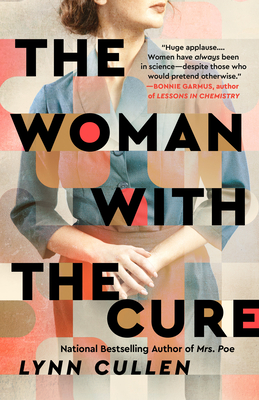
The Woman with the Cure, by Lynn Cullen

Meet Dr. Dorothy Horstmann who worked tirelessly and in the face of persistent gender discrimination to stop the polio pandemic. Now mostly forgotten, polio epidemics between 1948 and 1955 paralyzed or killed hundreds of thousands of people, mostly children, around the world. President Franklin Roosevelt is the patient with whom most people are familiar.


Cullen brings this time period to life with searing portraits of wards filled with children in iron lungs and scientists competing against each other to be the first to find a cure. Dorothy doesn’t care about fame; fighting polio is her only concern. She freely shares what she learns with the two leading competitors—Jonas Salk and Albert Sabin—as well as with others working to end the scourge.


I love that biographers and historical fiction writers are bringing to light women whose essential contributions have been downplayed and forgotten while only the “great men” are credited and remembered. It’s worth noting that polio research was one of the first uses of HeLa cells which I first learned about in Rebecca Skloot’s The Immortal Life of Henrietta Lacks. How much we owe to Ms. Lacks! Check out the book if you’re ever looking for an example of how one person can—even unwittingly—change the world.


Rejected for a residency because of her gender, Dorothy applies again as D. M. Horstmann and is accepted. The first to suspect that polio travels from the gut to the blood, she is refused support needed to investigate and conduct trials. She finally gets funding years later after a male scientist proposes the same thing; meanwhile thousands of children continued to be paralyzed or died each year. Nominated for a Nobel Prize for her work, she is passed over for two men.


With no time for bitterness, Dorothy pushes forward. The first woman to become a full professor at the Yale School of Medicine, she travels around the world to participate in polio conferences and to study polio outbreaks, thus contributing valuable data. She is also instrumental in the Russian study that validated Albert Sabin’s successful polio vaccine, enabling it to be approved.


Cullen takes us behind the scenes as scientists race the clock and each other. I felt Dorothy’s despair at setbacks and her thrills at successes. The delays caused by infighting I found frustrating, thinking of the children around the world left to suffer while male scientists kept their secrets. One of the holdups was danger of human trials with children.


We learn that the first round of Salk’s initial vaccine (which was greeted with cheers of relief) left 164 people paralyzed and 10 dead, due to one of the suppliers cutting corners, so that their vaccines actually gave people polio. The resulting distrust of vaccines lingers to this day.


I’m old enough to remember those awful years, with terrified parents keeping children apart and swimming pools closed. Some of the children in my school stumped around in their leg braces, while other children never got to attend because schools couldn’t accommodate wheelchairs.


I vividly remember the day at school when we lined up to get our first sugar cube with the vaccine and my mother crying. Since then I’ve been a confirmed advocate of vaccinations and nothing that drug-addled creep currently in charge of the U.S. Department of Health and Human Services—who has made millions of dollars off of anti-vax activities—can say will convince me otherwise.


For me, the most moving scene in the book occurs in Detroit, Michigan in 1953 when Dorothy tours the Henry Ford Hospital’s polio unit with its rows of “groaning and wheezing iron lungs out from which heads stuck.” Dorothy herself had tried out one of them early on so that she’d better understand her patients and had immediately panicked.


On the tour, Dorothy is distracted by a little girl in a wheelchair. “With her physician’s eye, she noted that the muscles of both the child’s legs had atrophied from the hips down and were thus likely to remain permanently paralyzed.” The child is playing a board game with a grown woman in an iron lung, Mrs. Konkle, who cheerfully announces that all the children beat her at the game, even her own children when they come to visit.


The game is Candy Land which we played incessantly when I was little. I never knew that it was invented by a schoolteacher in California while she was in the hospital with polio. Mrs. Konkle had her husband buy it and spent her days cheering up the children in the ward with her by letting them win. Such courage!


Occasionally the ins and outs of such a complex, multifaceted effort became a bit tedious, and perhaps some of the side stories could have been eliminated, but it is worth pushing through to get the full story of the dedication and sacrifice, not only Dorothy’s but that of others as well, which finally brought about a cure. Of course, Dorothy—the daughter of immigrants by the way—didn’t stop there but went on to work on the rubella vaccine still used today to protect children.


Did you ever play Candy Land? Were you aware of its history?

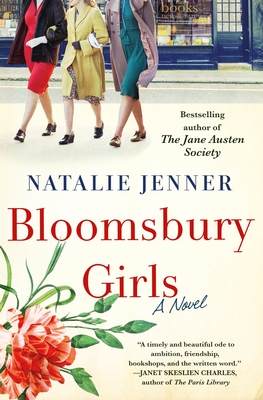
Bloomsbury Girls, by Natalie Jenner

In 1950s London, Bloomsbury Books is a relic of an earlier age. Offering new and rare books, the store has resisted change for a hundred years, and its stodgy general manager, Herbert Dutton, with his 51 unbreakable rules is determined to keep it that way. However, the three women who work there have other ideas.

Vivien staffs the Fiction department and loathes her one-time lover Alec who heads the department. She wants to introduce more female authors while Alec refuses all but the usual classics like Jane Austen and George Eliot. Ambitious and clever, Vivien provides much of the humor in the book. I especially love the way she comes up with witty and daring names for the people and places in the bookshop, like the Tyrant and the Via Dolorosa.

As Mr. Dutton’s secretary, Grace is the unacknowledged angel of the house. She helps Mr. Dutton manage his workload and tries to keep things on an even keel. She’s an anomaly for the time: a wife and mother who decided to take a job to avoid her abusive, unemployed husband. She cannot leave him because she doesn’t make enough to support herself and the children and fears she’d lose custody of them.  

Despite a brilliant career in Cambridge, a member of the first class of women awarded degrees by the university, Evie’s academic plans are crushed when she is passed over for a less accomplished man who takes credit for her work. At the bookstore she is in charge of cataloging the jumbled collection of rare books on the top floor, but she has an ulterior motive for working at Bloomsbury Books.

All tea-making is done by the three women, in obedience to Rule No. 17: ‘Tea shall be served promptly four times a day.’ Each of the four departments is run by a man, and they, of course, cannot be expected to make their own tea. The exception is Ash, head of the Science Department, who makes his own chai. As an immigrant from India, Ash’s presence brings portents of change and adds another dimension of discrimination.

I selected this story when looking for a light but engaging audiobook for a trip. Not only does it check those boxes, but it also features a few of my favorite things: a bookstore, London, one of my favorite actors as narrator—Juliet Stevenson—and the post-WWII time period. It also offers something I look for and rarely find: people, especially women, functioning in the workplace. Yes, raising children and running a household is work, and there are many stories about that, but little is written about the rewards and difficulties of working in an office (literal or figurative).

Jenner’s story abounds with the kind of rivalries and shifting alliances, the kindnesses and restrictions recognisable to anyone who has worked in an office. They keep the plot roiling and force the characters to show what they are made of. Other characters come and go, including real people of the time, such as Peggy Guggenheim, Daphne du Maurier, and Samuel Beckett.

Of course I hate the use of “girls” in the title applied to women, but it is true to the time period. I was a child then, but I see my parents in these characters. Many of those who survived the worldwide depression and WWII treasured security and stability, like Mr. Dutton and his 51 rules. And after the war many women like my mother had to give up jobs they found rewarding and confine their ambitions to home and family. Thus, I found Grace’s journey and her impulsive decision to work at the bookstore particularly touching.

If you’re looking for a cosy read with a bit of a bite, check this one out. You don’t need to have read Jenner’s previous book The Jane Austen Society which includes some of these characters. In writing this book, she was inspired by rereading 84, Charing Cross Road. She describes Bloomsbury Girls as “Mad Men meets You’ve Got Mail” which is pretty accurate. Of note, Jenner once owned an independent bookshop in Oakville, Ontario, where she lives now.

Can you recommend a story set in a bookshop?

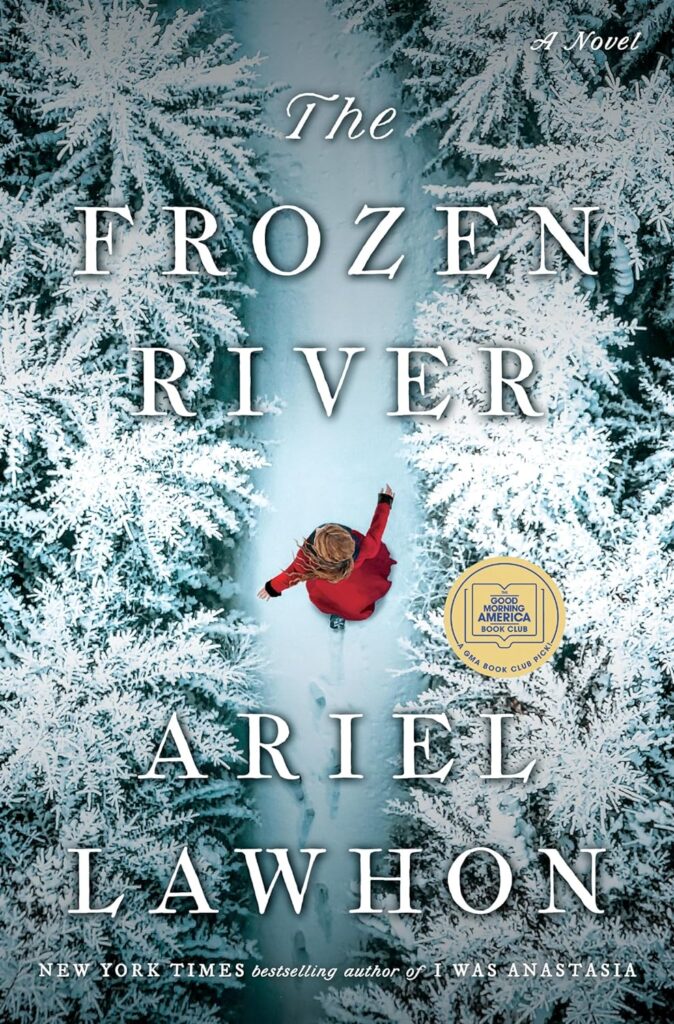
The Frozen River, by Ariel Lawhon

The blizzards that have been pummeling New England recently might hold us up for a while until the plows come through. They might send us scrambling for generators and firewood while waiting for the power to be restored, or putting on snowshoes to go out and assess the damage from fallen trees.

But what if we were in Maine in 1789 when the Kennebec River freezes and stalls activity in our small community? What if the river freezes early and traps a man’s body? Midwife Martha Ballard learns that two men fell through the ice that dark night: Sam Dawin who escaped and Joshua Burgess who didn’t. 

Called to examine the body Martha determines that Burgess was beaten and hanged before being thrown into the river. She’s interrupted by Dr. Page, a recent Harvard graduate and newcomer to town, who calls her an amateur and declares the death an accidental drowning. She later learns that her son Cyrus fought with Burgess shortly before the man’s death. Burgess and Judge North have been accused of raping a local woman, one of many secrets swirling in the village.

We follow Martha’s investigation through her activities as well as through the journal she keeps to record her work as a midwife and community events. Her story is “inspired” by the real Martha Ballard who lived in Hallowell, Maine, delivered over 800 babies, and left a diary covering 30 years of her life. While the author draws on the diary, a nonfiction biography of Ballard, and court transcripts, this story is firmly categorised as historical fiction.

I liked the use of the journal. Even when fictionalised, documents add veracity to a story. Although they sometimes repeated events already dramatised, these sections brought home the physical labor of using ink and quill. I also liked the use of a flashback at the end of each section to fill in information about Martha and her beloved husband Ephraim. These brief forays into the past come just when the information is needed.

The overriding image of the river is powerful; everyone depends on it and is controlled by it. The patriarchal limits on women are powerful as well. Martha’s work makes her an anomaly at a time when women had almost no power and rarely worked in a profession. A woman could not testify in court without her husband accompanying her. Midwives were being supplanted by male doctors who often lacked rudimentary knowledge of sanitation and dismissed women with complaints as lazy or crazy.

Being already well aware of these conditions for women in the 18th century, I found their frequent and unsubtle deployment made the story drag, as did the pace of events now and then. At the same time, I recognise that the slower pace is appropriate to life at the time, when it might take days or weeks to travel between towns, and that there are many readers who might not know about the limitations women suffered then. Similarly, the bullies and corrupt locals seemed exaggerated until I looked around at what is going on here today.

Without giving the ending away, I will say that I appreciated the story’s unusual path to resolution. I also appreciated how the Martha of this story adapts her strategies as needed during the investigation, sometimes backing down, sometimes attacking, sometimes negotiating.

The story also made me think about the body. Not just the dead man, the necessary start to a murder mystery, but also how we inhabit our bodies, whether it’s pushing a quill pen across rough paper or delivering a baby into the world, making love with a husband of 35 years or trying to move quickly through deep snow, riding a horse or dealing with the effects of rape.

Things have changed in the centuries since this story takes place, but not human nature, its insecurity and greedy grasp for power on the one hand and its generous care for everyone in the community on the other. And no matter how much we may think we’ve controlled the natural world since then, it only takes a blizzard to remind us how wrong we are.

What is frozen in your life? What will it take to unfreeze it?

The Cherry Robbers, by Sarai Walker

Reclusive Sylvia Wren is a famous artist, now in her eighties, living in New Mexico and painting flowers that resemble women’s private parts. Her peaceful life is upended when a journalist discovers her long-buried secret: She is actually Iris Chapel, an heiress who has been missing for sixty years. Concerned that her story might be distorted or sensationalised, she begins to write it herself.

With that, we leave the frame story and plunge in the life of Iris Chapel, the fifth of the six Chapel sisters, born in the 1930s and all named after flowers. Their strict father is a gun baron, owner of Chapel Firearms, while their mother is a distant woman, obsessed by her own fears and her belief that the victims of those guns are haunting her. Alternating between screams and silence, Belinda also believes that the women of her family are cursed, and tries to keep her daughters from marrying

However, as the sisters begin to come of age in the 1950s, marriage seems to be the only way to get out of their restrictive home. Some of them long to live “normal” lives and head for that escape hatch, certain that the curse is just part of their mother’s madness. Iris comments:

It’s easier to say that women like my mother are crazy. Then you don’t have to listen to them. And so maybe in a way she became crazy. Maybe she could communicate only by screaming.

This novel was recommended to me when I was reading ghost stories around the solstice last month. I love the way Walker handles the spooky side of the story. People are haunted for sure, and sometimes ghosts are mentioned, but the story remains in a liminal space where the reader can believe in the ghosts or not. What is unmistakable is the underlying unease, a sense that something is dangerously wrong, and the way that unease intensifies as the story unfolds.

Iris alone believes her mother and tries to help her sisters. I loved the depiction of the communal life of the sisters, with their quarrels and tenderness, their jealousies and generosity. Like the plucky heroine beloved of gothic novels, Iris tries to be the compliant, self-sacrificing young woman her society demands, but says:

When you live in defiance of yourself, you can adapt to your circumstances, but remnants of who you are at your core remain. A bit of wildness that can’t be tamed.

With Iris as an engaging narrator, the first part of the story absorbed me. I found the  characters strong; the setting atmospheric, and the pacing excellent. However, the story went on too long and became repetitious. Also, coming back to the frame story at the end felt a little flat and predictable.

The use of Georgia O’Keeffe’s life and work to characterise Sylvia Wren disturbed me. Walker did acknowledge the artist in her note at the end, and she has a right to imitate O’Keeffe this way, since the artist is considered a public figure. If O’Keeffe were still alive would she object to this imitation? I don’t know, but somehow feel that this depiction is as jarring as commercials of Fred Astaire dancing with a vacuum cleaner. Similarly, using Sarah Winchester’s supposed fears as the centerpiece for Iris’s mother earned a raised eyebrow. I’m reminded of Milan Kundera’s Immortality where he delves into the morality of manipulating a person’s image and reputation after they are dead and cannot protest.

The title comes from D. H. Lawrence’s poem with its sensuality, blood and tears. While the metaphor of the cherry seems almost too direct, the poem brings more context to the uneasiness summoned by the image of a robber. I ended up liking the title and glad I read this book.

What do you look for in a ghost story?

Mrs. Dalloway, by Virginia Woolf

Reading this classic novel now, more than fifty years since I first encountered it as an undergrad, is quite a different experience. Back then I was confused and thrilled by Woolf’s modernist, experimental style that expanded forever my idea of what a novel could be.

Now I see it as a story of midlife, in several senses of the word. The story unfolds as a day in the lives of a handful of people in London going about their ordinary business, and we get thrown right into the middle of things. Clarissa Dalloway is preparing to give a party. Newly returned from India, Peter Walsh sets out to recapture the past by exploring London and visiting Clarissa, his first love. Richard Dalloway is off to lunch with old friend Hugh Whitbread at Lady Bruton’s. Septimus Smith, a damaged veteran of the Great War, and his wife Rezia are walking through the park, on their way to an appointment with a doctor.

Since Clarissa, Peter and others are in their early fifties, we have another sense of midlife. It’s a time of life when we look back nostalgically, but also when we measure ourselves—and others—assessing how we have changed with age, and calculating what we have made of our years. Have we measured up to our early promise?

Time comes up frequently, not just in the characters’ reflections on how they and each other have aged, their memories of the past, and the bustling busy lives of their present; but also in the more linear sense of the clocks sounding the hours of the day. Time in this novel is both infinite and finite.

Another sense of midlife underpins the story: the Bible’s “Media vita in morte sumus”—“In the midst of life we are in death.” Death comes up frequently, whether it’s Septimus thinking of suicide or Clarissa hearing old Mrs Hilbery at the party say “how it is certain we must die.” Clarissa herself has recently been ill which has turned her hair white and left a concern still about her heart.

In my youth the book’s theme that struck me most strongly centered on solitude versus society. Plunging into this novel, we have opportunities to see most of the characters alone—really see them; right into their jumbled, chaotic thoughts, sublime ideas, and snarky digs. We see Peter like his namesake in Kensington Gardens never having fully grown up, and Clarissa awash in memories of a golden childhood and gloriously loving her present life—until she’s brought low by self-doubt or sensing criticism from others.

We also see them with others, whether through intimate conversations or Clarissa’s crowded party. In some instances simply exchanging a look with someone else—a young woman in the park or an elderly woman in a window across the street—becomes a vital communication.

Clarissa believes that her strength is that she knows what other people are feeling. In fact, all the characters think they do, but they are mistaken. Richard is certain that Clarissa will know he loves her without his saying so. Peter thinks he and Clarissa read each other’s minds. The worst offenders are the two doctors to whom Septimus goes for treatment; they burst with confidence that they know what is wrong with him, but their pompous, one-size-fits-all solutions are worse than useless.

There’s a reason why so many books and essays and dissertations have been written about this novel. It is so rich—so full of life. You can look at it through the lens of class or gender; you can hold it up to Woolf’s own life; or consider the fragility of a world that is on the cusp of change—the book came out in 1925, so this year is its centennial.

For me in this reading it is the sense of time that demands my attention. Like these characters I strain to reckon the long years behind me: the golden times that I weave into stories for my grandchildren and the bitter griefs and regrets that I keep to myself. I consider what I will do with the few years that remain, knowing how much I value being alone and how much I enjoy being with others.

We are all born and we all die. That is what we have in common. What comes in between is our own unique story. By slicing one day out of the lives of this small group of people, Woolf gives us a glimpse of the extraordinary richness of the lives humming all around us.

If you’ve read Mrs. Dalloway, what did you think about it? If you’ve reread it, did your opinion change?

Note: My thanks to Tash for her discussion of the novel on her Woolfish! Substack and to all the commenters there as well for expanding my understanding of the novel.

The Real Mrs. Miniver, by Ysenda Maxtone Graham

The Real Mrs. Miniver, by Ysenda Maxtone Graham

We’ve seen the movie, of course, and thought it a sentimental film about a woman who is practically perfect in every way keeping her family together and holding the home front together during the Blitz—the bombing of London during WWII. The book the film is based on, a collection of columns from the London Times, was something else altogether: an idealised portrait of an ordinary upper middle class woman’s life in pre-WWII England.

Those columns were written by Joyce Maxtone Graham (née Anstruther) using the name Jan Struther, and she modeled the family on her own husband and three children. However, as we learn from this biography by her granddaughter, the loving Miniver family was a far cry from Joyce’s own. Her marriage to Tony Maxtone Graham, initially fun-loving and amusing, had dried up as he’d been taken hostage by golf, leaving Joyce to her articles and poems many of which were published in Punch among other periodicals.

Joyce had been a tomboy as a child, loathing the ceremonial tea parties and dance lessons, preferring to run and shoot with the boys. She and Tony initially shared a comic view of the world. I loved the way they shared the silly things they noticed during their days: pebbles, as she called them, like children turning out their pockets at the end of the day. As they drew further apart, Joyce fell deeply in love with Dolf Placzek, a penniless Jewish refugee from Austria gifted with intelligence and a strong appreciation for the arts.

The Mrs. Miniver columns depict a happy, loving marriage that was a far cry from what Joyce’s had become. Yet for many, those columns embodied an England that was being destroyed by the war and a reminder of what they were fighting for. Mrs. Miniver’s upper middle class life was comfortable, with a London house and a weekend cottage in Kent, a son at Eton, and servants to do the chores. The columns contain the small things she notices during the day, some pleasurable, some not—like the pebbles she and Tony used to exchange. While Mrs. Miniver could be critical of her social circle, she was alive to its charms.

Joyce—now Jan all the time—was shocked by the surprising success of the book and the reading tours and talks that followed. She came to be haunted by Mrs. Miniver. Many fans assumed they were the same person. She struggled to finding a firm place to stand.

Of all emotions, she perhaps felt the emotion of missing most acutely. At a party, she missed solitude. Abroad, she missed home. Cut off from her children, she longed to be with them again. When she was, she longed again for solitude. The raggle-tangle gypsy in her head beckoned her to escape.

Why read biographies? In my twenties I read lots of biographies of women writers and artists, looking for inspiration during a time when women were second-class citizens when it came to the arts. I was also looking for ideas for how to write while wrangling two babies and an ex who refused to contribute. Just keeping the heat on and some kind of food on the table was a miracle. Forget about finishing a story and sending it out.

These days I still look for inspiration from brave women and men as I struggle with how to live a moral life in an increasingly compromised and chaotic world. I’m especially drawn to women living during dark times. I’m also interested in the wide range of life choices people make. One thing that is so fascinating in this book is the contrast between the life of Mrs. Miniver—a model for womanhood at the time—and that of the woman who created her.


Sometimes with a biography, it is enough to see myself in a reckless tomboy unwilling to knuckle under to social norms or an almost accidental writer. Now if only I can catch the zeitgeist the way Jan Struthers did! Perhaps it’s better I don’t. Her story is yet another cautionary tale of how too much success and celebrity can wreck a person.

It’s been difficult lately to find books that hold my interest. My reading record is full of DNFs. This one, though, fascinated me and kept my attention right through to the end. Jan reinvented herself several times over, which I find wonderful. And she changed the course of history, inadvertently perhaps and not alone, but for sure. What kind of world would we be living in today if the U.S. had refused to join the Allies fighting Hitler and Mussolini in Europe and Africa?

I take courage from her story and the stories she wrote about the ordinary people of Britain as we fight today’s fascism.

Have you read a biography that inspired you?

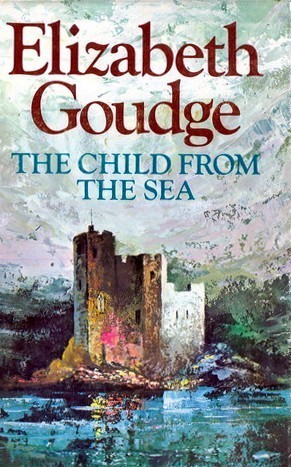
The Child from the Sea, by Elizabeth Goudge

Little is known of Lucy Walter whose son James was the oldest child of King Charles II. From those few facts, Goudge has spun an entrancing story of a vibrant girl whose great love for the prince—whose father ruled England, Scotland and Ireland as King Charles I—lasted a lifetime. We first meet Lucy as a child in Wales, where she lived with her family in Roch Castle and thought herself part buccaneer, roaming the countryside experiencing all of creation with a dazzling joy.

It was then she became aware of the birds. They were coming down from the sky like drifting autumn leaves, martins, chaffinches, goldfinches and linnets, finding their way to the bracken-sheltered hollows and the warm dry hedges and the safe crannies of the rocks. Lucy had watched the bird migrations before but she had never seen one halted like this, halted as the warning sounded along the shore.

She stood still, scarcely breathing, her arms out and her face turned up to the darkening sky, and they had no fear of her. A wing brushed her cheek and just for a moment some tired little being alighted on her hand, putting on one finger for ever the memory of a tiny claw that clung like a wedding ring. It was for her a moment of ecstasy, of marriage with all living creatures, of unity with life itself, and she whispered in Welsh, ‘Dear God, this happiness is too great for me!’

In London she glimpses the young prince from a bridge over the Thames, and they seem to have even in that brief moment a special connection, one that grows naturally over the years as they encounter each other, until they finally discover the wonder of first love. Though lost in their mutual fervor, Lucy insists on marriage first which, in this historical fiction, was performed by her beloved local parson before the marriage was consummated. It had to be kept secret because the political situation had become fraught.

However, this book is so much more than a love story. Charles’s father, Charles I, was under attack for his belief in the divine right of kings. He argued with Parliament by illegally levying taxes without their consent and alienated others during this time of religious disputes by marrying a Catholic and trying to enforce high-church Anglican practices. Charles I was successor to his father James I both of whom I encountered recently in Phillipa Gregory’s Earthly Joys.

The reader stays with Lucy as she tries to navigate these tumultuous times of civil unrest and debates over the power of the king and Parliament while staying true to her own Prince Charles. As we move between revolution and exile and betrayals, Lucy’s story illuminates themes of forgiveness, loyalty and enduring love. Given our own fraught times, her story is a welcome reminder of these virtues. They may not protect us from harm, but we can stay true to ourselves.

This final book from the beloved author of adult and children’s books abounds in such hard-won wisdom. I read it when it first came out in 1970 and at the time was absorbed in the romance of these two young people and of the Stuart kings about whom I’d read so much.

On this reading, though, I was looking for and found insight from Goudge, who was 70 at the time and had lived through both World Wars and the great changes and horrors of the Twentieth Century, as recounted in her memoir The Joy of the Snow. For example, the description of Elenor Gwinne, Lucy’s grandmother, the peace she had attained and how, struck me as a genuine example of wisdom one might come to in the course of a long life.

The other advantage of this late-in-life novel is that Goudge is writing in the fullness of her powers, as shown in the richness of the story, the interweaving of fact and fiction into a story that keeps the reader enchanted from first page to the last. We move from place to place but each one comes to life because we encounter them through Lucy’s eyes.

I was especially taken by the way Goudge uses description to evoke a response, everything from the smallest image to passages that capture your heart. A particularly thoughtful image is spoken by one of Charles’s friends: “ ‘ . . . loyalty is one of the most difficult of virtues, a flower with all its petals pointing in different directions.’ ” And a passage that thrilled me is:

The birds sang for joy of the growing light, and when Lucy opened her window to hear them, the air smelt of violets, though as yet she had found none under the dead leaves in the unicorn wood. But she found minute buttons of coral buds on the brambles and the green of dog’s mercury among the leaves, and when she left the wood and looked back from the far end of the field, she saw how the trees in the silvery sunshine were clothing themselves in pale amethyst and paler coral, in faint crimson and dun gold, one colour fading into the other as the colours do on the iridescent breast of a bird. 

Lucy never loses her thrilling response to the world, whether it’s a sailing vessel or a homely fire. She is no saint but is constantly reminded—and reminds us—that there are good people in the world and that even in the midst of danger we can keep a loving heart.

What historical fiction or nonfiction have you read that gives you courage in our dark times?

Gemma Sommerset, by Jill McCroskey Coupe

The story opens at a summer camp in the Blue Ridge mountains where fourteen-year-old  Gemma undergoes a transformative experience. In 1957 girls’ roles were strictly defined, especially in the South, but away from home and facing a surprising danger, she finds a new sense of herself. The problem then becomes what to do with that when she returns home.

Gemma is part of an in-between age group: too late to be part of the WWII generation and too soon for the Sixties with its peace-and-love. This new novel from Jill Coupe explores how throughout her life she balances her desire for adventure and accomplishment with society’s restraints and expectations.

She dreams of studying French in Paris but ends up in a traditional marriage, home with a baby while her husband continues up his professional path. I’m reminded of Philip Larkin’s poem “Afternoons” where he describes young mothers watching their children at a playground, ending with: “Something is pushing them / To the side of their own lives.” Gemma’s one joy is watching the sun rise each morning, its beauty a reward, its freshness a promise.

The wonderful editor Dave King once wrote about what he called the gentle genre: “straightforward tales of ordinary people in mostly every-day, low-key situations.  No psychotics, no wrenching twists, no gore, no vampires or werewolves or demons.” These stories were popular in the early part of the 20th century, from writers such as Jan Karon, Angela Thirkell, D. E. Stevenson, Elizabeth Cadell, R. F. Delderfield, and Wendell Berry.

The problem with writing such a story is how to create enough tension and suspense to propel the reader through to the end when you can’t throw in a gang war or vampire to liven things up. Dave King defines two ways to keep a gentle story going without letting it become either boring or saccharine. One is for the author to pay close and detailed attention to the characters so the reader will recognise that even small things hold deep meaning for them. The other is to set the story in a small town where you can’t avoid interactions with your neighbors, even if their opinions differ from yours.

In terms of the first method, we do get to know Gemma and the experiences that shape her and her refusal to be pushed to the side of her life. Since the story is told from her point of view, we learn about the other characters as she does. As for the second, her life revolves around her family so they, rather than the small city where she lives, become the community she defines herself within. Conflicts with her parents, husband, and daughters animate Gemma’s story as she strives to carve out a space where she can be herself while still caring for them. As Dave King says, gentle books—of which this is one—are “driven by love.”

Stories driven by love are a much-needed balm these days. Gemma Sommerset reminds me about the importance of family and community. We might disagree, but we can do so with love. So maybe Gemma’s not so far away from the Sixties generation as I thought.

What novel have you read lately that reminded you of what really matters?