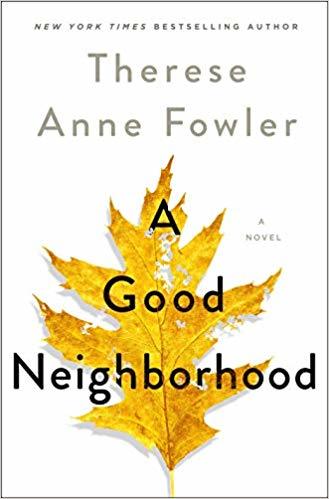
In Oak Knoll, a diverse and modest North Carolina neighborhood full of trees and ranch houses, professor of forestry and ecology Valerie Alston-Holt is concerned about the people who’ve just moved in next door. Flush with new money, the Whitmans have ignored the character of the neighborhood and instead cleared all the trees from their plot and built a McMansion complete with in-ground pool.
Although Valerie is worried about the health of her beloved and historic oak tree, its root system disrupted by all the digging, she tries to find a way to get along with her new neighbors, inviting Ms. Whitman—Julia—to a book club meeting. Then Valerie’s bright and talented biracial son Xavier meets Julia’s teenaged daughter Juniper.
In order to shield her daughters Juniper and young Lily from the hardscrabble life she led until marrying her boss, the up-and-coming millionaire Brad Whitman, Julia had the family join an evangelical church. Juniper agreed to take the church’a purity vow in which she agreed that her virginity belongs to God and, until she marries, to his representative on earth: her stepfather Brad. Having just watched the Neflix documentary Trust Me, this vow gave me the creeps. Already Julia’s purity vow has opened her up to bullying at her new school.
Meanwhile, Xavier, a classical guitar prodigy, is off to college in the fall on a music scholarship. He has close friends to hang out and play music with. He’s had two brief relationships with classmates, but his heart wasn’t really in either. When he meets Juniper, though, he discovers the power and glory of love. And miracle of miracles: she, too, falls for him.
Fowler makes this familiar story both urgent and utterly engaging with a relatable setting, masterful pacing, and vivid characters. I like that she works against stereotypes with some characters, but wonder if she doesn’t go too far, making them either too good to be true or too evil.
What really makes the book stand out, though, is the use of the neighborhood itself to narrate the novel. They say right on the first page: “[W]e never wanted to take sides.” They come back as a chorus throughout the story, reminding me of Euripides’ plays and other Greek tragedies. Just as the main characters are changed in the course of the story, so too is the collective group.
Using the first person plural “we” as the point of view in a novel is unusual and difficult to do well. I loved Then We Came to the End, by Joshua Ferris, where he maintained that point of view until near the end of the book. Here the chorus appearing between more traditional third-person scenes adds to a sense of looming tragedy. Even more importantly, it includes the reader as part of the “we,” making us complicit in their attitudes and opinions.
What a brilliant way to work issues of class, race and women’s lives into an old story! Because of our involvement, we readers are put on the spot: What we really think it means to be a good neighbor? How can we share our community with those who may be different from us?
Fowler’s story is more important than ever during this time when resurgent racism is polluting our society. We may not want to take sides, but standing aside while tragedy unfolds carries its own consequences.
Have you read a novel with an unusual point of view?