Wakenhyrst, by Michelle Paver

For the winter solstice I wanted to return to East Anglia and the fens, a time and a place when the veil between our world and another seems to thin. Paver’s novel fit my mood perfectly with its luminous and sometimes eerie descriptions of life in fen country.

Many Gothic novels use a frame story, usually told by an ordinary person, someone the reader can identify with. Then the inner story plunges into the darker twists and turns of human nature before ending with a return to the realistic world, reassuring perhaps, yet still haunted by a suspicion of unease.

Here the frame story takes place in 1966, starting with a magazine article. The first paragraph lands us right in the story.

Like a witch’s lair in a fairytale the ancient manor house crouches in its tangled garden. I can’t take my eyes off the ivy-choked window above the front door. It was from that window in 1913 that 16-year old Maud Sterne watched her father set off down the steps with an ice-pick, a geological hammer—and murder in his heart.

The article’s author describes a visit to the now elderly Maud, alone in her crumbling manor, Wake’s End, in Suffolk. He suggests that Edmund Sterne might have been innocent, adding, “We only have Maud’s word that he did it.” Then comes an exchange of letters between Maud and an academic culminating in her inviting him to Wake’s End.

From there we go into the larger story, beginning in 1906 with young Maud as our guide. The house is situated by Guthlaf’s Fen, one of the few fens that hasn’t been drained to create more farmland. Her father Edmund hates it and won’t allow any of the windows on that side of the house to be opened, but Maud loves it.

To her the fen was a forbidden realm of magical creatures and she longed for it with a hopeless passion. In summer the scent of meadowsweet drifted across the Lode and the reeds rang with the eep-eep of frogs. In winter Maud could hear the ice cracking on the Mere and the skies were alive with vast skeins of geese. One afternoon they’d flown right over the garden, and the beat of their winds had lifted Maud as if she were flying.

The sense of dread grows as Maud’s mother suffers multiple unsuccessful pregnancies. “ ‘Perhaps not every night,’ ” the doctor advises, but Edmund brushes him aside. Maud finds her father’s private journal where she learns of the foggy afternoon when Edmund walked by the church in the nearby hamlet of Wakenhyrst. “The church loomed, deep black against the charcoal sky. It seemed not a place of sanctuary, but the menacing relic  of a savage and haunted past.”

Then he tripped over the planks he’d ordered stripped from the chancel arch as part of the renovations. Seeing an eye peering up at him from the grass, he felt a strange sense of guilt and caught “a strong marshy whiff from the fen.”

It turns out that the planks hold a medieval painting that had been whitewashed by the Puritans, a Doom that depicts the Last Judgment, dominated by the gleeful devils torturing the damned. It is restored and mounted in a separate room in the church, yet the painting clings to his imagination until he begins to see devils everywhere.

With the unearthing of the Doom, he comes to believe that “Something has been let loose…” The old superstitions still have a hold, not only on the church-going residents of Wakenhyrst, but also on the manor house where servants tell Maud stories of the fens, and now they gradually take hold of Edmund himself.

Maud finds, though, that her father won’t give up his autocratic grip on the household and is frustrated in her attempts to educate herself. The sense of intrigue grows as she begins to unearth other secrets even as the claustrophobic atmosphere tightens around her.

What I liked about this story was its slow burn. It moves within that liminal space between the ancient mysteries and the modern world without completely spilling over into either horror or rational explanation. I found plenty of tension and suspense, but they are curiously muted by the proximity of reality; somehow that intensifies them.

Framed narratives like this one, with their multiple narrative voices, do increase suspense and also create a sense of unease through the blurring of reality and fiction. There are some daring moves on the author’s part, such as revealing so much in the first paragraph and then staying within that liminal space between the natural and supernatural worlds. I thought she succeeded and look forward to reading more of her work.

Can you recommend a good Gothic novel or perhaps a literary novel with some Gothic attributes?

Beryl Blue, Time Cop, by Janet Raye Stevens

Librarians! I admire them all. They know so much and are incredibly generous. So when I met a librarian who’d written a suspense story about a time-traveling librarian, how could I resist?

Beryl Blue, librarian-in-training, is going about her business one day in 2015—her business at that moment being shelving books—when she falls off a ladder and into an adventure. Caught by the mysterious Glo Reid who materializes from 2031, Beryl is given a mission to go back to 1943, where World War II is in full swing, and prevent a man from being killed. She—this perfectly ordinary young woman—is the only one who can eliminate the assassin.

It sounds far-fetched, but we quickly learn enough about her past—and her tendency to run away from trouble—to go along with it. To her consternation, the place where she has landed is her very own town, at least a past version of it.

Beryl’s story makes for an entertaining summer read. I especially liked the details from 1943: the slang, the music, the clothes. From the rooming house to the nightclubs, Beryl sticks with Sergeant Tom Sullivan and his mates while they celebrate their embarkation leave. He thinks he’s protecting her, while she knows it’s the other way around.

While keeping an eye out for the assassin even though she knows she’d never be able to actually kill him, Beryl struggles to answer Sully’s questions about where she’s from and why she—a single woman—is on her own. Her 21st century views on things like smoking and women’s roles are challenged by the mores of the period. Meanwhile, she is wondering why this one man’s life is essential to saving the future as she knows it.

Plot twists abound, challenging Beryl’s understanding of herself and leading to a satisfying conclusion. There are three more books in the series: something to look forward to.

What books do you turn to for light-hearted entertainment?

The Strand Magazine, Issue LXXV 2025

A new story by Graham Greene? And a new one from Ian Fleming, too? Wow! I had to send for this issue.

Greene’s story is a departure from his usual explorations of moral ambiguity in the worlds of diplomats and spies, which he knew from having been recruited by MI6, as well as the Catholic faith and imperialism. “Reading at Night” is an entertainment indeed: a ghost” story, reminiscent of classic British ghost stories such as those described in Ghostland, by Edward Parnell.

A man who is traveling on the Côte d’Azur stays in a borrowed house has a nervous disposition, traumatised by a boyhood reading of Dracula. He picks up an anthology of stories to read himself to sleep, but unfortunately the one he lights on . . . Well, Greene shares the story with us and it’s disturbing and mysterious. When our man becomes too terrified to read any more, he puts the book aside and turns out the light. Then . . .

I found myself going back to look for what Donald Maass calls promise words: words that tell you what to expect in the story. I found plenty that helped create the ominous atmosphere, the sense of being outside of the natural world, and the suspense.

Ian Fleming’s “The Shameful Dream” is not about James Bond, but rather a story of psychological suspense as a successful literary editor, Caffrey Bone, drives toward the home of the Chief. Lord Ower has invited Bone for the evening at The Towers and to spend the night. Gradually, though, we learn the reasons why he wishes the invitation had been sent to someone—anyone—other than himself. Plenty of promise words in this sentence alone:

Bone stared moodily ahead at the rain and the dripping hedgerows and at the shaft of the headlights probing the wet tarmac of the secondary road which would bring him in due course to The Towers.

I had heard of The Strand Magazine in its British incarnation. From 1891-1950 it published short fiction and general interest articles and was perhaps best known for being the first in the U.K. to publish Arthur Conan Doyle’s Sherlock Holmes stories and some of Agatha Christie’s. I somehow missed that it was revived in 1998 in the U.S. The magazine features stories from emerging crime and mystery writers in addition to stories by established writers. These are genres that I often turn to, and I thoroughly enjoyed this entire issue.

Aside from the stories by Greene and Fleming, there are two by writers I’m familiar with—Denise Mina and C.J. Box—and two by authors new to me—Mike Adamson and John M. Floyd. All are excellent. What a box of wonders! To top it off there’s a fascinating talk with Amor Towles, author of A Gentleman in Moscow and The Lincoln Highway, and pages of reviews of additional mysteries and thrillers.

Sometimes it seems as though there are too many magazines and too little time, but The Strand is one I now intend to make time for.

Have you read a magazine full of short stories lately? Tell me about it.

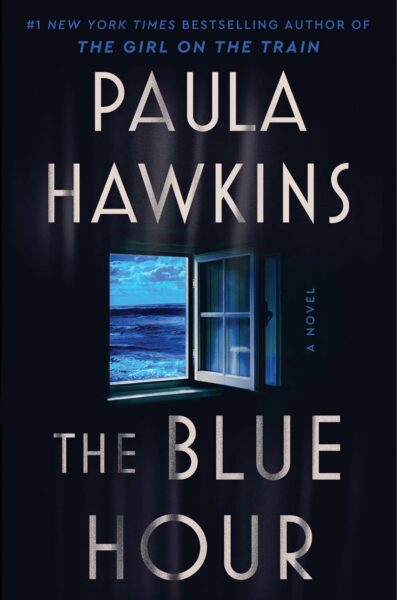
The Blue Hour, by Paula Hawkins

“How very odd it must be, living at the mercy of the tide.”

Eris is a tidal island off the coast of Scotland, meaning that it can only be accessed at low tide. It is a place of crashing seas, wild storms, and dark woods where mainlanders once buried their dead to keep wolves from disturbing them.

Once the home of the reclusive artist Vanessa Chapman, now—five years after her death—the island’s only inhabitant is Grace, her friend and companion. However, Vanessa’s art and papers were left, not to Grace, but to the Fairburn Foundation run by Vanessa’s lover-turned-enemy Douglas Lennox, who feuded with Grace for years, certain that she was holding back art and papers. He is now dead, shot in a hunting accident, and his son Sebastian in charge.

When one of Vanessa’s pieces, on loan to Tate Modern, is discovered to contain a human bone, Sebastian sends James Becker, curator of the Chapman collection to Eris to gather any papers that may shed light on the origin of the piece. Becker intends—unlike Sebastian’s family—to be conciliatory toward Grace, while she initially defends her isolation but gradually finds Becker eases her loneliness.

The shifting ground between the two of them captured and kept my attention.I found myself eager to get back to the book every time I set it down, wanting to explore the twists in the plot, rummage through the complicated relationships between the characters, and measure the reliability of each person. In a time when we are told so many lies, looking for the truth becomes a skill to be honed.

While two of the story’s voices are those of Grace, who loved her, and Becker who wrote his thesis on her work and is still obsessed with her, it is Vanessa—the third voice—who is at the heart of this story. A creative woman who fled domesticity and came to this wild island, her journal entries throughout the book bring out her voice and her rage to be free.

Through Vanessa’s own words, as well as those of Becker and others, her paintings became so vivid in my mind that I could almost swear I’ve seen them. I enjoyed imagining them and can easily say that it would have been worth reading the book solely for them.

The title also drew my attention, as I have always loved that mysterious hour before sunrise and after sunset. The image signaled to me that this would not be a breakneck thriller like Hawkins’s The Girl on the Train. Instead, it’s a slow burn of buried secrets, sinister suspicions, and mysterious deaths. It reminded me of Daphne du Maurier’s novels.

A glimpse at some of the reviews on Goodreads reveals a widespread dissatisfaction with the ending. I won’t give it away, but my interpretation of it is quite different from most people’s. I like ambiguity in fiction. I like being asked to invest some of my attention into working out the subtext of a story. Here, I felt quite certain of what was being said between the lines, and am surprised to find myself at odds with so many others. I’ll say no more, but once you’ve read the book, I’d be happy to share views on the ending.

 Can you recommend a mystery about a woman artist?

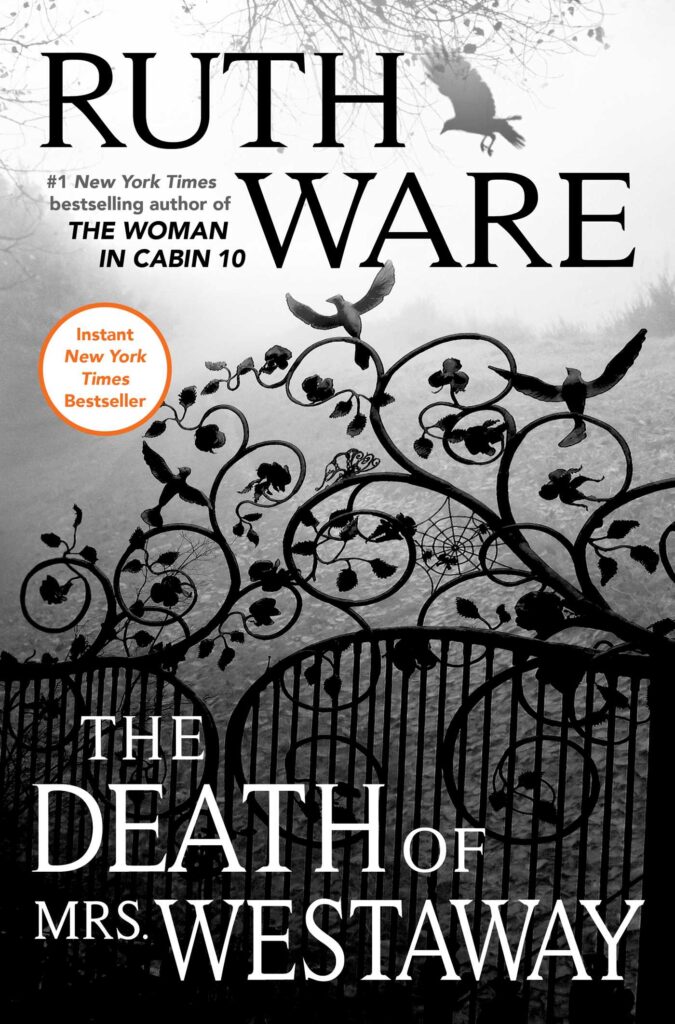
The Death of Mrs. Westaway, by Ruth Ware

On a damp, chilly night, Harriet “Hal” Westaway finally makes it home to her dismal flat. At 21, she’s been scraping out a living doing tarot readings in a kiosk on Brighton Pier she inherited from her mother. In her mail, mixed in with the past-due notices are two letters: a threat from a loan shark demanding immediate payment and one from a lawyer in Cornwall.

The lawyer’s letter informs her of the death of her maternal grandmother and invites her, as a beneficiary, to a reading of the will. Hal knows her mother’s mother died years ago, so this must be a case of mistaken identity. She’s alone in the world, her mother killed in a hit-and-run three years earlier and her father dead when she was too young to remember him.

Still, the promise of a sizeable bequest and the increasing violence of the loan shark’s threats combine to overcome her scruples at deceiving this mourning family. After all, she reasons, they are obviously rich enough to spare a few thousand pounds. In crafting her tarot readings, she’s become superbly skilled at reading people, so she just might be able to pull it off.

She barely manages the one-way fare to Cornwall, where she’s met and taken in the pouring rain to Mrs. Westaway’s funeral at a church outside Penzance, where she meets her “uncles” and is taken back to Trepassen House, a gloomy mansion complete with hostile housekeeper who shows her to a tiny room set off from the rest of the house with a small iron bed and bars on the window.

There was a lock on the door. Two, in fact. They were long, thick bolts, top and bottom.

But they were on the outside.

I generally avoid thrillers—the world is producing a more than sufficient supply of anxiety these days, thank you very much—but I keep gravitating to Ware’s books anyway. This is the first one I’ve managed to read through, entranced by the echoes of Daphne Du Maurier’s Rebecca and the brilliant use of tarot cards.

Hal and her mother never believed in the cards; they were a means of making a living.

The cards tell you nothing you don’t already know. It was her mother’s voice, steady in her ear. They have no power, remember that. They can’t reveal any secrets or dictate the future. All they can do is show you what you already know.

Yet the author tantalises us with one card or another, turned up in a reading demanded by her new “relatives” or left conspicuously out, its meaning exerting power over the other characters and perhaps holding a clue to the mystery.

I’m also not a fan of the glut of woman-in-danger stories, but here the gothic atmosphere combined with the fascinating house and its grounds made for a captivating read. And Hal is an interesting heroine. I liked her integrity and how it is put to the test, not just once but over and over. At times I wished she were more strong-minded, but I could also see how the tragedies in her life could have left her afraid and uncertain.

As an author I was intrigued by the pacing and the reveals: when information is revealed, questions answered or new questions raised. Some things I did see coming, so I especially liked the times (no spoilers!) when I expected something to happen and was all set to condemn it as predictable—and it didn’t. Or it happened in a different way. Nice.

A contemporary gothic mystery with a mysterious mansion in Cornwall and plenty of family secrets to unearth: who could ask for anything more?

What mystery have you read that is set in Cornwall?

A Borrowing of Bones, by Paula Munier

37638044

Former military police Mercy Carr and Elvis are veterans of the Afghanistan war, home now but unable to shake their habits, memories and wounds. Elvis is a bomb-sniffing dog, a Malinois or Belgian Shepherd which is similar to a German Shepherd, forced to retire due to depression after the death of his partner Martinez, Mercy’s fiancé.

They take refuge in Mercy’s cabin in rural Vermont where they have plenty of forest in which to run and hike, and Mercy’s beloved grandmother, a veterinarian, nearby. On the fourth of July weekend, they escape the fireworks and mayhem by hiking in a particularly remote area.

Then Elvis alerts that there are explosives off the side of the path. And nearby Mercy finds an abandoned baby and partially buried human bones. Her 911 call brings U.S. Game Warden Troy Warner and his partner, a Newfoundland named Susy Bear. The four of them try to unravel the mystery—Mercy leaping back into law enforcement mode and Troy reminding her that she is a civilian now.

They run into territorial disputes, including the attempts pf the state police chief to keep them out of the investigation, and hostile families on remote dirt roads who don’t try to hide their disregard for the law. The more they learn, the more they fear something terrible is going to disrupt the holiday festivities in town.

I chose this story because of the Vermont setting, and was rewarded with plenty of woodsy scenes to go with the intriguing plot. The characters also appealed to me, even the minor ones. Mercy and Elvis are sensitively drawn by the author, who avoids wounded warrior stereotypes to present realistic people. Munier also manages to handle big ideas like grief, patriotism and honor with refreshing sincerity. It’s a good reminder to me, as a writer, not to back away from concepts like these for fear they’ve been overdone.

Apparently there is a whole genre of mysteries with dogs, actually a subgenre of mysteries. The two dogs are certainly full-fledged actors in this story, and fully formed characters as well, not cutesy cartoons. Among the dogs in my life have been several German Shepherds and a Newfoundland, so I enjoyed this aspect of the story.

If you’re looking for a new series of mysteries, you might check this out. I know I’ll be looking to travel more trails with Mercy and Elvis.

t’s fun when a book has a dog who works as a character. One that comes to mind is Lessons in Chemistry. Can you recommend another?

The Question Is Murder, by Mark Willen

Willen

As Mr. Ethics, Sam Turner writes a column for a Washington, D.C. newspaper answering readers’ questions about right and wrong. He also teaches classes on ethics in journalism at a local college, so a reader’s moral dilemma would have to be pretty convoluted to challenge him.

Then he gets a letter asking if murder is ever justified.

The writer is a young woman who is being stalked and threatened by an ex-lover, one who is immune to her appeals and too powerful to be stopped through legal means. Killing him seems to be her only option.

Knowing he should not get personally involved, Sam is worried about her, both what she is suffering and what she might do to stop it, and tries to find out her identity. Then Senator Wade Morgan is found dead. Despite his best intentions, Sam finds himself being drawn in deeper, trying to discover if his mystery woman could be the killer. When his own life is threatened, he realises he can’t bow out until the killer is found.

This new novel from the author of the Jonas Hawke contemporary fiction series makes good use of Willen’s 40 years of experience as a journalist in Washington, D.C., covering politics and government. The world of the story—the setting, characters, atmosphere, etc.—is conveyed with the authority that comes from shrewd observation and experience.

At a time when ethical concerns are in the news, mostly about the unethical behavior of political figures, a book like this that takes ethics seriously is most welcome. Lately, too many ethical standards that we took for granted are being flouted by those who have sworn to uphold them. Of course there has always been graft and corruption in politics, but now we have entered an extraordinary new phase of shameless lying and gaslighting.

So I’m grateful for this smart and fast-paced mystery. I love the combination of ethical questions with a mystery’s puzzle. Although much more serious in tone, Willen’s book satisfies me the way Alexander McCall Smith’s series about Isabel Dalhousie does. As a moral philosopher and editor of the Review of Applied Ethics, Isabel considers the ethical ramifications of even her smallest action or thought.

Similarly, Sam Turner—perceptive, principled, flawed—is a character I’m happy to spend time with. I hope there are more books featuring Mr. Ethics to come.

What mysteries are you enjoying this spring?

Disclosure of Material Connection: I received a copy of this book free from the author. I was not required to write a positive review. The opinions I have expressed are my own.

Leave the World Behind, by Rumaan Alam

leave

This highly praised novel was my book club’s selection for this month. A well-to-do white couple vacationing in a rented home in the Hamptons with their two teenaged children hear a knock at the door late on their second night. They open to find a middle-aged black couple who say they are the owners of the house. G.H. and Ruth say that while they were out for the evening in New York City there was a massive blackout covering the whole Northeast, and they were afraid to try to return to their apartment.

They thought they’d be safer coming to their home in the Hamptons. Of course there is no way to check their story. Although considering themselves liberal, Amanda and Clay are suspicious, even when G.H. offers to refund their money if he and Ruth can stay in the basement mother-in-law apartment until the blackout is over.

That negotiation is an incredible piece of writing. The author captures nuances of behavior, such as G.H. holding up his hands “in a gesture that was either conciliatory or said Don’t shoot. By his age, black men were adept at this gesture.” We are in Amanda’s point of view and she is far more suspicious than her husband, suggesting they might be the handyman and maid come to rob them. She feels ashamed for thinking that, but not for the thought that goes with it: “those people didn’t look like the sort to own such a beautiful house.”

I was immediately reminded of an incident when I lived on the edge of a wealthy neighborhood that decided to hire its own security force to supplement the city’s police. One of their first actions was to arrest an older black man coming out of his home in his pajamas and slippers to get the morning paper. He didn’t look like the sort of person to own a house in that neighborhood.

Alam’s novel shifts gears several times as the situation worsens. Strange things begin happening, signaling that the problem is more than just a blackout. We cycle between different characters’ points of view, adults and teens.

Unfortunately, while G.H. and Ruth are presented as finely drawn, complex characters, the white family are superficial and implausible. It’s not that there aren’t people like them, but real people are far more complex than these sitcom-type characters. I had to chuckle. Turnabout is fair play, of course. How often have white authors written black characters as simple stereotypes?

Yet it made the story seem more like a fairy tale than something that could really happen, which is a shame since the themes are important ones: how can we find ways to get along, how can we cope with the crisis that seems closer every day.

The book is certainly suspenseful, as everyone in my book club agreed. Yet most of us were disappointed that it didn’t go deeper. As drawn, the white characters are such easy targets. I would have loved to see more of the nuanced writing that was displayed in that night-time scene.

What is your book club reading?

Mrs. Pollifax and the Hong Kong Buddha, by Dorothy Gilman

pollifax

My mother and I had a complicated relationship. We were never close. I had a passel of younger siblings and, what with one thing and another, she seemed largely absent as I was growing up. Looking back I can see and appreciate the small, generous things she did for me, but at the time she seemed like the adults in the Peanuts cartoons: offstage, uttering strange quacking sounds.

Once I had children, I appreciated her more, not surprisingly. We developed a casual friendship where we emphasised the things we had in common and didn’t discuss the many areas where we disagreed. We both liked watching ice skating competitions and Masterpiece Theater. I became infected by her love of dark cherries and sandwiches made of parsley and cream cheese. In return I taught her to use mushrooms in cooking and to make bread. Together we learned how to can peaches from Baugher’s in Westminster, Maryland.

We both liked reading Georgette Heyer’s novels, she for the romance and me for the wit and historical accuracy. And we both loved Dorothy Gilman’s series of Mrs. Pollifax novels. Although we believed ourselves to be complete opposites, my mother and I both saw ourselves in Emily Pollifax. If we were a Venn diagram, Gilman’s character sits firmly in the sliver shared by our two circles.

Becoming somewhat bored with her New Brunswick, New Jersey life, her Garden Club and nosy neighbors, Mrs. Pollifax, a widowed senior citizen, decided to do something new, something she’d always wanted to do. She walked into the CIA and applied to be a spy.

As it turned out, the CIA had a use for someone who didn’t look or sound like anyone’s idea of a spy.

In this seventh book in the series, Mrs. Pollifax is sent to Hong Kong to check on an agent, one well known to her from a previous adventure. This agent has gone curiously silent, and the CIA has become convinced that his superior in Hong Kong is compromised.

On the flight out she meets a gentle man who turns out to be a psychic, though he can never see his own future. And in the hotel, to her surprise, she runs into a reformed cat burglar she met in an earlier story, now posing as the third richest man in the world.

One of the fun quirks in these stories is the way Mrs. Pollifax meets odd people, some of whom turn out to have skills she needs. I love discovering the interesting qualities they are hiding and also her thought process as she decides whom she can trust. Another wonderful aspect of the series is the exotic locale of each, astutely described: just enough to give you the flavor without overwhelming you.

In Hong Kong Mrs. Pollifax is taken aback by her reception at Feng Imports, where the agent she is looking for should be working undercover. Complications ensue, with danger around every dark corner. Suspense builds to a nail-biting climax.

If I can ever hold off being gripped by the story, maybe someday I can work out how Gilman manages to balance humor with these dark and dangerous adventures. Mrs. Pollifax herself is one way: the surprise of a suburban grandmother who enjoys gardening and espionage, who has tea with her neighbors and takes karate lessons.

I think it is this clear-eyed view of how complex an average woman can be that appealed to both my mother and me. We loved Mrs. Pollifax’s normality, her practical and no-nonsense understanding of right and wrong. We liked these tales of an ordinary woman thrust into extraordinary situations, bringing to them the same courage and common sense that women everywhere display when faced with concocting a dinner out of what’s in the frig or dividing a pie among a horde of hungry children.

My mother has been gone for 13 years now, but I still buy cherries for her when they first appear at the grocer’s in June. And I still get the urge to pick up the phone and ask her if she’s read the latest adventure of Mrs. Pollifax.

Do you and your parents or children share books with each other? What are some that appeal to both of you?

The Hunting Party, by Lisa Foley

Foley

For their annual New Year’s reunion, nine friends travel to a remote lodge in the Scottish Highlands. It becomes even more remote when cut off by a massive blizzard on New Year’s Day, just as Heather and Doug—the two staff who live at the lodge—discover the body of the missing guest.

The bruises on the neck indicate murder, which means the murderer must be one of the people at the lodge, though there is a serial killer on the loose and the possibility of local poachers. The lodge sits on a loch far from the nearest town, with only three staff: Heather the manager, Doug the gamekeeper, and a third staff person who lives in the now-inaccessible town. For this weekend, the exclusive lodge has only two other visitors: an Icelandic couple who keep their distance from the rowdy group of friends.

In their thirties, the nine of them are starting to pull apart, mostly because of the changes that come with aging. The tensions between them become obvious on the train from London. Katie and Miranda have been friends since childhood, Miranda the queen bee who enlivens any gathering and Katie the plain friend. Seven others congregated around them at Oxford: Julian, now married to Miranda; two couples—Giles and Samira with their new baby, Nick and Bo—and Mark who always had a crush on Miranda. The ninth is Emma, Mark’s girlfriend of three years. She’s the one who organised this plush weekend.

The settings—the loch, the trails up the mountain, the glass lodge, individual cabins, the relentless snow—are beautifully and vividly described. Foley keeps up the suspense, not only about who the murderer is but who has been murdered. The suspense is also fed by the gradually emerging backgrounds of the characters. They have secrets, as do we all but some of theirs are pretty ugly. Old resentments, betrayal, and shifting alliances cloud the air.

The narrator changes with each chapter, giving us different insights into all the characters. There are flashbacks filling in the characters’ backgrounds and illuminating the difference between the accepted story about an incident and an actual memory from someone who was there.

I generally dislike multiple protagonists. I’m easily confused and they can blur together if the voices are not distinctive. Plus moving around keeps me from bonding with any one character, though that may not be a bad thing in a locked-room story like this, where anyone could be an unreliable narrator. I can also get confused when, as here, chapters bounce back and force between several time periods, in this case the several days around New Year’s.

I wasn’t confused here, though. Each chapter immediately clarifies who is speaking and what day it is. Also, I listened to the audio version which has a different actor for each point-of-view character, so it was more like listening to a play. Their voices did the necessary differentiation; I don’t know how well it would have worked if I’d read the book.

It’s been promoted as a classic locked-room mystery, which it is. I found the puzzle interesting; the characters less so. If you saw gamekeeper and thought D.H. Lawrence, you wouldn’t be far wrong. If you saw queen bee with plain friend and thought of stereotypes, you’d be on target, not just for those two but for everyone.

Beyond that, I simply could not work up sympathy for any of them, especially the nine friends trying to clutch at their youth, their golden days at Oxford. Drinking too much, taking pills, playing childish or teenage games, making risky impulsive decisions: maybe I’m just not the right audience for such characters. On top of that, some of the more extreme antics—no spoilers—seemed implausible to me. The person would surely have died or fallen into a coma.

Still, I enjoyed the twists and turns of the story. Some I saw coming; others took me by surprise. And I loved the descriptions of the loch and surrounding forests.

Do you like a good locked-room mystery? What’s one you can recommend?