The Strand Magazine, Issue LXXV 2025

A new story by Graham Greene? And a new one from Ian Fleming, too? Wow! I had to send for this issue.

Greene’s story is a departure from his usual explorations of moral ambiguity in the worlds of diplomats and spies, which he knew from having been recruited by MI6, as well as the Catholic faith and imperialism. “Reading at Night” is an entertainment indeed: a ghost” story, reminiscent of classic British ghost stories such as those described in Ghostland, by Edward Parnell.

A man who is traveling on the Côte d’Azur stays in a borrowed house has a nervous disposition, traumatised by a boyhood reading of Dracula. He picks up an anthology of stories to read himself to sleep, but unfortunately the one he lights on . . . Well, Greene shares the story with us and it’s disturbing and mysterious. When our man becomes too terrified to read any more, he puts the book aside and turns out the light. Then . . .

I found myself going back to look for what Donald Maass calls promise words: words that tell you what to expect in the story. I found plenty that helped create the ominous atmosphere, the sense of being outside of the natural world, and the suspense.

Ian Fleming’s “The Shameful Dream” is not about James Bond, but rather a story of psychological suspense as a successful literary editor, Caffrey Bone, drives toward the home of the Chief. Lord Ower has invited Bone for the evening at The Towers and to spend the night. Gradually, though, we learn the reasons why he wishes the invitation had been sent to someone—anyone—other than himself. Plenty of promise words in this sentence alone:

Bone stared moodily ahead at the rain and the dripping hedgerows and at the shaft of the headlights probing the wet tarmac of the secondary road which would bring him in due course to The Towers.

I had heard of The Strand Magazine in its British incarnation. From 1891-1950 it published short fiction and general interest articles and was perhaps best known for being the first in the U.K. to publish Arthur Conan Doyle’s Sherlock Holmes stories and some of Agatha Christie’s. I somehow missed that it was revived in 1998 in the U.S. The magazine features stories from emerging crime and mystery writers in addition to stories by established writers. These are genres that I often turn to, and I thoroughly enjoyed this entire issue.

Aside from the stories by Greene and Fleming, there are two by writers I’m familiar with—Denise Mina and C.J. Box—and two by authors new to me—Mike Adamson and John M. Floyd. All are excellent. What a box of wonders! To top it off there’s a fascinating talk with Amor Towles, author of A Gentleman in Moscow and The Lincoln Highway, and pages of reviews of additional mysteries and thrillers.

Sometimes it seems as though there are too many magazines and too little time, but The Strand is one I now intend to make time for.

Have you read a magazine full of short stories lately? Tell me about it.
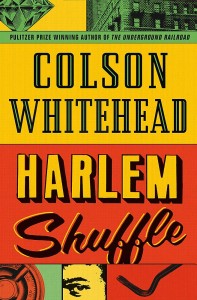
Harlem Shuffle, by Colson Whitehead

harlem

While all Colson Whitehead’s novels are well-written, their subjects and genres vary widely, much as Graham Greene wrote literary novels like The Power and the Glory and what he called “entertainments.” After The Underground Railroad and the wrenching Nickel Boys, Whitehead seems ready for something a bit lighter. Harlem Shuffle is entertaining, for sure, with serious undertones.

Ray owns a used furniture store in late 1950s and early 1960s Harlem. He’s always on the alert for an angle, milking his network of friends and contacts for deals like trading an outdated radio for a used television. The son of a legendary gang leader, Ray wants to play it straight; as we learn in the book’s first line: “Ray Carney was only slightly bent when it came to being crooked.”

So he turns away the serious capers he’s offered a part in and concentrates on making his business a success, hard as that is for a Black man in mid-twentieth century America. He wants a better life for his wife and children and that takes money. And it means he has to keep his nose clean, not be like his father. Adding to the stakes for Ray, his in-laws never let him forget that he is not good enough for their daughter.

But he has this nephew. Ray feels responsible for Freddie who keeps getting into trouble, finally getting in deep enough to call on Ray for help, endangering both of them. Thanks to his father, though, Ray knows who to call on for backup. He’s also adept at navigating the treacherous waters of Harlem’s dual economy, the one that’s above-board and the one that isn’t. Of course, as in any life, race is always a factor in Ray’s dealings with others, explicitly or implicitly.

It’s a light story on a serious theme: Is breaking the law the only way to lift yourself and your family out of poverty? One thing that struck me, reading Ray’s story, was just how easy it is to slip into a pattern of minor grift, no matter what your race or socio-economic status. Do a favor for a friend, bend the rules a little to help someone out, and there you are: on the other side of the line. You may say, I’d never fence stolen goods, but it’s only a matter of degree.

While some in my book club were disappointed that the story wasn’t as weighty as The Nickel Boys, we were all entertained. We liked the elaborate schemes Ray comes up with to get Freddie and himself out of trouble or to revenge a slight. I was especially amused by Ray’s rhapsodies about furniture: memorising the ad copy for a new line of furniture or appreciating the details of a particular recliner.

One person noted that we get to see the softer side of people who in other stories might just be stereotypical thugs or prostitutes. One assassin-for-hire dreams of owning a farm someday, while a kept woman turns out to have an extraordinary sense of drama and design. I appreciated the care taken to fill in even the minor characters, though several of us still had trouble keeping them straight. The few women play very minor roles in the book; I guess that too is true for someone like Ray in that time and place.

Through the three time periods of the novel, we see Ray drawn deeper into the life he’d sworn to avoid, betrayed by his love for his family and his loyalty to Freddie. I admire the structure of the novel: the three sections, the pacing, the well-spaced turning points, and the resonance between the heists at the beginning and at the end.

One member of my book club was surprised that the “heist” parts weren’t more suspenseful, as in some of the heist movies we’ve seen. I, on the other hand, enjoyed the measured unfolding of Ray’s plans, his ingenuity and resilience. In this “entertainment,” Whitehead has given us a slice of life: realistic characters responding to real-life challenges.

What is your reaction when a favorite writer switches between genres from one book to another?

London Review of Books, Vol. 40, No. 21, 8 November 2018

cov4021

A recent vacation gave me the opportunity to catch up a bit on my backlog of LRBs. I’m a longtime subscriber to this review that comes out twice a month, enjoying not just the reviews themselves, but also the British perspective.

This issue has many articles that intrigued me. A review of Karl Ove Knausgaard’s final volume by Frederic Jameson in which he analyses the fascination of Knausgaard’s massive My Struggle, placing it within the history of writing and philosophy, exploring questions of truth versus fiction, theorising about the identity of the “you” addressed in these books. I’m still not convinced I want to jump into these books, but I learned a lot from the review.

On the other hand, Michael Wood’s review of Graham Greene’s The Third Man & Other Stories, in which he delves into Greene’s process of working on the film and the story at the same time, made me watch the film again and sent me in search of the book.

When the LRB began including political essays some years ago, I was disappointed. Yet I’ve found the British point of view on U.S. and world events intriguing and the insight into British politics helpful. Of particular interest in this issue is a point-by-point analysis of the consequences of a no-deal Brexit by Swati Dhingra and Josh de Lyon. This should be required reading for every British voter, and news commentators from other countries.

I was also fascinated by Malcolm Gaskill’s “Plot 6, Row C, Grave 15”, his account of looking for the grave of Lieutenant Van Dyke Fernald, killed near Conegliano in July 1918. He gives us Fernald’s short life, especially taking us inside his experience as a fighter pilot in the ridiculously dangerous planes of the time. A U.S. citizen, Fernald became a British citizen at the age of 18 so he could join up. Most heartbreaking is Gaskill’s account of the reaction of Fernald’s mother to his death: devoting herself to spiritualism, certain that he was contacting her, ignoring her younger son Jack in the process.

Deeply moving, as well, is Jane Campbell’s account “The Year of My Father Dying” about Peter Campbell who, among other things, created all of the LRB’s cover art until his death. She captures the unreality, the chasm between past and present.

I understood how pampered and oblivious I had been before; perhaps the most shocking thing about the emotional torture of the year of my father’s dying was how ordinary I now realised it must be. I sat on buses and walked down high streets, wondering how many others like me there were.

She uses Christian Marclay’s art piece The Clock to explore time itself, its elasticity and ultimate inscrutability.

My one complaint about the LRB is illustrated by its appallingly low Vida Count: only 27% women in the latest count (though in fairness their count is up 5% from the previous year). This breaks down to women making up 28% of authors reviewed, 24% of book reviewers, and 28% of bylines. By comparison, The New York Times Book Review’s count is 46% women, Poetry Magazine’s a healthy 50%, and The Times Literary Supplement’s slightly better 36%. The New York Review of Books, however, clocks in at only 23% women.

I’ve only scratched the surface of this issue. Take a look at the LRB in your local library or use the three free articles a month available to nonsubscribers on their website. Let me know what you think.