Rain, by Melissa Harrison

While rainy weather sends most people indoors, Harrison suggests that “if you only ever go out on sunny days you only see half the picture, and remain somehow untested and callow.”

In this quiet gem of a book, she takes us on four walks in the rain in different parts of England. In January we visit Wicken Fen in Cambridgeshire; Shropshire in April; the Darent Valley in Kent in August; and Devon’s Dartmoor in October. Different landscapes, different seasons, yet all of them reveal how our world is different in the rain, as well as its effects on us.

For some of us, rain induces a pleasant melancholy; one friend of mine calls it a blown-flame mood: not the thrill of fire but the lingering scent that turns us inward. Memories open like petals, and the past is no longer a foreign country.

Wet weather offers other rewards to walkers willing to brave it. Aromas become more intense: The difference between walking in a pine forest in dry or wet weather is astounding. Some creatures emerge while others hide. The air may be softer on your skin, the sounds more mysterious.

When the Kent sky—already overcast—darkens, it does so suddenly. A restless wind gets up, bullying the muggy August air so that the ripe wheat shifts uneasily, gusts pushing its golden surface this way and that like a nap . . . The downpour that follows seems to fall with more force than mere gravity could provide, and as lightning flickers—first distantly, then much closer—and thunder renders the sky, I weigh the risks of standing beneath the bankside trees against the discomfort of getting drenched.

Harrison explores the way rain transforms the landscape whether it be by storms or floods or the minute trickling of drops upon stone. She calls our attention to the way minerals create soil from which grow the plants and trees that support insect, bird and animal life.

The old drystone walls bounding the road where we walk are shaggy with moss and dog lichen and pinned with medals of pennywort and the delicate buttonholes of maidenhair spleenwort, all beaded silver with rain. A few paces ahead of us a stonechat perches on the top of the wall and flicks his wings insouciantly. The call he makes echoes almost exactly the clash of wet pebbles loosed from the disintegrating road surface under our boots.

As a genre, travel writing encompasses a wide range of formats. Most commonly its purpose is to encourage readers to visit places near and far. These pieces could be simply description of a place with suggestions for dining and lodging.  They could highlight single endevours such as a farm that offers field-to-kitchen cooking classes. Or they could be a biography of the place, so to speak, incorporating history and legends, famous and not-so-famous residents, hidden gems and well-known sites which come together to portray the personality of the place.

Travel pieces may also be a story about the author’s particular experience there, their exploration and encounters with places and people and how they are changed. I’m thinking of Colleen Kinder’s Letter to a Stranger: Essays to the Ones Who Haunt Us and associated website. Or a  travel book can be a record of the travels of the author’s mind as they move through the world, as in W.G. Sebald’s The Rings of Saturn.

Fusion with memoir is common because our experiences are grounded in certain locations, such as in Martha Gellhorn’s Travels with Myself and Another or Edward Parnell’s Ghostland which combines travel with literary review and memoir. With fiction, as well, we sometimes say the location is a character in the story.

This gentle series of four walks is none of these. To me it felt like a guided meditation, as though the author simply invites me along on a walk with her. Look over here; feel this leaf; does this remind you of something from your childhood?

In amongst the luminous descriptions are tidbits of history, poetry, memory and story. I especially enjoyed hearing about the volunteer-driven British Rainfall Organisation, “a quintessentially eccentric body and one of the first examples of what we now call ‘citizen science’.” Harrison also incorporates legends and folklore, such as the belief that thunder on Sunday portends the death of great men but on Monday the deaths of women.

She’s fascinated by local dialect and includes an appendix of 100 Words Concerning Rain as well as a Glossary of Meteorological Terms for Rain and a Bibliography.

This short (less than a hundred pages) and lovely book is one I will return to often. It reminds me of the many walks I’ve taken in England and elsewhere, and encourages me to be more attentive to the world around me, not just the natural world, but the glimmers of history and memory that it evokes.

Have you read a travel book or piece that stood out to you?
Ghostland, by Edward Parnell

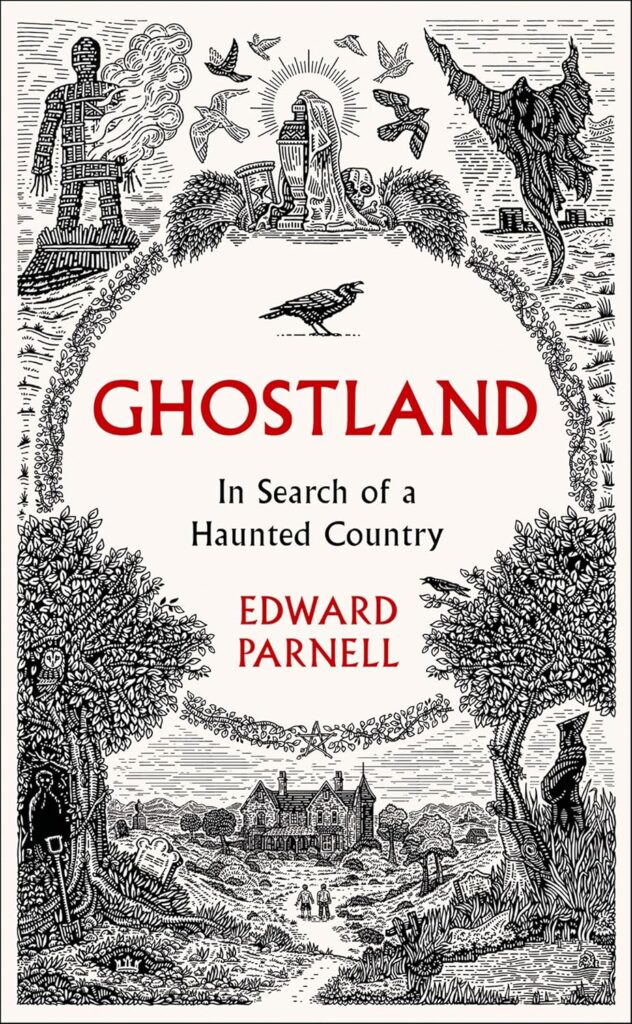
Subtitled In Search of a Haunted Country, this unusual book combines travelogue, literary review, and memoir. England is that country, home to nearly all of the ghost stories I grew up on and to the legends that fired my imagination as a child. Parnell sets out to revisit the ghost stories that have been meaningful to him throughout his life, and actually go to the places where they are set or were written.

I felt as though I were making this journey with him. As he takes us to these places, he shares not only their sometimes beautiful, sometimes eerie atmosphere, but also his own memories of visiting them as a child with his family or later on birding expeditions with his brother Chris. He introduces us to the writer associated with the place and one or two of their stories. This is no dry, academic tome, but rather a genial, engaging story, as though we were in a pub somewhere listening to a fascinating storyteller.

Hard as it was to put down, I spent most of December reading this book because I kept stopping to find and read stories and books that Parnell discusses. Many of the authors, stories and places are old friends of mine. Some were new to me, all or in part. For example, I didn’t know that Rudyard Kipling had written ghost stories. I loved being introduced to The Children of Green Knowe, and returning to old haunts in the fen country and Arthurian-haunted Cornwall and Dorset.

Most of all, I enjoyed revisiting W.G. Sebald’s Rings of Saturn, a formative book for me, and similar in some ways to this book, being also a combination travelogue, memoir and collection of curious information. Parnell refers to a particular scene which

. . . cuts to the heart of Sebald’s work and his exploration of how we, both individually and collectively, come to forget (or at least suppress) the losses we have suffered, the memories of people and events that once came to us to us with such clarity, and the atrocities to which we are in some part complicit.

With this book, though, we are doing just the opposite: exploring the memories that haunt us. I was most moved by a story new to me: “Pirates,” by E. F. Benson, in which a fifty-six-year-old, successful business man comes across his childhood home, now abandoned and beginning to decay. The man becomes obsessed with buying and restoring it, recreating the happy home of his youth, returning even the furniture and other items now in his London home. The story gave me a jolt of recognition for I often dream that I’ve discovered my own beloved childhood home, miraculously not destroyed after all, and that I can buy it and, indeed, return these items from my current home to their rightful places. Then I wake up.

There is something about this time of year that makes me turn to ghost stories. Of course, traditionally the solstice and Christmas Eve are moments when the veil between the living and the dead thins, and perhaps disappears. And there’s something about ghost stories and England. Parnell mentions the Happisburgh footprints discovered in 2013 in Norfolk, England. Dating to the end of the Early Pleistocene, they are the oldest known hominid footprints discovered outside of Africa.

Although only in his late thirties, Parnell has suffered great losses: the deaths of both parents and Chris, his only sibling, leaving him—as one of my friends said of herself—the Last of the Mohicans. He talks about the period during and after the Great War, with its huge loss of life, when those desperate to see again their lost loved ones embraced Spiritualism. One of the themes that lends power to this story is the question of how best to heal from grief. Can we really sense something of them lingering around us? Do we hold onto our dead or let them go?

And of course there are the attendant themes around memory: what we hold onto and what we suppress, why these particular memories stay with us, even though at the time the incidents may have seemed inconsequential. As the year dies, I think about death and welcome my ghosts. I believe this is a book I will return to every December.

Who or what haunts you?

Author Tours

IMG_0356

When I went to Toronto many years ago to visit my son who had moved there, he took me on a tour of the city to show me the places in Michael Ondaatje’s masterful novel In the Skin of a Lion. I had loved the novel, along with the other Can Lit books my son had recommended (Timothy Findley, Alistair MacLeod, Jane Urquhart, David Adams Richards, Margaret Laurence, etc.) at that time not available in the U.S. Somehow, seeing the actual places mentioned in Ondaatje’s book made it come alive for me in a different way.

Perhaps you have had this experience. If you read a book set in a place you know well, you have a different relationship with the story. When I read an Anne Tyler book or one by Laura Lippman, I recognise the places in and near Baltimore that they mention, and the story becomes that much more real.

A few years ago when I was in Edinburgh, I went on an Ian Rankin tour. His books are true works of literary art, and I highly recommend them. I first found one in a Toronto bookstore; they weren’t available in the U.S. and the online bookstore thing hadn’t taken hold yet. He immediately became one of my favorite authors, and I’ve enjoyed watching his immense talent increase with every book, especially those featuring detective John Rebus.

The tour was fun, taking us to places that cropped up in his books as well as to buildings where he and fellow Edinburgh authors lived. I also made an effort to look on my own for things referenced in his books, such as the miniature coffins found on Arthur’s seat and Rebus’s favorite bar.

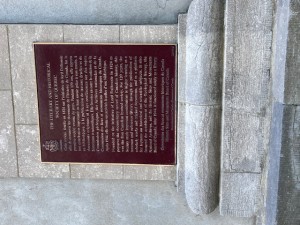
Recently I enjoyed a tour in Quebec City that took us to places mentioned in Louise Penny’s Bury the Dead. Seeing where the incidents in the story took place, following Inspector Gamache’s footsteps, enjoying the restaurants and bistros mentioned made the story real in an entirely different way. If nothing else, I saw how short a distance it was in some cases from one place to another, making it easier to understand how Gamache could move so quickly between them.

Our tour guide Marie had some inside information: Penny herself had stayed in the house where Gamache stayed with his friend Emil in the story. Marie had seen inside and verified that it matched the description, just as we could verify the descriptions of other, more public places mentioned.

Marie speculated that Penny had eaten in these restaurants, ridden the funicular, visited the Cathedral-Basilica of Notre-Dame de Quebec. I thought: Of course she did! That’s how you research a book. All good writers do that.

When you travel, I encourage you to read novels set there and, if possible, take a tour of the places mentioned. Let me know how that changes your perception of the book.

Have you ever taken a tour of places mentioned in an author’s book? If you read a book set in a place you know well, how is the experience different?

A Visit to London

Tavistock Sq

Today is a Significant Day for me, and I am celebrating by going to London.

Not really, of course. With the pandemic restrictions and my own abundance of caution, I can’t just hop on a flight. But I can visit one of my favorite cities virtually.

When I go, I always visit the Tate to see the Turners and the National Gallery for the Pre-Raphaelites. I can’t explain it, but I am fascinated by the National Portrait Gallery and by the Foundling Museum (though it makes me cry). I always try to get to the British Museum, especially since I usually stay in Bloomsbury. I go to the Royal Maritime Museum and am shocked all over again by the size of the James Caird, the tiny boat Shackleton and a few men used to travel 800 miles in terrible conditions to reach South Georgia Island and get help for his stranded crew. Many of these collections are available online.

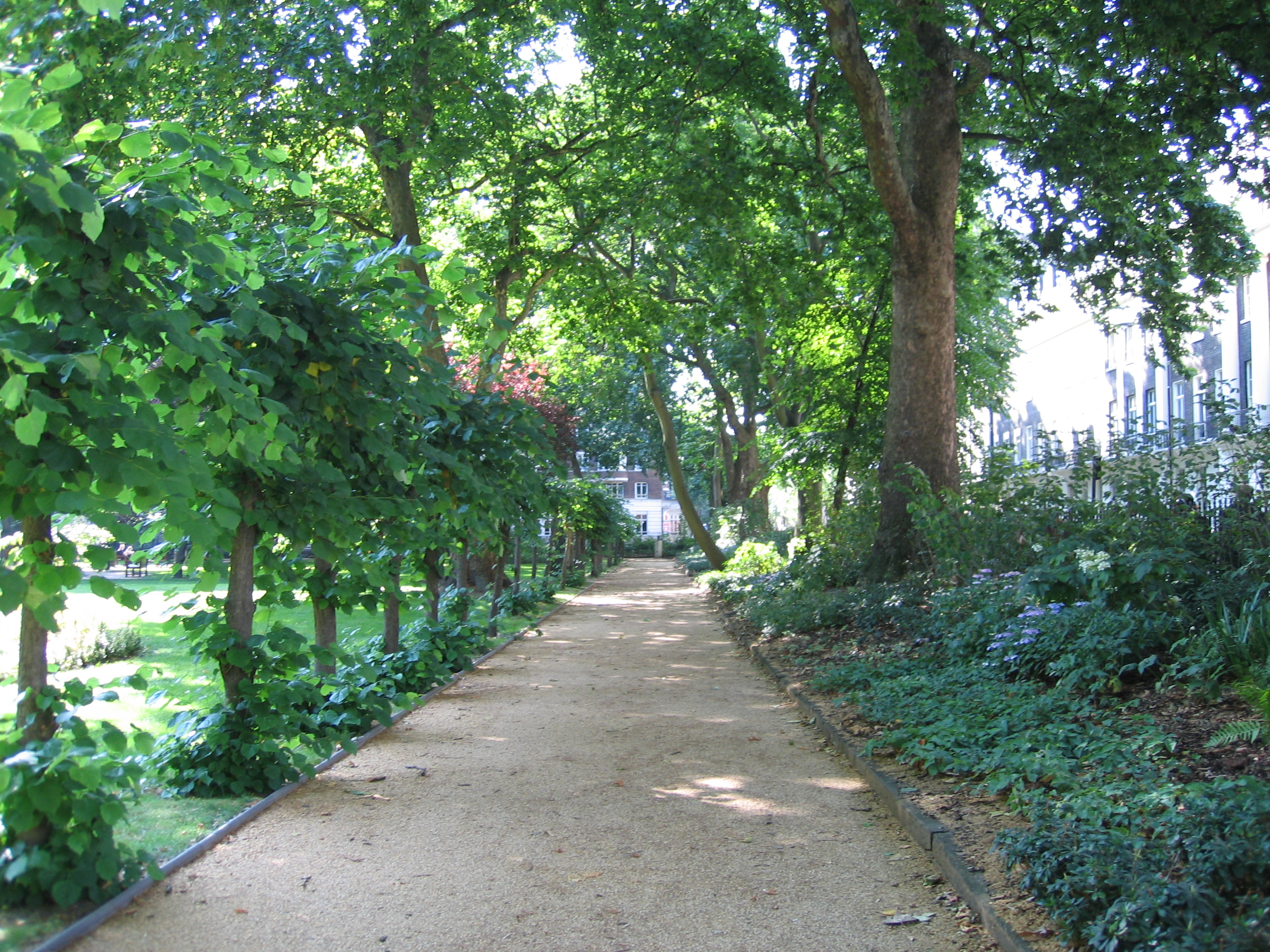
My favorite parks are, well, all of them. I try to walk through St. James’s Park and visit the Peter Pan statue in Kensington Gardens. I’m partial to the Chelsea Physic Garden and Holland Park’s Kyoto Garden. There are plenty of London videos online to supplement my photos from previous visits.

And I always try to go to the theatre. One long weekend I saw five plays, with incredible actors such as Jeremy Irons, Judi Dench, and Alan Rickman–or was that another time? I very much enjoyed the National Theatre Live and Shakespeare’s Globe productions that were available online for free last summer. Some shows are still available at both, though you may have to pay for them, but it’s good to support these venues. I’ve enjoyed their shows in London, too. Once the only seat available for Warhorse was in the front row, which gave an astonishing view of the “trenches”.

Toast and marmalade for breakfast, a cheese and chutney sandwich for lunch, and fish and chips for dinner should set me up quite nicely.

Road Scholar (formerly Elderhostel) has a wonderful listing of online resources for a virtual tour of London.

But of course books are my ultimate imaginative vehicle, so I’ll dip into Mrs. Dalloway, have tea with Barbara Pym’s Excellent Women, and see the changing of the guard with Christopher Robin and Alice. I’ll tour Sir John Soane’s quirky museum again via Christopher Woodwards In Ruins and walk along the Embankment with Elswyth Thane’s Tryst.

And of course I’ll draw on my own memories for this tryst with a city where I—to my surprise—have always felt as though I have found my real home.

Where are you going today?