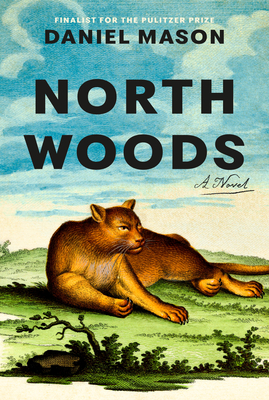
Daniel Mason’s fifth novel is a shimmering tale of a patch of New England woods and those who pass through it over four centuries. We feel the flow of history as we navigate what is essentially a set of twelve stories keyed to the seasons. They are linked and validated by documents, such as song lyrics, pictures, and almanacs.
Mason brings each story to life with sensitive comprehension of both the people and their place. We begin with a pair of young lovers running away from their Puritan colony.
They had come to the spot in the freshness of June, chased from the village by its people, threading deer path through the forest, the valleys, the fern groves, and the quaking bogs . . . Gone was England, gone the Colony.
What fascinates me is the way Mason writes each section using style, language and social constructs appropriate to its time period. For example, there’s a former British soldier planting an apple orchard during the time of John Chapman, aka Johnny Appleseed, and a spiritualist during the time of the Third Great Awakening. There are murder ballads in the 19th century and psychiatric case notes during the early years of using lobotomies to solve neurological disfunction. What a challenge to set yourself as a writer!
The descriptions of the natural world are stunning as well. Mason has done his research and writes beautifully of the woods and the creatures—and insects—within it. One of his sources, whose wisdom I see throughout the book, is Tom Wessels, whose fabulous book Reading the Forested Landscape was given to me by my son.
I propose a new calendar: not one autumn but twelve, a hundred. The autumn when the birches are yellow but still have their leaves; when the beeches are green but the birch leaves have fallen; when the oaks tint to the color of ripe apricots and the beeches yellow; when the oaks turn a cigar brown and the beeches curl up into crispy copper rolls. And so on: I’ve missed a few. But to call it all just “autumn”!
As in Jenny Erpenbeck’s novel Visitation, which is centered on a plot of land in Brandenburg and the houses built there, we see a yellow house built, damaged, added to, redecorated, and reconstructed while different inhabitants move through it. As Clara MacGauffin wrote in “The Unhomely House,” there is a peculiar tension when it is the home that is unsafe. “The disturbance is not simply fear. It is closer to a conflict in perception where what should reassure instead unsettles.”
My book club jumped at the chance to read this book; we’re fans of Daniel Mason’s novels such as A Winter Soldier and A Registry of My Passage upon the Earth. However, some thought this book depressing—in the course of four hundred years, every story ends; everyone dies—while others found a lot of it hilarious. There are ghosts here; former inhabitants who sometimes make themselves known, reminding me of Gabrielle Mullarkey’s novel The Ones Who Never Left which she wrote because she wondered if the people who used to live in our houses ever truly leave, an unsettling thought indeed.
Amused by the writerly games and deeply appreciative of the landscape and its history, I did get to a point when I thought the book might be a bit too much. I was overwhelmed by grief at the loss of the birds and the forests, the elm trees and chestnuts.
Then I was reminded of Octavia Butler’s Parable of the Sower thanks to Mason’s story of a post-doctoral fellow studying spring ephemerals, those lovely flowers I’ve tracked in that sliver of time between the coming of the spring sunlight and the canopy blocking it out. “Sometimes, overwhelmed, she retreats into the forests of the past . . . and she has found that the only way to understand the world as something other than a tale of loss is to see it as a tale of change.”
Cold comfort, but I’ll take it.
Have you read a book that has comforted you during this dark time in our history and/or has you thinking about what we leave behind during our brief passage on this earth?