The History of Sound, by Ben Shattuck

In 1984 a renowned singer and music scholar receives a box of wax cylinders. Lionel knows what they are: the long-lost recordings from a trip he took in the summer of 1919, accompanying his friend and lover David who planned to record folksongs in rural Maine.

I was hooked right away because of my long-ago research into the song-collecting travels of Maud Karpeles, Cecil Sharp, and Anne and Frank Warner, as well as my more recent interest in the methodology. In Shattuck’s title story, Lionel is the shy novice while David is the persistent charmer who wears down reluctant backwoods singers.

The intensity of emotion mingles with the immersive setting of the woods to create a kind of dream. Yet we know from the beginning of the story that Lionel ends up alone, and that “this cylinder reminded me of what I’d missed—which is, I think, a life that I didn’t know but of which David was a part. The real one. And how ridiculously short it had been.”

Lionel tries to analyse the “bone-deep” emotions roused in him by the sight of the cylinders and the prospect of once again hearing David’s voice. “How to put it? This type of sadness. Not nostalgia. Not grief. Just the obvious and sudden fact that my life looked an inch shorter than it could have been. That the best year really had come when I was twenty.”

In an interview with The Adroit Journal, Shattuck describes exploring the idea that the “relationship between those in the present and past isn’t static — anyone who has discovered a secret about their family’s past knows this, that you can be changed by the past as it becomes illuminated.” How Lionel is changed by these artifacts from the past makes for a powerful experience.

Each of the remaining eleven stories is equally powerful, their waters troubled by the rip tide of history. As I enter my later years, I think often about my past, how it informs my present but also what I may have misunderstood back then. In this collection the mingling of past and present occurs not only within the stories but also between the pairs of stories.

For Shattuck has structured the collection, as he describes in a note at the beginning, using the “hook-and-chain” song or poem format popular in 18th century New England, where we have five pairs of stories, held within the first and last: A BB CC DD EE FF A. The second story in each set might provide some insight or twist to the first. It might be set before the first or long after.

All of these stories summon strong emotions independent of their time periods, universal emotions, refuting L.P. Hartley’s famous opening sentence “The past is a foreign country; they do things differently there.” Maybe, but emotions are the same. The primary one a few members of my book club found was regret. Some of the characters didn’t follow their hearts; some did and perhaps were sorry later. Yet there’s also humor in some of the author’s choices and playful stabs at how academics and historians misinterpret the past.

I fell into each of these mysterious stories so profoundly that I could only read one a day. Each story called me to sit with it a while, think about it, try to grasp what it meant to me. It was as though each one left me with a handful of shells, or stones perhaps, that I had to examine, turning them over and over, rubbing one or another to see what it might tell me.

I loved Shattuck’s use of an unusual structure and that he didn’t try to mimic period dialogue. I also liked the variations of point of view—first or third, close or distant—and verb tense—present or past—which keep the stories from falling into a rut. Most of all, though, I loved the surprising tenderness of the stories. He is gentle with his characters while keeping the writing strong and unsentimental. I’ve found that this kind of tenderness is what I love in the work of many authors I enjoy; their characters have good hearts.

The stories are spun together by theme and setting, yet can stand alone. They contain much that speaks to me and perhaps my own obsessions: the song collecting, the New England settings, the tenderness, the interplay of past and present. Yet it’s not just me; my book club was unanimous in its praise. They found the stories as moving and mysterious as I did.

This is my favorite book of the year so far, and that’s saying a lot. What has been your favorite book in 2026?
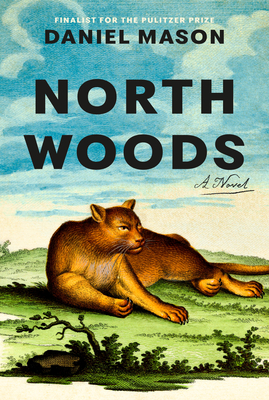
North Woods, by Daniel Mason

Daniel Mason’s fifth novel is a shimmering tale of a patch of New England woods and those who pass through it over four centuries. We feel the flow of history as we navigate what is essentially a set of twelve stories keyed to the seasons. They are linked and validated by documents, such as song lyrics, pictures, and almanacs.

Mason brings each story to life with sensitive comprehension of both the people and their place. We begin with a pair of young lovers running away from their Puritan colony.

They had come to the spot in the freshness of June, chased from the village by its people, threading deer path through the forest, the valleys, the fern groves, and the quaking bogs . . . Gone was England, gone the Colony.

What fascinates me is the way Mason writes each section using style, language and social constructs appropriate to its time period. For example, there’s a former British soldier planting an apple orchard during the time of John Chapman, aka Johnny Appleseed, and a spiritualist during the time of the Third Great Awakening. There are murder ballads in the 19th century and psychiatric case notes during the early years of using lobotomies to solve neurological disfunction. What a challenge to set yourself as a writer!

The descriptions of the natural world are stunning as well. Mason has done his research and writes beautifully of the woods and the creatures—and insects—within it. One of his sources, whose wisdom I see throughout the book, is Tom Wessels, whose fabulous book Reading the Forested Landscape was given to me by my son.

I propose a new calendar: not one autumn but twelve, a hundred. The autumn when the birches are yellow but still have their leaves; when the beeches are green but the birch leaves have fallen; when the oaks tint to the color of ripe apricots and the beeches yellow; when the oaks turn a cigar brown and the beeches curl up into crispy copper rolls. And so on: I’ve missed a few. But to call it all just “autumn”!

 As in Jenny Erpenbeck’s novel Visitation, which is centered on a plot of land in Brandenburg and the houses built there, we see a yellow house built, damaged, added to, redecorated, and reconstructed while different inhabitants move through it. As Clara MacGauffin wrote in “The Unhomely House,” there is a peculiar tension when it is the home that is unsafe. “The disturbance is not simply fear. It is closer to a conflict in perception where what should reassure instead unsettles.”

My book club jumped at the chance to read this book; we’re fans of Daniel Mason’s novels such as A Winter Soldier and A Registry of My Passage upon the Earth. However, some thought this book depressing—in the course of four hundred years, every story ends; everyone dies—while others found a lot of it hilarious. There are ghosts here; former inhabitants who sometimes make themselves known, reminding me of Gabrielle Mullarkey’s novel The Ones Who Never Left which she wrote because she wondered if the people who used to live in our houses ever truly leave, an unsettling thought indeed.

Amused by the writerly games and deeply appreciative of the landscape and its history, I did get to a point when I thought the book might be a bit too much. I was overwhelmed by grief at the loss of the birds and the forests, the elm trees and chestnuts.

Then I was reminded of Octavia Butler’s Parable of the Sower thanks to Mason’s story of a post-doctoral fellow studying spring ephemerals, those lovely flowers I’ve tracked in that sliver of time between the coming of the spring sunlight and the canopy blocking it out. “Sometimes, overwhelmed, she retreats into the forests of the past . . . and she has found that the only way to understand the world as something other than a tale of loss is to see it as a tale of change.”

Cold comfort, but I’ll take it.

Have you read a book that has comforted you during this dark time in our history and/or has you thinking about what we leave behind during our brief passage on this earth?


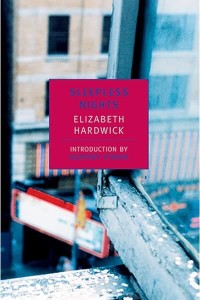
Sleepless Nights, by Elizabeth Hardwick

sleepless

While I love a realist novel that pulls me right into someone else’s life, like Stoner by John Williams or Migrations by Charlotte McConaghy, I also like to be surprised and challenged sometimes.

Here a woman named Elizabeth, in a story written by an Elizabeth, summons her past: “If only one knew what to remember or pretend to remember. Make a decision and what you want from the lost things will present itself. . . Perhaps.” What arrives is a kaleidoscope of people she’s known, places she’s lived, literary references, letters, brief essays: vignettes presented in prose as concise and brilliant as poetry, connected by threads so fine as to be invisible.

Elizabeth writes about her mother: “I never knew a person so indifferent to the past. It was as if she did not know who she was.” She writes about friends, such as Alex who has never quite fulfilled his promise—“Not quite liking himself, he whom everyone adores”—or Louisa who “spends the entire day in a blue, limpid boredom. The caressing sting of it appears to be, for her, like the pleasure of lemon, or the coldness of salt water.” And Billie Holliday with her “ruthless talent and the opulent devastation.”

I was most interested in the parts about two women who once worked for her: Ida when Elizabeth lived in Maine, and Josette when she lived in Boston, summoning the shape of their lives in spare sentences. Josette, who “in her passionate neatness, adored small spaces” finds her dream home in a trailer. In Maine, Ida is the “rough and peculiar laundress” whose “disaster” is the disreputable local man who moves in with her:

Winter came down upon them. The suicide season arrived early. The land, after a snowfall, would turn into a lunar stillness, satanic, brilliant. The tall trees, altered by the snow and ice, loomed up in the arctic landscape like ancient cataclysmic formations of malicious splendor. The little houses on the road . . . trembling there in the whiteness, might be settlements waiting for a doom that would come over them silently in the night.

This passage takes me back to my first winters in New England, fifty years ago now, when winters were more severe. Or at least that’s how I remember them. I have mixed feelings about her portraits of certain women. Anything that reduces individuals to categories rubs me the wrong way, yet the descriptions themselves are piercing.

I like to remember the patience of old spinsters, some that looked like sea captains with their clear blue eyes, hair of soft, snowy whiteness, dazzling cheerfulness. Solitary music teachers, themselves bred on toil, leading the young by way of pain and discipline to their own honorable impasse, teaching in that way the scales of disappointment.

Like Elizabeth, we find roots of our identity in the people we’ve encountered during our lives and in places. She writes of the Kentucky of her childhood and sojourns in Amsterdam. But it is New York City that is most vividly rendered here.

The spotlight shone down on the black, hushed circle in a café; the moon slowly slid through the clouds. Night—working, smiling, in makeup in long, silky dresses, singing over and over, again and again.

Originally published in 1979 as a novel, Hardwick’s plotless book is now considered an early work of what is now called autofiction where the lines between autobiography and fiction are blurred by writers like Rachel Cusk, Karl Knausgård and Ben Lerner.

Readers prospecting for details of her life may find fragments in their sieves: “I was then a ‘we.’ He is teasing, smiling, drinking gin after a long, day’s work . . .” The absence of the narcissistic ex-husband who co-opted her life is refreshing.

I mistrust autofiction, though I do recognise that we create our lives and curate our memories of them. I appreciate, particularly in these days of flagrant misinformation, the attempt to tell the truth.

Still, I enjoyed this fragmented chronicle of a life. Partly it’s the writing, and partly it is honoring the collection of seemingly random memories. Many of us, as the decades pile up behind us, look back and try to find coherence in the jumbled chaos of our days. Like Elizabeth we are:

Looking for the fosselized, for something—persons and places thick and encrusted with final shape; instead there are many, many minnows, wildly swimming, trembling, vigilant to escape the net.

Have you read anything by Hardwick, either her essays or novels?

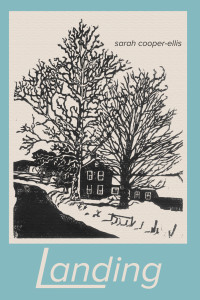
Landing, by Sarah Cooper-Ellis

Landing-Cover-scaled

There’s a moment in mid-life when many, if not all of us stop and wonder if it’s time to change course. Maybe something brings home how short the time we have left may be, and we rethink how we ought to use it. This novel begins with such a moment (Full disclosure: I know the author slightly.) Sometimes we look back over our lives to see if we missed a turning somewhere. Sometimes we get drawn into something new almost without realising it.

At 60, Meredith Carter must take a break from her work at a childcare center due to physical injury. She enjoys her job but realises “that there was something else she should be doing.” An independent New Englander, she has only herself to consult about changing course. Her husband died 17 years earlier and her only child is grown and living in New York City.

Life in her rural New Hampshire home is disrupted by her siblings who, across the river in Vermont, are starting a maple syrup business. Smaller than a small town, the village of Middlefield where they grew up holds ghosts and memories: ponds where they used to skate, new developments covering fields that once held forests.

As she spends more and more of her time staying with one of her brothers while working in the store, Meredith feels the pull of the past even as she enjoys flexing new muscles managing sales and inventory. Then she meets Arthur, a woodworker who lives across the road. Fifteen years older than Meredith, there is a calm strength about him that draws her.

The story moves across time as Meredith explores her own willingness to return to her hometown or to share her life again. What I most love about this book are the descriptions. Meredith had once been a forester and so a walk in the woods takes us deeper into the landscape than one might expect, reminding me of Tom Wessel‘s masterful Reading the Forested Landscape. More than mere ornaments, these images embody her own exploration of her native ground.

There are a few places where I wanted more: a scene with a former boyfriend that ends almost before it’s begun, a story thread that didn’t seem to ever get resolved. But I found much to like about this book: the independent woman at its center, the immersion in rural New England life and landscape, the idea of investigating the possibility of a new life, the emotional journey of an older woman that rings so true.

What novel have you read where the landscape is an integral part of the story?

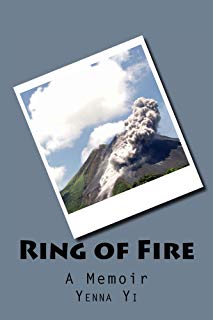
Ring of Fire, by Yenna Yi

Yenna

One reason I like to read memoirs and biographies is simple curiosity about other people’s lives. I even like reading memoirs that were written primarily to leave a record for children and grandchildren. Those of us who have been around for a while have seen a lot and thought about our experiences. Perhaps we’ve traveled widely or never left the county where we grew up.

Yenna Yi is one who has traveled much. In this memoir she describes growing up in Masan, a small village in South Korea, with her grandmother, mother, and cousins who joined them near the end of the Korean War. Her father died when she was one. The war and the poverty that followed it shaped her childhood, though she also recounts happy times playing with other children and shopping with her grandmother. Their one-room home was a clean and happy one.

After her first year at university, Yenna flew to Thailand for summer break to visit her mother who had remarried and moved there with her German husband. On impulse she transferred to university in Germany. There she met Steve, who would become her husband, and they eventually moved to Hawaii.

While curious about all of this, it is their life after the move to Hawaii that really fascinated me. They built a catamaran, which became home for them and their two sons for the next 12 years. They sailed around the southern part of the Ring of Fire, a horseshoe-shaped belt of volcanoes, some active, around the Pacific, taking in the costs of the Americas, Japan, the Philippines and New Zealand, with Korea barely outside.

With each island, large and small, Yenna gives us a bit of the history, some description, and a taste of their adventures: picnicking on Bora Bora, riding ponies on Niafu in the Tongan Islands, visiting Robert Louis Stevenson’s grave on Western Samoa. I kept thinking of the children and what a magical childhood—despite gales and panicked moments at sea: wind-surfing and caving on Fiji, visiting a live volcano on Vanuatu, and skiing on Mt. Hood in New Zealand.

Eventually Yenna ended up in New England where I met her. So much living crowded into one short book! I especially loved all the photographs. Intriguing as it is, the book left me wanting to know more. And wondering if I’ve been too cautious in my own life. What a world of wonders there is out there that I, with all my traveling, have never explored!

I was interested, too, in her reflections on the effects of war and greed in the countries where she lived and visited. Those of us who live in the U.S. have been spared such experiences, but she describes things such as a once-thriving port city reduced to rubble, indigenous peoples decimated by disease and discrimination, corrupt dictators leaving their population mired in poverty.

If you’re looking for something different, something that will take you around a good part of the world and human nature, try this memoir.

Have you read a memoir that took you to other lands?

Disclosure of Material Connection: I received a copy of this book free from the publisher. I was not required to write a positive review. The opinions I have expressed are my own.

The Risk Pool, by Richard Russo

9780679753834_p0_v1_s118x184

Russo is one of my favorite writers. I’ve written about his first book, Mohawk. His second novel is also set in that fictional town and like the first is hilarious and true, full of flawed and damaged characters whom Russo treats with compassion even as he details their absurdities.

Ned Hall narrates the story for us. Although he uses the voice of an adult, he enters fully into the thoughts and feelings of his younger self. When he is six, Ned makes the mistake of telling people at school that his absent father was dead, thus bringing Sam Hall back into the lives of himself and his long-suffering mother. As a result, in addition to working at the phone company and raising a boy on her own, Jenny Hall has to suffer incursions that feel like raids by Sam, who manages to stay one step ahead of the local police and their restraining order. Then Sam kidnaps Ned. It’s just for an overnight fishing trip, but Jenny has no way of knowing that, and she is waiting for them with a gun.

Of course, my sympathies are with Ned’s mother, but this isn’t her story. It is Ned’s story of his tangled relationship with the father one of whose friends said “should have been issued with a warning label.” Like some New Englanders I’ve known, Sam manages to cobble together a ramshackle sort of life with seasonal jobs, unemployment, local bars, and the occasional girlfriend. His philosophy is that when things start to seem impossibly bad, something would “give”: a loan, a job, a lucky bet at the track.

Of course, what Ned really wants is for his father to love him. One of my favorite sections of the book is when Ned goes to live with his father for a few years; the culture shock is there but also the easy adaptability of a child. This coming-of-age story continues into Ned’s adulthood and beyond. Their curious relationship is epitomized by Sam’s usual “Well?”, expecting Ned to catch up on his own, without any parental guidance. Ned sees through his father, even at an early age noting the way Sam takes over a conversation about Jenny’s breakdown, and concluding “It will always be his story, about how he hadn’t believed it could be true.”

Even though Mohawk is in upstate New York, it and its denizens remind me so much of the milltowns I knew in Massachusetts that I kept forgetting where we were. It reminded me of Andre Dubus’s memoir Townie , both in its setting—in Dubus’s case Haverill, Massachusetts—and in the story’s focus on his relationship with his absent father. I also loved the way Sam’s friends, some of them stable but more of them disreputable, watch out for Ned and try to help him. This aspect of the book reminded me strongly of J. R. Moehringer’s memoir The Tender Bar. While Russo’s book is fiction, it has the strength and power of these memoirs. I admit to being a bit fascinated by these books about men and the way they are together when there are no women around. These stories depict a tenderness and a supportive web that are at odds with the stereotypes.

What coming-of-age story have you read that resonated with you?