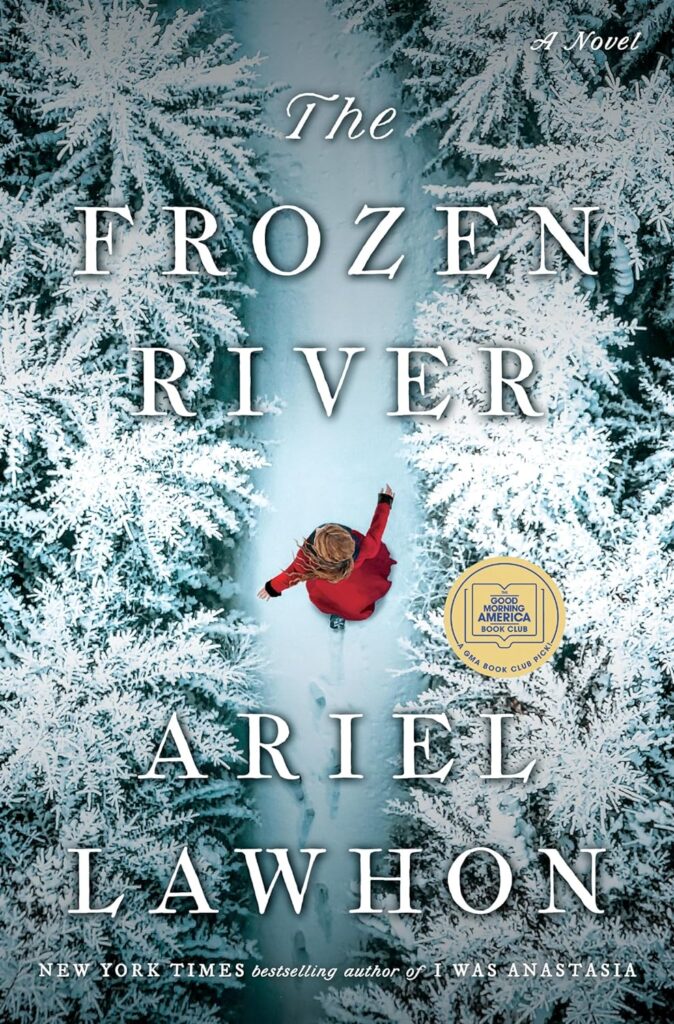
The Frozen River, by Ariel Lawhon

The blizzards that have been pummeling New England recently might hold us up for a while until the plows come through. They might send us scrambling for generators and firewood while waiting for the power to be restored, or putting on snowshoes to go out and assess the damage from fallen trees.

But what if we were in Maine in 1789 when the Kennebec River freezes and stalls activity in our small community? What if the river freezes early and traps a man’s body? Midwife Martha Ballard learns that two men fell through the ice that dark night: Sam Dawin who escaped and Joshua Burgess who didn’t. 

Called to examine the body Martha determines that Burgess was beaten and hanged before being thrown into the river. She’s interrupted by Dr. Page, a recent Harvard graduate and newcomer to town, who calls her an amateur and declares the death an accidental drowning. She later learns that her son Cyrus fought with Burgess shortly before the man’s death. Burgess and Judge North have been accused of raping a local woman, one of many secrets swirling in the village.

We follow Martha’s investigation through her activities as well as through the journal she keeps to record her work as a midwife and community events. Her story is “inspired” by the real Martha Ballard who lived in Hallowell, Maine, delivered over 800 babies, and left a diary covering 30 years of her life. While the author draws on the diary, a nonfiction biography of Ballard, and court transcripts, this story is firmly categorised as historical fiction.

I liked the use of the journal. Even when fictionalised, documents add veracity to a story. Although they sometimes repeated events already dramatised, these sections brought home the physical labor of using ink and quill. I also liked the use of a flashback at the end of each section to fill in information about Martha and her beloved husband Ephraim. These brief forays into the past come just when the information is needed.

The overriding image of the river is powerful; everyone depends on it and is controlled by it. The patriarchal limits on women are powerful as well. Martha’s work makes her an anomaly at a time when women had almost no power and rarely worked in a profession. A woman could not testify in court without her husband accompanying her. Midwives were being supplanted by male doctors who often lacked rudimentary knowledge of sanitation and dismissed women with complaints as lazy or crazy.

Being already well aware of these conditions for women in the 18th century, I found their frequent and unsubtle deployment made the story drag, as did the pace of events now and then. At the same time, I recognise that the slower pace is appropriate to life at the time, when it might take days or weeks to travel between towns, and that there are many readers who might not know about the limitations women suffered then. Similarly, the bullies and corrupt locals seemed exaggerated until I looked around at what is going on here today.

Without giving the ending away, I will say that I appreciated the story’s unusual path to resolution. I also appreciated how the Martha of this story adapts her strategies as needed during the investigation, sometimes backing down, sometimes attacking, sometimes negotiating.

The story also made me think about the body. Not just the dead man, the necessary start to a murder mystery, but also how we inhabit our bodies, whether it’s pushing a quill pen across rough paper or delivering a baby into the world, making love with a husband of 35 years or trying to move quickly through deep snow, riding a horse or dealing with the effects of rape.

Things have changed in the centuries since this story takes place, but not human nature, its insecurity and greedy grasp for power on the one hand and its generous care for everyone in the community on the other. And no matter how much we may think we’ve controlled the natural world since then, it only takes a blizzard to remind us how wrong we are.

What is frozen in your life? What will it take to unfreeze it?

The Wonder, by Emma Donoghue

Like some of Donoghue’s other novels, such as Room and Haven,  this story again follows people confined in a tiny location. In 1850s Ireland Elizabeth (Lib) Wright, an English nurse, is sent to a rural area to stay with an 11-year-old girl who supposedly can survive without food. Anna and her parents say she has not eaten anything for four months, only water and—Anna says—manna from heaven.

A committee made up of villagers, including the doctor and priest, want to prove that the girl is truly not eating anything. Their motives are mixed, as we learn, but they are deeply influenced by the Catholic church and its stories of saints and miracles. To show their earnest motives, they hire both Lib Wright, who’s been trained in scientific nursing principles by Florence Nightingale, and a nun to take turns keeping watch over Anna.

Donoghue is too good a writer to let the women be flat symbols of science and religion. They are far more complex than that, and both waver into the liminal area between them. The story is told from Lib’s point of view, and she rails about the malign influence of the Catholic church and the way superstition and ambition play on the members of the committee.

Most of the story takes place in Anna’s small bedroom in the rough, rustic cottage where Lib requires the girl be isolated to ensure no one is slipping food to her. Even the parents must keep their distance except for a morning and evening greeting from her mother. Lib often clashes with the mother, such as insisting that pilgrims no longer crowd the cottage to see The Wonder and beg for her to bless them—before leaving a monetary offering of course.

Catholic doctrine and rituals guide the family’s days and nights. Anna prays constantly; her only books are religious texts. Lib herself is a sceptic and not religious at all. A veteran of the Crimean war and a short-lived marriage, she is determined to unmask the fraud quickly, so she can return to her hospital in England. Yet Anna, so smart and so sincere, begins to affect her during the long eight-hour shifts, just the two of them in the tiny room.

Among the other themes percolating through the story are ideas about food—it has not been that long since the potato famine in Ireland—and grief and the effects of isolation. I treasured the tiny hints of family, such as the destitute young cousin the family has taken in, and community where neighbors generously come up with scarce items such as extra mattresses and pillows.

Writers often talk about the ‘sagging middle’ where stories begin and end strongly but not much happens in the middle, leading to the reader giving up on the book. I gave up on this book several times. It seemed to drag on without much happening. Lib’s complaints about the Catholic church became repetitious as well, though perhaps that’s my fault, and  I’ve just read one too many books about the very real suffering of the Irish under the rule of a power-hungry church.

One solution to the ‘sagging middle’ is to include a turn in the very middle of the story. Sometimes called the fulcrum, hinge, or mirror moment, something happens that dramatically changes the protagonist and the course of the story. Not giving anything away, there is such a turn here which was interesting. However, I still struggled until the story picked up near the end.

I think what kept me going was my strong interest in that liminal moment in the 19th century when science challenged the church’s teaching. It seems important to revisit that time now when science is once again being thrown out in favor of gossip and superstition. And as a result, children are dying.

What period in the past gives you insight into today’s challenges?

Best Books I Read in 2025

As a writer, I learn something from every book I read. In no particular order, these are twelve of the best books I read in 2025. Please check the links to the blog archive for a fuller discussion of those I’ve reviewed.

Fiction

1. Orbital, by Samantha Harvey
Put six people from five countries into the International Space Station orbiting Earth and leave them there for several years. Now write about a single day, which encompasses sixteen orbits, meaning sixteen sunrises and sixteen sunsets. I immediately imagined around a dozen different stories that could come out of this premise. I never imagined Samantha Harvey’s Orbital.

2. The Painter of Silence, by Georgina Harding
In 1950s Romania a nurse named Safta recognises a new patient as her childhood companion. They’ve been separated by the war and the years and the changes wrought by Stalinist rule. Deaf and mute, Tinu only communicates through his art. This is the novel I have been waiting for. Hoping for. It is quiet and asks much of the reader as it unfolds.

3. In the Fall, by Jeffrey Lent 
In Virginia during the last days of the Civil War, a wounded Union soldier becomes separated from his comrades and is found near death by an escaped slave who saves him. Norman Pelham and Leah Mebane become inseparable and, after he is demobilised and they marry, the two decide to walk to his home in Randolph, Vermont. This story of three generations of Pelhams made me forget everything else in order to finish it.

4. The Summer Book, by Tove Jansson
The twenty-two chapters that make up this brief novel combine surprisingly poignant discussions between two women, one very young and one very old, with closely observed details of the natural world  on a tiny island in the Gulf of Finland. The chapters are deceptively plain yet leave the reader aware that each seemingly normal summer adventure holds a deeper meaning. Jansson’s simple and direct language leaves a silence similar to the white space around a line of poetry, space where a reader can bring forward her own memories.

5. Mrs. Dalloway, by Virginia Woolf
Reading this classic novel now, more than fifty years since I first encountered it as an undergrad, is quite a different experience. Back then I was confused and thrilled by Woolf’s modernist, experimental style that expanded forever my idea of what a novel could be. Now I see it as a story of midlife, in several senses of the word.

6. Middlemarch, by George Eliot
What stood out to me on rereading this classic is the theme of what it means to live a good life. By that I mean a life of integrity, one we can be satisfied with when we lie on our deathbeds. In Middlemarch we have all these lives, all of these people intending to do the right thing yet derailed by temptations and compromises and the pressures of daily life. As we follow each storyline, we get to see various permutations of what a good life might look like—or not.

7. Birds of Paradise, by Paul Scott.
A reread of one of my favorite books, I found this story of William Conway looking back and trying to make sense of his life as good as I remembered. Conway revisits people and memories from his childhood in India during the Raj, his English education, and his suffering in a Japanese prison camp during WWII. So much is obscured in our lives, so much we don’t understand at the time.

8. Brother of the More Famous Jack, by Barbara Trapido
I looked for some light reads this year and this one really tickled me.

Nonfiction

1. A Woman in the Polar Night, by Christiane Ritter
In 1934, the painter Christiane Ritter leaves her comfortable life in Austria to join her husband Hermann for a year in Spitsbergen, an island in the Svalbard archipelago, which lies between mainland Norway and the North Pole. Ritter’s journal summons the experience of surviving such a punishing climate and its surprising rewards.

2. Spell Freedom: The Underground Schools That Built the Civil Rights Movement, by Elaine Weiss
This well-researched and engaging book tells the story of some of the less well-known leaders of the Civil Rights Movement, courageous people who came before the famous speeches and laid the foundations for the Movement’s success by creating the citizen schools that prepared Black Americans in the Jim Crow South to register to vote.

3. Ghostland: In Search of a Haunted Country, by Edward Parnell 
A fusion of travelogue, literary review, and memoir that reminded me of (and mentions) W. G. Sebald’s Rings of Saturn, it sent me off to read many of the books I didn’t already know. And I discovered a story that sent me to the heart of something that has haunted me for a while.

4. The Lost Words, by Robert MacFarlane and Jackie Morris
When the Oxford Junior Dictionary was updated, it was found that around forty common words had been dropped—all of them words to do with nature. In response, MacFarlane and Morris came together to create what they call a spell book to help young readers rediscover the natural world, believing that unless we experience and learn to love the world of nature around us, we will not work to save it. This is the most beautiful book I’ve seen in a long, long while.

What are the best books you read in 2025?

In the Fall, by Jeffrey Lent

In Virginia during the last days of the Civil War, a wounded Union soldier becomes separated from his comrades and is found near death by an escaped slave who saves him. Norman Pelham and Leah Mebane become inseparable and, after he is demobilised and they marry, the two decide to walk to his home in Randolph, Vermont. As they pass through nearby Bethel, his fellow veterans—already home for several months—watch for him.

So they saw him pass along the road that Indian-summer morning with the sugarbush maples flaring on the hillsides and the hilltop sheep pastures overgrown with young cherry and maple. Word ran along the road ahead of him so near all his neighbors and townspeople saw him walking in the long easy stride of one who counted walking in months and years not miles, a rucksack cut from an issue blanket strapped to his back and by his side a girl near his own height in a sunfaded blue dress and carrying her own cardboard suitcase bound with rough twine.

Norman’s father has died while he was fighting, leaving the farm to him. His mother and two sisters, while abolitionists, are so shocked and troubled by Leah that they move into town, leaving the young couple to begin their new lives on the farm. Fired by their fierce love for each other, they ignore the scorn of their neighbors by keeping to themselves and plunging into the hard work of making a living from a hill farm.

Thus begins this saga of three generations of Pelhams, haunted by their troubled legacy of what Leah left behind and by America’s ongoing racial tensions.

This debut novel was a huge bestseller when it was released in 2000. I told the friend who recommended it to me that I didn’t know whether to bless her or curse her because I found it thoroughly addictive reading—the prose so luscious that I read slowly to savor it and could hardly bear to set it aside until I’d finished all 565 pages.

Lent takes his time with the story, enclosing me in the worlds of nineteenth-century farm life and early twentieth-century bootlegging, in New England’s mountains and North Carolina’s tobacco and cotton fields. I especially enjoyed the very specific details about tools and descriptions of places and processes in these time periods; they added so much richness to the fabric of the story. I could tell how fully the author inhabited each moment of the story as he wrote.

The partridge went up, a sudden burst of speckled animation that hit a long going-away glide down the mountain and he passed the splendid moment where his mind left him and was all out ahead of him, pinned down only on the flying bird as the gun came up. Then there was a pinwheel of feathers and both dogs broke past him and he was back.

A few things surprised me. For example, some significant events are skipped over in a sentence or two while others that seem lightweight unfold with great leisure. A possible reason could be that this is a story about men, so the female characters’ stories—aside from aspects that influence the men’s stories—are just not that important. Or maybe the reason is that we are in the men’s point of view and they simply don’t understand the women’s experiences. Maybe it’s something else altogether.

Much as I eventually loved the book, I almost stopped after the first couple of pages. Why? Because I don’t like when a chunk of text from later in the book is stuck in front as a prologue. It feels like an attempt to motivate the reader to plow through hundreds of pages until we finally meet these people and find out who they are, instead of just trusting the story. I’m not opposed to all prologues; some are great. But this book doesn’t need a prologue; Chapter One begins with a splendid hook. Once I got there, I was caught by the prose and the lovely grounding in time and place and character and theme.

I truly did not want this book to end. I keep opening it up in random places and looking closely at a single paragraph, trying to see how Lent works his magic. I read it aloud. Sometimes I copy it, writing in longhand, to get the feel of the sentences in my fingers. It really is beautifully done. I’m eager to read some of his later books.

Have you read a novel where it felt like falling into a dream from which you never want to wake up?

The Women, by Kristin Hannah

Frankie McGrath, a naïve 23-year-old “California girl” and nursing student, enlists in the Army Nurse Corps because it is the branch of the military that will send her to Vietnam as quickly as possible. It’s 1965, and she has an idealistic vision of meeting up with her brother who is deployed there.

Unsurprisingly, once there she’s overwhelmed by the difference between her dreams and reality. The author recreates the day-to-day chaos and destruction of a medical station during the Vietnam war through Frankie’s eyes and emotions. Frankie manages to adjust and become a superb surgical nurse, very much thanks to Barb and Ethel, two fellow nurses who befriend and support her. Friendship, loyalty and betrayal are themes that run through the book.

At the end of her second tour in 1969, Frankie returns to California, and the second half of the book is about the antipathy she encounters. Confronted by antagonism that ranges from pretending she (as a woman) could not have been in Vietnam to outright hatred and abuse, she struggles to find her feet. As her mental health deteriorates she calls constantly on Barb and Ethel who repeatedly drop their East Coast lives to fly to California to help her.

All the conflict in this part of the book comes from the supposed hatred of Vietnam vets. True, there are romantic and work problems, but it is her emotional and mental fragility in the face of this hatred that makes her unable to deal with these normal problems.

I do not question the PTSD suffered by returning Vietnam veterans of all genders and, indeed, all of our veterans deployed in war. However, I was active in the antiwar movement at the time, and I NEVER saw protestors spitting on returning veterans and calling them baby killers, not in person, not on tv. Just the opposite. We were on the side of the soldiers, working to help them come home safe from a senseless war—something most of the soldiers in country wanted as well.

So I have long believed that all that supposed fury of protestors against veterans is a story—a lie—created by the warmongers to discredit the antiwar movement. It’s an urban legend. Here’s what Snopes has to say.

The claim that anti-war protesters spit on Vietnam veterans returning from the war is a persistent one, but there is no clear evidence that this was a widespread occurrence . . .

The persistence of this claim, despite lack of clear contemporary evidence, suggests it may be more of an urban legend that gained traction over time rather than a documented widespread occurrence. However, the available Snopes archives do not contain a comprehensive fact-check specifically addressing the broader claim about anti-war protesters spitting on Vietnam veterans.

Without more specific archival information addressing this claim directly, it’s difficult to make a definitive statement about its veracity. The persistence of the story, even among those who did not serve in Vietnam, indicates how deeply ingrained this narrative has become in discussions about the reception of Vietnam veterans upon their return home.

Other resources are a scholarly book by Jerry Lembke: The Spitting Image: Myth, Memory, and the Legacy of Vietnam and a Wikipedia page, neither of which find any credible proof to support the myth.

These days, we know a lot more about deliberate misinformation—lies—told for political purposes. I’m disappointed that Hannah, a brilliant writer whose other books I’ve enjoyed, has chosen to repeat and amplify this distortion of what actually happened back then.

The first part of the book which takes place in Vietnam, although a bit melodramatic, provides a vivid picture of what life must have been like on the ground for nurses. I applaud her choice to concentrate the second half of the book on how hard life is for returning war veterans. I’m just sorry she stuck to this simplistic—and false—narrative of abuse of Vietnam vets instead of digging into the more nuanced reasons why we see so many vets struggling with depression and suicidal thoughts.

Have you read anything about women in the Vietnam War?

Middlemarch, by George Eliot

I’ve been rereading Eliot’s classic novel this month with Haley Larsen’s Closely Reading group on Substack. It’s been a few decades since I last read it, and different features of the book leaped out at me this time.

The story is about the inhabitants of the fictional town of Middlemarch in the English Midlands around 1830. Eliot does a masterful job of zooming in to a dozen or so characters while giving other townspeople plenty to space to make themselves known.

We first meet Dorothea Brooke, a wealthy and intelligent young (19) woman, who wants to do great things in service to others, starting with better housing for the tenants of her uncle and guardian Arthur Brooke, a hilariously foolish man who can talk himself out of any opinion. Dorothea is extremely religious and denies herself pleasures, such as her mother’s jewelry, in order to sacrifice herself to a greater cause.

That turns out to be marrying Rev. Edward Casaubon, prematurely elderly at 45. A dry stick of a man, who has devoted his life to creating The Key to All Mythologies, he marries her but quickly withdraws into his shell. He rejects her romantic ideas of assisting him in his work, like Milton’s daughters taking down the blind poet’s dictation (as Dorothea dreams), mostly because he fears she will mock him when she sees how little he’s accomplished.  

We also meet Dr. Tertius Lydgate who hopes to modernise medicine In Middlemarch and the lovely, self-centered Rosamond Vincy who sets out to capture him. Her brother Fred loves Mary Garth, nurse to his uncle Mr. Featherstone, and she him. But she won’t marry Fred because he is feckless and a spendthrift, believing himself to be Featherstone’s heir and borrowing on the strength of that.

Mary’s parents Caleb and Susan Garth are kind and generous folks, Caleb being land agent for Featherstone. Then there’s Mr. Bulstrode, a wealthy banker. He’s a pious if hypocritical Methodist who runs much of the town and would like to do more to impose his beliefs on other residents.

A lot of characters—and there are more! However, Eliot wrangles their stories into a coherent story where we touch each person often enough that it’s not hard to keep them straight.

What stood out to me on this reading is the theme of what it means to live a good life. By that I mean a life of integrity, one we can be satisfied with when we lie on our deathbeds. In Middlemarch we have all these lives, all of these people intending to do the right thing yet derailed by temptations and compromises and the pressures of daily life. As we follow each storyline, we get to see various permutations of what a good life might look like—or not.

One aspect of a good life is being a contributing member of society, one which among other things means getting involved in politics. We hear a good bit about the Reform Bill (later the Reform Act of 1832) expanding the franchise to a larger segment of the male population, and about the coming of the railroads that threatens local farmers. There’s an interesting parallel here between the politics of the period and Eliot’s method of concentrating on a few privileged characters while including others to a lesser extent but with equal respect.

Another aspect is our personal relationships. I am fascinated by Eliot’s idea of a “home epic” which is what she calls this novel. She defines a home epic as a story about what happens after the wedding, particularly during the course of a marriage. I am often frustrated by stories that end with a wedding, as though that’s the be-all and end-all of a woman’s life, so I love that she takes marriage as  the starting point instead. I’d expand the definition of Eliot’s term to include domestic stories, stories within a family, not just the married couple. And by family, I mean families of choice too. A home epic might also cover the course of a life and how we interact with others, how we live within communities.

The greatest barrier to a good relationship, whether with a spouse or a neighbour, is embodied in her subtitle “A Study of Provincial Life.” Yes, the town is geographically provincial, but there is a larger meaning to the word. As Rebecca Mead puts it in My Life in Middlemarch, “It is also concerned with the emotional repercussions of a kind of immature provincialism of the soul—a small-minded, self-centered perspective that resists the implications of a larger view.”

Over and over again, we see characters misunderstanding each other. So many conversations where people misread each other’s intentions or fail to comprehend what the other is thinking! We know this because of Eliot’s psychological insights, and her technique of using a narrator to go into each character’s thoughts. Her narrator also pulls out to give us that larger view, sometimes warning us that a character may not be as bad as they appear. The narrator can occasionally seem intrusive but is vital to Eliot’s ability to weave the story together and bring out her theme.

Therefore, to live a good life we must be able to empathise with others. We have to work to actually see things the way someone else does, to set aside our own view of the world and understand theirs. I think this is why our narrator persists in explaining these characters to us. Eliot keeps coming back to the idea that we have to grow out of our natural self-centeredness and recognise that others see the world differently.

It’s not easy. As Eliot says, “If we had a keen vision and feeling of all ordinary human life, it would be like hearing the grass grow and the squirrel’s heart beat, and we should die of that roar which lies on the other side of silence. As it is, the quickest of us walk about well wadded with stupidity.”

Yet we can try.

What does it mean to you to live a good life?

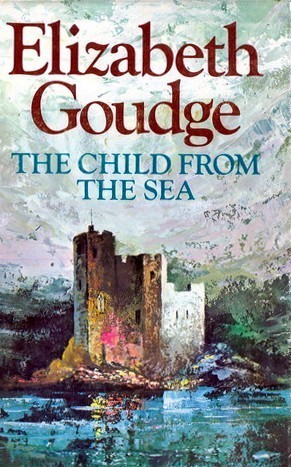
The Child from the Sea, by Elizabeth Goudge

Little is known of Lucy Walter whose son James was the oldest child of King Charles II. From those few facts, Goudge has spun an entrancing story of a vibrant girl whose great love for the prince—whose father ruled England, Scotland and Ireland as King Charles I—lasted a lifetime. We first meet Lucy as a child in Wales, where she lived with her family in Roch Castle and thought herself part buccaneer, roaming the countryside experiencing all of creation with a dazzling joy.

It was then she became aware of the birds. They were coming down from the sky like drifting autumn leaves, martins, chaffinches, goldfinches and linnets, finding their way to the bracken-sheltered hollows and the warm dry hedges and the safe crannies of the rocks. Lucy had watched the bird migrations before but she had never seen one halted like this, halted as the warning sounded along the shore.

She stood still, scarcely breathing, her arms out and her face turned up to the darkening sky, and they had no fear of her. A wing brushed her cheek and just for a moment some tired little being alighted on her hand, putting on one finger for ever the memory of a tiny claw that clung like a wedding ring. It was for her a moment of ecstasy, of marriage with all living creatures, of unity with life itself, and she whispered in Welsh, ‘Dear God, this happiness is too great for me!’

In London she glimpses the young prince from a bridge over the Thames, and they seem to have even in that brief moment a special connection, one that grows naturally over the years as they encounter each other, until they finally discover the wonder of first love. Though lost in their mutual fervor, Lucy insists on marriage first which, in this historical fiction, was performed by her beloved local parson before the marriage was consummated. It had to be kept secret because the political situation had become fraught.

However, this book is so much more than a love story. Charles’s father, Charles I, was under attack for his belief in the divine right of kings. He argued with Parliament by illegally levying taxes without their consent and alienated others during this time of religious disputes by marrying a Catholic and trying to enforce high-church Anglican practices. Charles I was successor to his father James I both of whom I encountered recently in Phillipa Gregory’s Earthly Joys.

The reader stays with Lucy as she tries to navigate these tumultuous times of civil unrest and debates over the power of the king and Parliament while staying true to her own Prince Charles. As we move between revolution and exile and betrayals, Lucy’s story illuminates themes of forgiveness, loyalty and enduring love. Given our own fraught times, her story is a welcome reminder of these virtues. They may not protect us from harm, but we can stay true to ourselves.

This final book from the beloved author of adult and children’s books abounds in such hard-won wisdom. I read it when it first came out in 1970 and at the time was absorbed in the romance of these two young people and of the Stuart kings about whom I’d read so much.

On this reading, though, I was looking for and found insight from Goudge, who was 70 at the time and had lived through both World Wars and the great changes and horrors of the Twentieth Century, as recounted in her memoir The Joy of the Snow. For example, the description of Elenor Gwinne, Lucy’s grandmother, the peace she had attained and how, struck me as a genuine example of wisdom one might come to in the course of a long life.

The other advantage of this late-in-life novel is that Goudge is writing in the fullness of her powers, as shown in the richness of the story, the interweaving of fact and fiction into a story that keeps the reader enchanted from first page to the last. We move from place to place but each one comes to life because we encounter them through Lucy’s eyes.

I was especially taken by the way Goudge uses description to evoke a response, everything from the smallest image to passages that capture your heart. A particularly thoughtful image is spoken by one of Charles’s friends: “ ‘ . . . loyalty is one of the most difficult of virtues, a flower with all its petals pointing in different directions.’ ” And a passage that thrilled me is:

The birds sang for joy of the growing light, and when Lucy opened her window to hear them, the air smelt of violets, though as yet she had found none under the dead leaves in the unicorn wood. But she found minute buttons of coral buds on the brambles and the green of dog’s mercury among the leaves, and when she left the wood and looked back from the far end of the field, she saw how the trees in the silvery sunshine were clothing themselves in pale amethyst and paler coral, in faint crimson and dun gold, one colour fading into the other as the colours do on the iridescent breast of a bird. 

Lucy never loses her thrilling response to the world, whether it’s a sailing vessel or a homely fire. She is no saint but is constantly reminded—and reminds us—that there are good people in the world and that even in the midst of danger we can keep a loving heart.

What historical fiction or nonfiction have you read that gives you courage in our dark times?

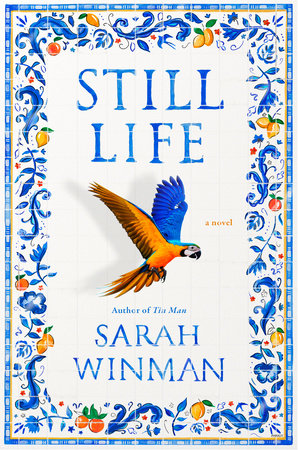
Still Life, by Sarah Winman

Tuscany, August, 1944. Taking a walk after lunch, Evelyn Skinner sees a jeep and waves it down. As an art historian with decades of experience, she’s in Italy to help with the artworks from museums and churches that have been hidden in the hills during the war, identifying them and assessing the damage. She asks the young English soldier driving the jeep, Private Ulysses Temper, to help her contact the Allied Military Government.

Even in this brief scene, these two people capture the imagination, while Tuscany itself seizes the senses. Ulysses is on his way to pick up Captain Darnley, who has opened his eyes to glories of Italy and art and literature, and takes Evelyn along. Then we jump to London where we meet Ulysses’s wife Peg, Col who runs the bar where she sings, Cress who converses with a tree, the parrot Claude who lives in the bar and quotes Shakespeare, and others. From that point on the novel alternates between London and Florence.

I picked up this book wanting to spend some time in Italy in the middle of the twentieth century. The description are luscious, but the true beauty of the book comes from showing how the fragile threads we throw out to each can, over time, become a beloved community and a motley group of eccentrics can become a family.

There’s never any confusion with the wide cast of characters spread between the two cities. Each person vibrates with life, their adventures by turns dangerous, hilarious and poignant. We meet them as they gather in the sort of places we’ve started to call the commons: a pub, a café, a plaza. We follow them over the decades as they, and we, begin to see how these relationships that began so casually have become a web that can support them during the worst times.

Some people in my book club were bothered by the many unlikely coincidences, but most of us enjoyed the fairy tale quality of the story. We also appreciated the subtle use of symbols and the way different kinds of arts were folded into the story: music, paintings, sculpture, poetry, literature. The descriptions of places and people seduced me, and the dialogue is some of the best I’ve read.

However, the decision to present dialogue without quotation marks poses a problem. It’s a cool, modern thing to do, but this fiction is set in the past. Worse, I often couldn’t tell what was dialogue and what was narrative. Some stories manage to make this clear without the punctuation, but not this one. Most of the people in my book club had trouble getting into the book; they started and stopped, tempted to give up, or they had to reread parts near the beginning a few times before taking the plunge. They thought the lack of quotation marks played a part in their confusion.

Writers often struggle with beginnings and endings. In some of my reviews, you’ll find a complaint about an ending that seems too abrupt or that ties things up too neatly. Here, I found the opposite problem: the last section should have been cut. Unfortunately it leaves behind the rich cast of characters we’ve come to love in order to follow a single one, and introduces a slew of new characters here at the end of the book. The section is well-written, but unnecessary to the story. It felt like padding. I was disappointed, too, that it took some wonderfully evocative allusions from earlier in the book and ran them into the ground, just in case we didn’t get them. 

Yet even with these concerns, I don’t know when I’ve enjoyed a novel as much as this one.  Each time I picked it up, I felt as though I were sinking into a rich, delicious dream. What a wonderful, luxurious summer read!

What novel set in Tuscany have you enjoyed?

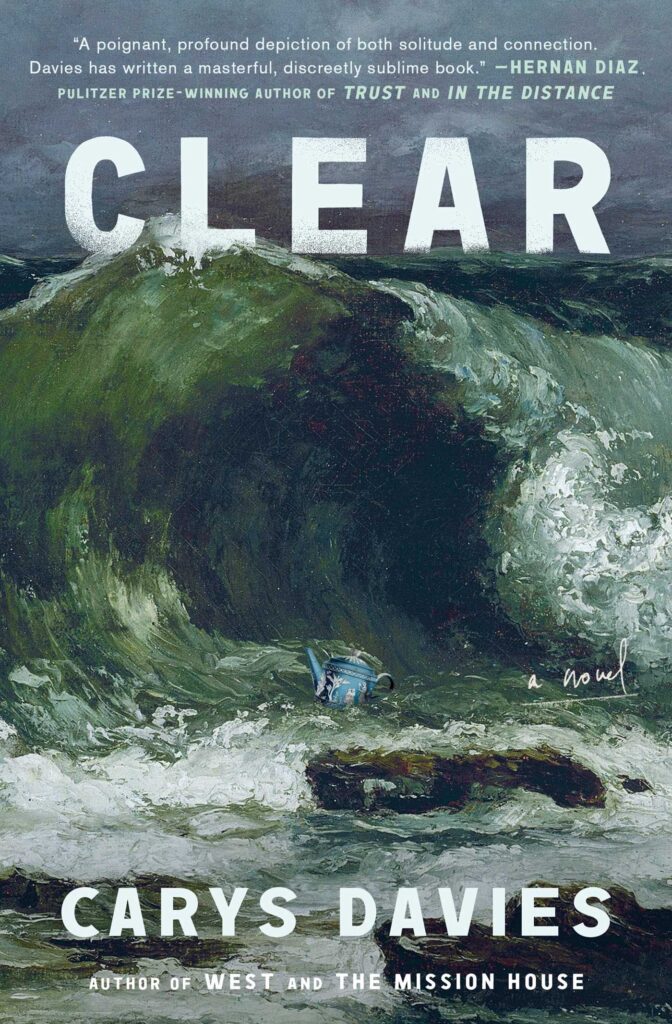
Clear, by Carys Davies

In 1840s Scotland, John Ferguson makes the difficult decision to become one of the evangelical ministers leaving the Church of Scotland to help form the Free Church of Scotland. It means giving up his job and income, but at least his church will be free of patronage and interference from the British Government. Also, it’s not the life he’d promised his wife Mary, but she accepts his choice.

The other major political upheaval besides the Disruption of the Church of Scotland is the ongoing Highland Clearances in Scotland which saw wealthy rural landowners evicting tenant farmers to clear the land for cattle or sheep. Most of the people in my book club were not familiar with the Clearances, which caused immense poverty and fury among the rural poor. A couple of us knew about them through our reading or family stories, but none of us had heard of the Disruption.

Desperate for funds, John jumps at the offer of a temporary, well-paying job as a factor. His assignment is to travel to a remote Scottish island and evict the lone remaining inhabitant—Ivar—so the island may be turned over to sheep. However, soon after arriving on the island he’s badly injured in a fall from a cliff.

Ivar finds the unconscious man and takes him into his home to nurse him. For a long period, John does not remember why he is there and busies himself learning Norn, the ancient language used by Ivar, so the two can communicate.

This lovely story is told in through three perspectives: Ivar, John and Mary. The author’s descriptions of the lonely island and Ivar’s life there are stunning both for their beauty and their authenticity. I especially enjoyed the language lessons, using actual Norn words that are poetic in their precision, such as the word “for the moment before something happens; for the state of being on the brink of something.”

It’s also a story of connection, of how a life of isolation and solitude can be transformed by the arrival of another human being. The author’s spare, elegant prose turns the book into, as one member of my book club said, a real gem.

Curiously, everyone in the book club understood the ending differently. No spoilers here, though many reviewers have criticised the ending as abrupt and unearned. For us, even though we read it aloud several times, we still understood it to mean different things.

That’s okay with me. I don’t mind endings where the story seems to go on after you close the book. In fact, the different endings we came up with said more about each of us that they did about the book. One person suggested we write to the author and ask her to write a sequel, though that mostly reflected our desire to spend more time with the characters.

I do mind when the ending is unearned. I believe the story could have prepared the ground for it a little better, but I actually liked it as it is.

If you enjoyed Small Things Like These, you might enjoy this story. I certainly did, and that was one thing that my book club did agree on: we all were immensely glad to have read it.

What books set on a Scottish island have you enjoyed?

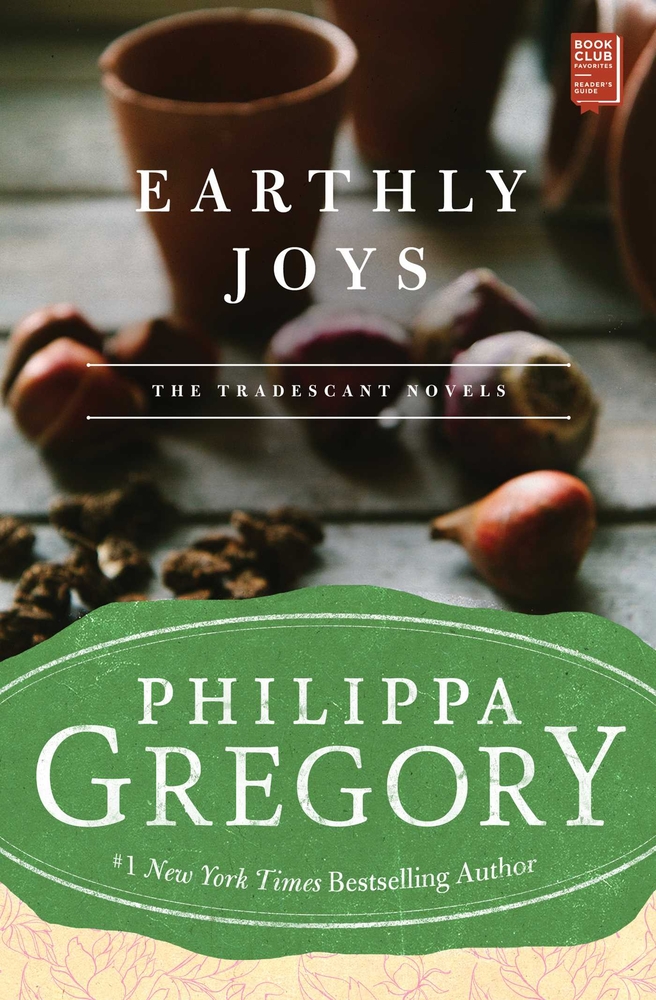
Earthly Joys, by Phillipa Gregory

We meet John Tradescant, gardener to Sir Robert Cecil, as he discusses the state of the gardens with his master in preparation for the visit of the new king: James I. Since Queen Elizabeth died without heirs, James—son of Mary, Queen of Scots and already King of Scotland—has ascended to the throne of England. The story is told by John himself, who is based on the real John Tradescant the Elder, the most celebrated horticulturalist and naturalist of his age.

As a gardener, John has no power in politics; he keeps his gaze focused on the plants and trees that he loves. However, knowing that “he could keep a secret, that he was a man without guile, with solid loyalty,” Cecil uses this principled and practical man as a sounding board, confiding that he has been working in secret to prepare James Stuart to rule in England. James brings two great advantages: he already has two sons and a daughter, and he is Protestant. Thus, it’s assumed he will end the turmoil over the succession and the bitter and deadly religious wars.

John is asked to design magnificent gardens at Hatfield, Windsor, and others. In his work for Cecil and later other lords and James’s successor Charles I, John is sent abroad in search of rare plants. His finds are described with such care that I could see, smell and feel them: the smoothness of a horse chestnut seed, the rainbow sheen of tulips, the scent of cherry blossoms. It turns out that he loves traveling and finding exotic varieties of plants and rarities, much to the dismay of his wife and son, left at home.

This book was recommended to me for its evocation of Tudor and Stuart era gardens, making it an appropriate read for this blossoming midsummer. I was also intrigued by my memory of Gregory’s amazing nonfiction book Normal Women that spoke to the range and depth of her research into the period. What I didn’t consider was how much the concerns of people in 17th century England would echo ours today.

As they discuss the new king, John tells Cecil, “When you have a lord or king . . .  you have to be sure that he knows what he’s doing. Because he’s going to be the one who decides what you do . . . Once you’re his man, you’re stuck with him  . . . He has to be a man of judgment, because if he gets it wrong then he is ruined, and you with him.”

And James is not a man of judgment. He immediately begins plundering the treasury Elizabeth amassed to protect England, squandering it on his own pleasures and rewards to his friends, while ignoring the discontent, poverty and starvation of his subjects. A favorite emerges in his hedonistic court: the Duke of Buckingham: young, beautiful, and self-indulgent. After Cecil’s death, Buckingham brings John to work for him as gardener and personal servant, even taking him into battle.

Civil war is brewing, as the people protest. Parliament is furious when the King takes over their power to impose taxes and sends them home as no longer needed. The King then gets needed income by selling baronetcies and other dignities. Many begin to question the traditional concept of the divinity of kings, seeing James as not someone ordained by God, but rather as simply a man and a repulsive, dishonest one at that.

John, however, is loyal, too loyal according to his wife. John is challenged not just by her, but also by his increasingly radical son who argues that people should be free to obey their own principles, not be ordered what to think by kings and lords. While John’s obdurate loyalty to his masters—even when he thinks they are wrong—can be frustrating for a reader today, it reflects the culture of the time, which was only just beginning to hear the whispers of the individualism we take for granted today.

Another aspect that is true to the time but troubling today is the quantity of foreign plants that John introduces to England. Many have become common to English gardens and forests today, but I couldn’t help thinking about the dangers of invasive species: plants and creatures that originally seemed innocent or useful but have become a nightmare.

While politics and philosophy struck surprisingly close to home for me, they took second place to the gardens. I luxuriated in descriptions of planning everything from orderly knot gardens to seemingly natural meadow gardens. I felt I was laboring along with John and his wife and son to build these joyful works of art. 

Are you a gardener?