The Lost Words, by Robert MacFarlane and Jackie Morris

When the Oxford Junior Dictionary was updated, it was found that around forty common words had been dropped—all of them words to do with nature—and their place taken by words, many of which have to do with the online world.

In response, MacFarlane and Morris came together to create what they call a spell book to help young readers rediscover the natural world. Unless we experience and learn to love the world of nature around us, we will not work to save it.

In this large-format book, we first see the creature or plant’s environment empty of everything but a scattering of letters. Some of the letters are a different color and spell out what is missing. Then comes the illustrated spell—an acrostic celebrating and summoning the creature or plant—followed by a stunning double-page illustration of it restored to its habitat.

This is the most beautiful book I’ve seen in a long, long while. Jackie Morris’s illustrations are simply stunning. I’ve even propped it open on my grandmother’s rocking chair so I can glance over at it frequently.

Robert MacFarlane’s spells—acrostic poems—summon the lost creature or plant through the music of words, using imagery, alliteration, internal rhyme, personification, and other poetic devices, including Anglo-Saxon kenning. A few excerpts:

“Hold a heartful of heather, never let it wither, / Even as you travel far from crag and river.”

“Kingfisher: the colour-giver, fire-bringer, flame-flicker, river’s quiver. / Ink-black bill, orange throat and a quick blue back-gleaming feather-stream.”

When I read this book to the littles in my life, they were surprised that anyone would think children wouldn’t know—or wouldn’t need to know—these words. The young ones talked eagerly of the bramble berries in their yard and the otters and herons they’ve seen. They wondered how children in even the most urban environments would not be familiar with dandelions. One of the littles is even named Willow, so was indignant that their name would be discarded.

The only one new to them was conker, since in the U.S. that word is not used for the seed of the horse chestnut, something they do know well since they love collecting the seeds from a horse chestnut near us. As far as I know, the children’s game using conkers is not played here in the U.S. My littles were interested in the description, but not eager to try it.

The book has won many awards and moved out into the world in various formats. I applaud its mission of connecting young people to our natural world and in the process helping to save that disappearing habitat. Most importantly it is a feast for the eyes and, when read aloud as it begs to be, for the ears as well. May its spells work.

What children’s picture book have you loved for the illustrations as well as the words?

Jigsaw puzzles available from the book’s website.
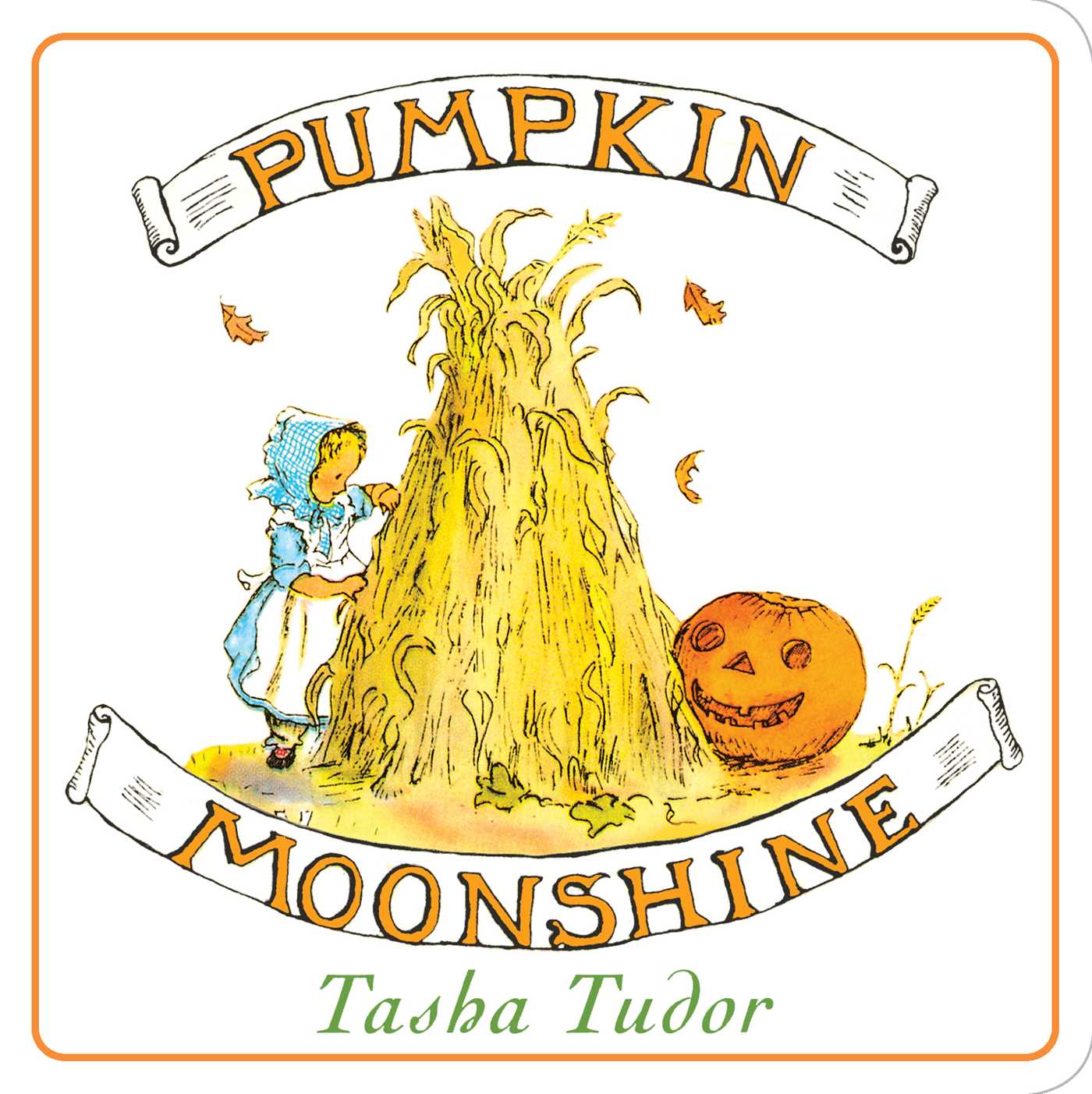
Pumpkin Moonshine, by Tasha Tudor

tudor

With little ones in the house several days a week, I’ve been reading lots of picture books. This one is a favorite just now, as we enjoy all the pumpkins on porches while we walk around the neighborhood.

Sylvie—who appears to be around four years old—is visiting her grandparents in Connecticut and wants to make a Pumpkin Moonshine. She and the dog Wiggy climb up the hill to the cornfield where she chooses the largest pumpkin, one that is half as tall as she is. She can’t lift it, so she rolls it in front of her, like a snowball in winter.

When they reach the edge of the field it gets away from her and caroms down the hill, starting the livestock (cue various animal sounds) and knocks over the hired man, making him spill a can of whitewash over a startled cat (the 20-month-old’s favorite page) before bumping into the house. Sylvie and her grandfather go on to make a Pumpkin Moonshine from it.

I’d never before heard this term for a Jack-o’-Lantern, but it is certainly descriptive. I don’t know whether the author knew it was also a term for a homemade alcoholic beverage made from pumpkin, sugar, yeast and water. The book was first published in 1938 and Sylvie puts on a bonnet to go to the field, so the time period is well established.

Writing a picture book is said to be one of the hardest writing tasks there is, and nothing chills the heart of an agent like hearing that their popular author of adult books wants to write a picture book. Of course, you have to consider what words and ideas are appropriate for your young audience, but the biggest problem is that you have very little real estate in which to tell the story. Every word needs to be essential, even more than in poetry.

If you are the artist, too, like Tasha Tudor, you do have the advantage of knowing what information will be conveyed in the pictures. Tudor has been my favorite artist of children’s books since, well, since I was a child. I’ve collected a shelf-full of books with her illustrations. While some might view them as sentimental or outdated—more kindly characterised as nostalgic—I found and find them full of magic, probably because she illustrated my copy of The Secret Garden, one of my favorite books of all time and a formative one from my early years.

She lived in New Hampshire and then in Vermont. Somehow I always sensed the air of New England in her work. Pumpkin Moonshine was Tudor’s first book. She went on to write and illustrate many others and illustrate still more, gathering awards along the way.

The children love the idea of going out and choosing their own pumpkin. The terror of losing control of it on the hill is manageable for them. Add in animal noises and the face on the startled cat and you have an exciting (but not too exciting) adventure for young children, ending with the somewhat subversive comfort of Sylvie and her grandfather hiding in the bushes hoping to see the surprise and fear of passersby when they see the Pumpkin Moonshine on the fencepost. My munchkins enjoy even more the description of the process of making the scary thing and of Sylvie planting its seeds the following year.

Who is your favorite picture book author or illustrator?

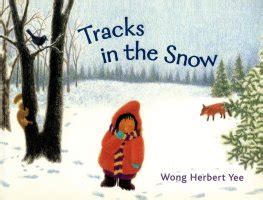
Tracks in the Snow, by Wong Herbert Yee

tracks

I’ve been reading a lot of picture books lately since I’ve been babysitting for a two-year-old. We’ve both fallen in love with this one. It starts with a child looking out the window at the snow and wondering what made the tracks there, and where the tracks go.

They (I’m deliberately using the plural because the child is not named and is not obviously a particular gender—part of the book’s charm) put on boots, coat and mittens (a skill my young friend has been working on recently) and go outside.

Following the tracks, the child wanders through typical landmarks for a little one: a garden gate, woods, some rocks and over a small footbridge. As they meander, they are shadowed by various animals: a squirrel, rabbit, fox, deer. The child considers what could have made the tracks: a duck? a woodchuck? a hippopotamus?

As you might have guessed, they follow the tracks all the way back to their own house and realise they themselves made these tracks the previous day.

This is a quiet book, like the snow’s hush, full of curiosity and imagination. The gentle illustrations are minimal, almost suggestions, yet they capture a child’s body language beautifully. Being snowy landscapes, of course there’s lots of white space.

In my opinion, the best picture books tell a story and, indeed, even in this brief text we have a full story. The protagonist is the child; the problem is to solve the mystery of the tracks. The antagonist is more abstract: ignorance, what we don’t know, the impenetrability of the world.

I remember as a preschooler being terrified by the vast sea of things I didn’t know. I knew my house and yard. I knew my block, more or less. But everything beyond that was a blank, simply inscrutable. For all I knew, there could be dragons. If I wandered off my block, how would I find my way back home?

Solving these mysteries, mapping out the nearby streets a little at a time, became my ambition. I think it’s partly why I enjoyed being a mechanic and then an engineer: understanding how cars and computers work. I never liked black boxes, those enigmatic spots in a flowchart labeled “Here the magic happens”.

So in this brief tale, I see not only an outward journey for our protagonist—following the tracks, answering the question—but an inner journey to satisfy that yearning to explore the world and begin to comprehend its mysteries.

What picture book have you read that you particularly enjoyed?

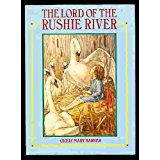
The Lord of the Rushie River, by Cicely Mary Barker

51xlrjusjwl-_ac_us160_

When in need of comfort, I often turn to beloved books. In a recent article on the great writer’s website Writer Unboxed, author Juliet Marillier described some of her favorite and most treasured books, her keeper books. This picture book was the very first one she named. It is by the author of the Flower Fairy books, which I have long adored.

This story opens with Susan’s father, the Sailor, bidding her goodbye as he heads to sea again. In her sadness, she is comforted by a family of swans swimming nearby, one of whom, as a cygnet, had been rescued by her father when some boys had broken its leg.

Dame Dinnage, hired by her father to care for Susan in his absence, immediately drops her pretense of loving Susan, feeding her scraps and watered milk, refusing to mend or replace her clothes. All Dame Dinnage cares about is her stocking of money that grows heavier and heavier. Then she moves them to the city.

In her despair at never seeing her father again, Susan runs away, trying to make her way back to Rushiebanks. She is rescued by a swan, the one her father saved, now grown large and strong, and lives with the swans until he returns.

I’ve given away the ending, but you knew it would end happily. The delight is in the details and in the drawings by the author, some in color. Barker perfectly captures the timeless voice of a young girl. Here is a short passage from Susan’s flight from the city:

It was still the dark night; but in one house a dim light burned in an upstairs window. It gave her a feeling of company; it might be the night-light of a little girl like herself. She crept into a corner of the creeper-covered porch, and rested there.

I was lucky to find a used copy of this lovely book and will treasure it and share it with the young people in my life. I’m grateful to Juliet Marillier for introducing me to it.

One of the benefits of the Writer Unboxed site is that people leave comments on every post. I culled more ideas from other people’s comments on Juliet’s post. Here are the keeper books that I posted in my comment:

9780881037470_p0_v1_s270x400

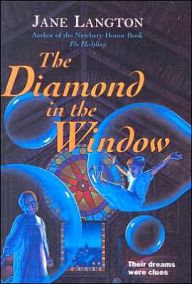
The Diamond in the Window, by Jane Langton. As a child I didn’t realise that this tale of magic and danger was based on aspects of Transcendentalist philosophy. I simply loved it, and the images in it are still touchstones for me.

9781593082772_p0_v4_s192x300

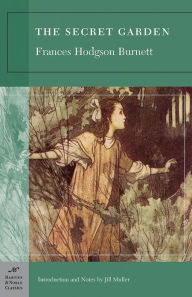
The Secret Garden, by Frances Hodgson Burnett inspired a lifelong love of gardening and Yorkshire. I walked the Dales Way this summer.

9781598568417_p0_v3_s192x300

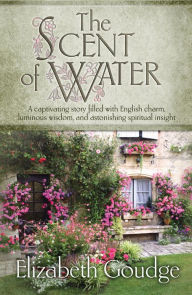
The Scent of Water, by Elizabeth Goudge. I first read this as a teen and, on re-encountering it later, realised how much it had influenced my personal philosophy, my beliefs, and my view of the world and relationships.

9780394701882_p0_v1_s192x300

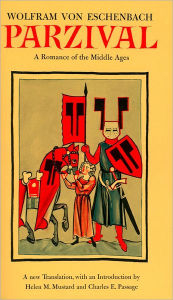
Parzival, by Wolfram von Eschenbach. Innocence, quests, and honor: this book took my childhood love of King Arthur stories into adulthood.

9780345339683_p0_v2_s192x300

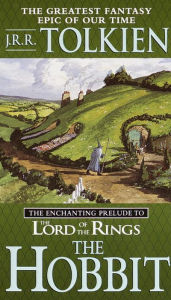
The Hobbit & Lord of the Rings, by J.R.R. Tolkein. One rarely mentioned aspect of these books is their maps and songs and barely remembered histories, which gave me a love of scholarship that has carried me through formal schooling and beyond.

9780226087931_p0_v1_s192x300
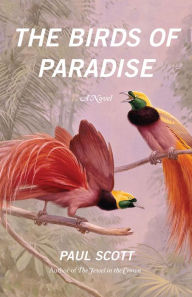
Birds of Paradise, by Paul Scott. This early novel by the author of the Raj Quartet resonated so deeply with me that I come back to it again and again. A coming of age story, it makes me consider the unreliability of childhood memory and the place of Arthurian honor and glory in today’s world.

What are some of your keeper books?