The Liar’s Dictionary, by Eley Williams

In 21st century London, Mallory works as a low-paid intern at Swansby’s, helping prepare their dictionary to be digitised. As the sole employee, she also must fend off threatening anonymous calls from a man angry about the dictionary’s newly inclusive definition of marriage.

When owner David Swansby finds a mountweazel—a non-existent word sometimes added to catch plagiarists—he  assigns Mallory to go through every single entry to verify that it is a real word. Mallory’s girlfriend Pip, a barista, decides to help, resulting in a fun version of Fictionary.

The absurdity of such a tedious task is increased by the fact that the last volume of Swansby’s Encyclopaedic Dictionary was never finished; all the men working there went off to war in 1914 and the printing presses were melted down. Now David Swansby wants to preserve his family’s work by putting the existing volumes online and closing down his great-grandfather’s company.

Alternating with Mallory’s story is that of Peter Winceworth, a laborer in the trenches of Swansby’s in 1899. Socially inept, Peter is the butt of jokes from his co-workers. He has affected a lisp since his youth, perhaps out of boredom or to annoy his father, and now clings to it as his secret way of showing contempt for his tormentors. Of course, he has been assigned to the “S” section of the dictionary.

He has another secret way to assert himself: He has begun to insert his own words into the dictionary. Some are fun sniglets—words that don’t appear in any dictionary, but should—while others are more personal, such as “winceworthliness, (n.), the value of idle pursuit.”

As a confirmed logophile, I enjoyed the audacious and whimsical use of language here. The etymologies and definitions, both real and fake, are like candy to me, and the whole enterprise of determining real words from fake raises interesting questions. For example, when Swansby explains to Mallory that a mountweazel is “a made-up word”:

“All words are made up,” I said.

“That is true,” David Swansby replied, “and also not a useful contribution.”

The term refers to a fictitious entry in the 1975 New Columbia Encyclopedia about Lillian Virginia Mountweazel, a fountain designer turned photographer, deliberately placed as a copyright trap. Continuing the joke, there is actually a Lillian Virginia Mountweazel Research Collection which displays photos attributed to her, though a footnote acknowledges that “All the materials presented here as her works are authentic pieces created by other photographers, repurposed or collaged from media that are in the public domain.”

There are also some Easter-egg tributes to Lillian in this book. Don’t be put off by the mock-pompous preface about creating an ideal dictionary. Once past that and into the A-Z chapters, the story becomes a sprightly tale about two characters who hide themselves: Mallory who wants people to think she’s straight and Peter who shields his heart with lisps and lies. There’s occasional wordplay in the text as well, such as this from Peter on a park bench.

The best benchside exoticisms January could offer were all on show—the starling, the dandelion, the blown seeds and the birds skeining against the grey clouds, hazing it and mazing it, a featherlight kaleidoscope noon-damp and knowing the sky was never truly grey, just filled with a thousand years of birds’ paths, and wishful seeds . . .

Such language can overwhelm a story yet here it just seems part of the fun. The story itself is light, a mere trifle, despite a few dark moments. I’m eager now to read the author’s two short story collections.

What is your favorite made-up word?

Ghostwalk, by Rebecca Stott

I’ve been on a bit of a Cambridge streak in my reading lately, so here we are again. Stott’s debut novel opens like a mystery: Cambridge historian Elizabeth Vogelsang, whose potentially controversial book on Isaac Newton’s use of alchemy is nearly finished, is found drowned in a river at the end of her garden, clutching a prism. Lydia Brooke, one of her former students, is urged by Elizabeth’s son Cameron to finish the book.

One difficulty is that she has her own work to do. Another is that Cameron is her former lover whom she’s not sure she can resist. However, she does move into Elizabeth’s home, where she feels her mentor around her and where the light—and her computer—begin to play tricks on her.

Most of the book is told in the first person as though it were a letter from Lydia to Cameron, though some chapters of the manuscript are inserted. That manuscript, which is apparently only missing the last chapter, explores Newton’s rise to fame, a series of unsolved seventeenth-century murders, and if there might be a connection between them. Lydia begins to feel that intrigues and conspiracies from Newton’s past are creeping into the present.

Even as Lydia is trying to work out whether her mentor committed suicide or was murdered, Cameron is being menaced by an animal rights group over his work as a neuroscientist that involves experiments on animals. There’s also a fortune teller whom Elizabeth had apparently befriended—perhaps my favorite character—and an odd young woman named Will who seems to have some knowledge of the various forces threatening Cameron and Lydia.

The breadth of Stott’s research is stunning. We learn a lot about Newton’s life and work. She brings the seventeenth century to life, especially in the manuscript chapters. There’s a lot interesting information from that time period about glassmaking, the plague, optics, and of course alchemy.

This is such an intelligent book. And the dark yet lyrical atmosphere is perfect for an October read. However, I struggled to finish it. Much as I loved individual elements, the story as a whole felt murky. The parallel plots of the past and the present never quite came together, perhaps because the seventeenth-century conspiracies fascinated me while those in the present-day seemed irrelevant.

I’m also not a big fan of second-person point of view. Since she’s writing to him, Lydia refers to Cameron as “you,” which is fine occasionally. However, when she’s recounting dialogue, telling him what he’s said, she must use “you said” as the dialogue tag. This throws me out of the story because of course he knows what he’s said, but Stott is forced by her point of view choice into these clumsy conversations.

Still, there’s much to admire here. I learned a lot about Isaac Newton and alchemy. I reveled in gloomy back stairs in Cambridge colleges and a sun-filled studio set in an orchard. And I’m always curious about the ways the past bleeds into the present. Here’s an excerpt from the first chapter:

Lily went to prison because the seventeenth century was missing from her court records, from her story. Her time line needed to be longer, much longer, and there were many sidelines and tracks, twistings and turnings and yes, it was a labyrinth, a skein of silk that began to weave itself in 1665, 339 years ago.

I’ve been thinking about labyrinths this summer. Ariadne giving Theseus the thread so that he could find his way back out of the labyrinth, away from the black void of the flesh–eating Minotaur. Unravellings have to start somewhere. Now that I see, for the first time, how connected everything is, I know that the threads between Isaac Newton and us were all attached, like the ground elder under Kit’s soil.

Most of all, I admire Stott’s ambition. Ghostwalk is an enormously complicated story, thoroughly researched and well written. Most of all, it is intelligent and exercises our own little grey cells.

What do you look for in historical fiction? 

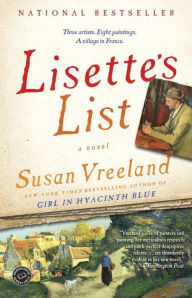
Lisette’s List, by Susan Vreeland

lisette

In 1937, young Lisette Roux and her husband André leave their beloved Paris and move to the south of France, to the small Provençal village of Roussillon to care for André’s grandfather Pascal.

Once an ochre miner, Pascal loved paintings whose pigments used his ochre. By exchanging his homemade frames for paintings by destitute artists, Pascal had acquired eight works of art. These paintings have grown in value as the fame of the artists grew, but their worth is beyond money to Pascal. He wants to be sure that André and Lisette understand their true worth and will protect them when he himself is gone.

The story is from Lisette’s point of view, first her misery at leaving Paris and the art world she is just beginning to move into, hoping for a job at a gallery, then her growing love for Pascal and Roussillon. She keeps track of her vows and promises to herself of what she will do in her lifetime.

All too soon, their life in Provence is overtaken by World War II. André hides the paintings before going off to fight, leaving Lisette to manage without his income. When the Germans occupy Roussillon, they are determined to find Pascal’s paintings.

In this final book from the author of books such as Girl in Hyacinth Blue and The Passion of Artemisia, we have the combination of historical fiction and a deep appreciation of art that we’ve come to expect from Vreeland. Along with Lisette, we are introduced to artists such as Pissaro, Cezanne and Picasso. The descriptions of the paintings and of Provence itself are luscious.

So why did I grow a little bored towards the middle of the story? Partly it was because these artists were not new to me. Partly it was because Lisette, the girl from Paris, seemed to accomplish new things without any trouble at all. Acquire and learn to care for a goat and chicken? No problem. Figure out how to make cheese and candies good enough to sell? Child’s play. She does face some challenges with the Germans and a man in town, it’s true. But I had a bigger problem with the book.

What we expect in a story is a protagonist with an overwhelming need or goal who faces obstacles to achieving what she’s set out to do. We expect there to be an external journey as she confronts these obstacles, as well as an internal journey as she learns more about herself and changes as a result of her inner and outer conflicts. We expect the stakes to be high for both.

The problem for me was that while Lisette certainly had an eventful outer journey, one with high stakes, she didn’t have much of an inner journey. She does have those vows and promises; she does want to be part of the art world, but it all seems rather vague. The stakes are low or non-existent for her inner journey. She doesn’t change by the end of the book. After eleven years, she’s still the same naïve young woman who came to Roussillon.

However, I’m glad I read the book, if only for the descriptions of life in Roussillon and of how the paintings affected Lisette and others. I’m grateful for the opportunity to think about the uses of art in our day-to-day lives, outside of museums and galleries.

What novel about art and artists have you enjoyed?

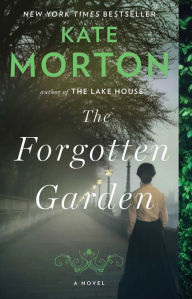
The Forgotten Garden, by Kate Morton

Morton

It being the end of summer, I went in search of a real vacation read. Not that I was going away, but I did have a week off from grandchild babysitting duties. I wasn’t looking for a beach read; most of my vacations end up in a cabin in the woods or a footpath in the Cotswolds. Instead I wanted to immerse myself in a big, fat, multi-generational novel, preferably set in the UK.

I found it in The Forgotten Garden. As the story opens, it is 1913 and a small girl is hiding on a ship on the Thames, as instructed by “the lady”. The ship casts off from its London dock to cries of “Bon voyage”, and the girl leaves her hiding place to follow a group of children. Later, a fall on the ship has damages her memory, so she no longer remembers her name or any other details of her former life.

She fetches up in Brisbane, Australia, where she is adopted by the harbormaster and his wife. As an adult Nell tries to discover how she came to be left alone on the boat and why a book of fairy tales was packed in her small suitcase. After Nell’s death her granddaughter Cassandra takes up the search, following Nell’s footsteps to Blackhurst Manor on the coast of Cornwall, ancestral home of the Mountrachet family.

I’d previously read and enjoyed Morton’s The Lake House, impressed by how well she moved back and forth in time without losing me—and I’m a notoriously easily confused reader.

Here Morton doubles down by using, not just multiple time periods but also multiple narrative points of view (POVs). Multiple POVs have proliferated lately, having the cachet of seeming modern. Many writers have tried their hand at using them. Most fail.

At least in my opinion—remember I’m easily confused. Sometimes it seems to me a lazy way of writing. It is a challenge to bring out all of a story’s incidents and information if you are confined to only one character’s perceptions. I think some authors try to get around that by moving from one character’s head to another, instead of finding more creative solutions.

That’s not what’s happening here. I should have been lost a hundred times over as we move between Nell, Cassandra, Rose Mountrachet, and Eliza, the author of the fairy tales. We jump around in time between 1900 when Eliza was a child, 1907, 1913, 1930, 1975-1976, and 2005 when Cassandra flies from Australia to England. We have letters and scrapbooks and journals. We even have some of the fairy tales.

And it all works. It’s not just that Morton labels each chapter with place and date. It’s not just that we have different characters associated with the different time frames to help ground us. Nor is it just that she pays attention to transitions, so for example at the end of one chapter Cassandra in 2005 is examining a legal document, while the next chapter starts in 1975 with Nell checking her passport and tickets.

It’s that Morton has carefully constructed her story so that whatever the date and POV, the line of the story continues. Thus, just as Nell in 1975 begins to learn about Eliza’s early life and that she is the author of the fairy tales, we go to 1900 where Eliza is watching the busy life of London’s streets through a chink in the bricks and making up stories about the people she sees. If I was unsurprised by the ending, I was at least not disappointed.

It’s always interesting to me as a writer to go back, after my gloriously immersive first read, and see how the author has handled releasing information. It’s a tricky balance. You want the reader on the edge of their chairs, but not so frustrated that they throw the book across the room. So you have to reveal information fairly regularly while also holding some back. One good mantra is: every time you answer a question in the reader’s mind, create a new one.

All of the characters, even minor ones, are well-drawn and memorable. The settings—ship, slums, estate, cottages, gardens—are gorgeously done. The letters and other ephemera add to the verisimilitude of the story and give us other voices. To my surprise, the fairy tales also work well, adding emotional depth to the story as the seeds planted by their images flower. In fact, the language throughout is particularly lovely: poetic without being distractingly so. There are some really gorgeous turns of phrase here, some haunting images.

All in all, Morton’s book is a perfect vacation read.

What did you read on your summer vacation?

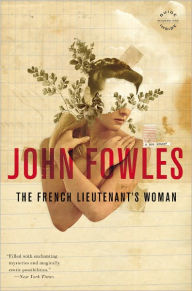
The French Lieutenant’s Woman, by John Fowles

9780316291163_p0_v1_s192x300

Since I was due to visit Lyme Regis, I decided to reread this 1969 novel which is mostly set in that seaside town. Of course, my first memory from reading it almost 50 years ago was the gloriously romantic opening image of a woman, dressed all in black, staring out to sea from the end of the Cobb.

The Cobb in Lyme Regis is a mole, a grey stone wall that curves out into the sea like an arm protecting the harbor. It features in Jane Austen’s Persuasion where it is the scene of Louisa’s downfall as she attempts to jump into Captain Wentworth’s arms.

Fowles’s mysterious woman is Sarah Woodruff, a disgraced woman who according to gossips had run off with and been abandoned by the eponymous officer. She’d met him while he was recovering from a shipwreck in the house where she then worked as a governess.

She is observed by Charles Smithson, a privileged young man who considers himself a Darwinist, and his fiancé Ernestina Freeman, whose conventional views belie her surname. As part of his scientific pursuits, Charles hunts for fossils, reminding me of my recent reading about Mary Anning. He leaves Ernestina at home when he goes on these expeditions, so is alone when he encounters Sarah later and resolves to try to help her.

While written in the style of and using the conventions of Victorian literature, the story is narrated from the point of view of a modern-day man. With epigraphs and footnotes and commentary in the text, this narrator provides social and historical context for the struggles of his Victorian characters, sometimes criticising them, sometimes commiserating with them. He also openly discusses the problems and choices the writer faces in putting the story together.

This self-consciousness places the book in the wave of postmodern metafiction in the 1960s. Another metafictional aspect is that the narrator provides three possible endings.

While the “I” of the narrator calls himself a “novelist”, it seems to me he is instead yet another character rather than Fowles himself. He even shows up as a character near the end.

Thus, Fowles has quite a few plates to keep spinning. He risks losing the story’s momentum with his digressions about Victorian mores and morality or the clash of religion and science.

Yet these challenges for the reader play into the theme of free will, the monster released from its chains by Darwin and his colleagues. What are the risks when the strict conventions of religion and social convention are shown to be shams? How do we comprehend the world—or the world of the novel—when the framework we’d always used begins to dissolve? When are we most free, when we are “working well within a harness” as Frost says or when we take responsibility for living an authentic life per Kierkegaard?

The other main thing I remembered from when I first read this novel was which of the three endings I preferred and what that said about me. Reading the book now, I find it much more complex than I remembered. It is the sort of book that repays multiple rereadings.

I plan to read it yet again to see how Fowles manages the omniscient point of view—the sort most rarely used these days. It’s an interesting choice, setting up an omniscient narrator—albeit one whose power and knowledge he undercuts now and then—for a story of the time when people were coming to terms with the idea that there may not be an omniscient and omnipotent god.

What novel have you read and reread, finding more in it with each rereading?