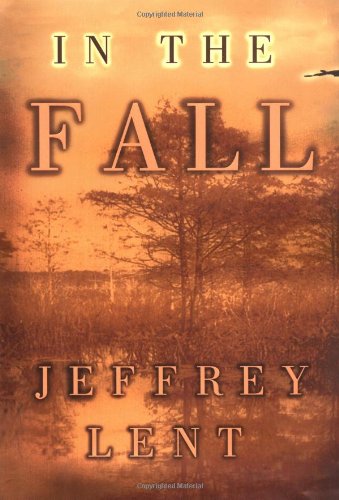
In Virginia during the last days of the Civil War, a wounded Union soldier becomes separated from his comrades and is found near death by an escaped slave who saves him. Norman Pelham and Leah Mebane become inseparable and, after he is demobilised and they marry, the two decide to walk to his home in Randolph, Vermont. As they pass through nearby Bethel, his fellow veterans—already home for several months—watch for him.
So they saw him pass along the road that Indian-summer morning with the sugarbush maples flaring on the hillsides and the hilltop sheep pastures overgrown with young cherry and maple. Word ran along the road ahead of him so near all his neighbors and townspeople saw him walking in the long easy stride of one who counted walking in months and years not miles, a rucksack cut from an issue blanket strapped to his back and by his side a girl near his own height in a sunfaded blue dress and carrying her own cardboard suitcase bound with rough twine.
Norman’s father has died while he was fighting, leaving the farm to him. His mother and two sisters, while abolitionists, are so shocked and troubled by Leah that they move into town, leaving the young couple to begin their new lives on the farm. Fired by their fierce love for each other, they ignore the scorn of their neighbors by keeping to themselves and plunging into the hard work of making a living from a hill farm.
Thus begins this saga of three generations of Pelhams, haunted by their troubled legacy of what Leah left behind and by America’s ongoing racial tensions.
This debut novel was a huge bestseller when it was released in 2000. I told the friend who recommended it to me that I didn’t know whether to bless her or curse her because I found it thoroughly addictive reading—the prose so luscious that I read slowly to savor it and could hardly bear to set it aside until I’d finished all 565 pages.
Lent takes his time with the story, enclosing me in the worlds of nineteenth-century farm life and early twentieth-century bootlegging, in New England’s mountains and North Carolina’s tobacco and cotton fields. I especially enjoyed the very specific details about tools and descriptions of places and processes in these time periods; they added so much richness to the fabric of the story. I could tell how fully the author inhabited each moment of the story as he wrote.
The partridge went up, a sudden burst of speckled animation that hit a long going-away glide down the mountain and he passed the splendid moment where his mind left him and was all out ahead of him, pinned down only on the flying bird as the gun came up. Then there was a pinwheel of feathers and both dogs broke past him and he was back.
A few things surprised me. For example, some significant events are skipped over in a sentence or two while others that seem lightweight unfold with great leisure. A possible reason could be that this is a story about men, so the female characters’ stories—aside from aspects that influence the men’s stories—are just not that important. Or maybe the reason is that we are in the men’s point of view and they simply don’t understand the women’s experiences. Maybe it’s something else altogether.
Much as I eventually loved the book, I almost stopped after the first couple of pages. Why? Because I don’t like when a chunk of text from later in the book is stuck in front as a prologue. It feels like an attempt to motivate the reader to plow through hundreds of pages until we finally meet these people and find out who they are, instead of just trusting the story. I’m not opposed to all prologues; some are great. But this book doesn’t need a prologue; Chapter One begins with a splendid hook. Once I got there, I was caught by the prose and the lovely grounding in time and place and character and theme.
I truly did not want this book to end. I keep opening it up in random places and looking closely at a single paragraph, trying to see how Lent works his magic. I read it aloud. Sometimes I copy it, writing in longhand, to get the feel of the sentences in my fingers. It really is beautifully done. I’m eager to read some of his later books.
Have you read a novel where it felt like falling into a dream from which you never want to wake up?