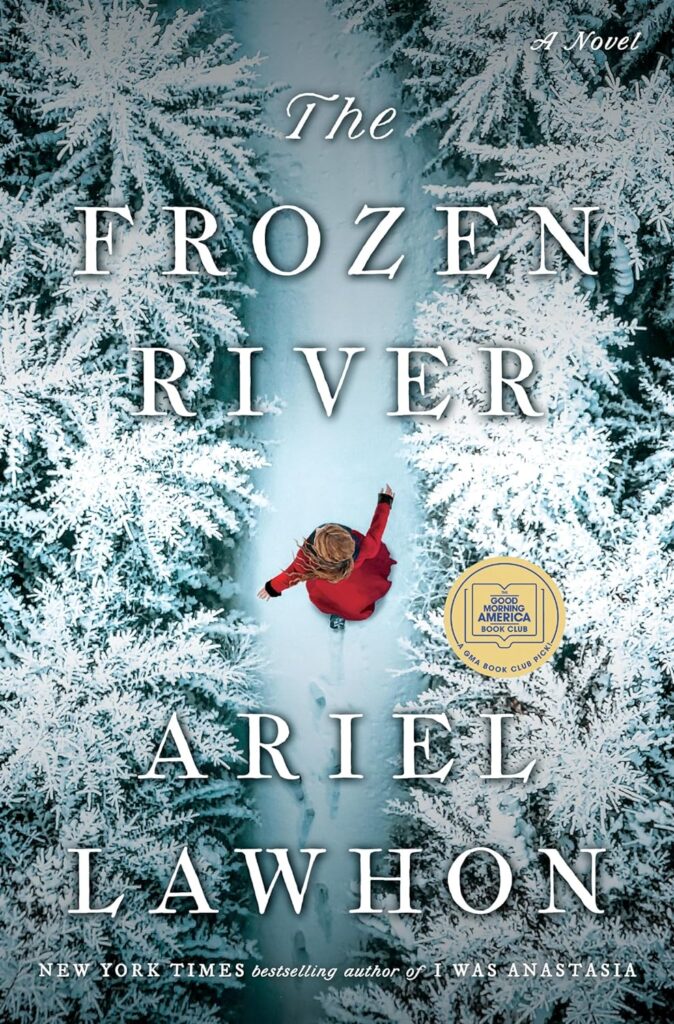
The Frozen River, by Ariel Lawhon

The blizzards that have been pummeling New England recently might hold us up for a while until the plows come through. They might send us scrambling for generators and firewood while waiting for the power to be restored, or putting on snowshoes to go out and assess the damage from fallen trees.

But what if we were in Maine in 1789 when the Kennebec River freezes and stalls activity in our small community? What if the river freezes early and traps a man’s body? Midwife Martha Ballard learns that two men fell through the ice that dark night: Sam Dawin who escaped and Joshua Burgess who didn’t. 

Called to examine the body Martha determines that Burgess was beaten and hanged before being thrown into the river. She’s interrupted by Dr. Page, a recent Harvard graduate and newcomer to town, who calls her an amateur and declares the death an accidental drowning. She later learns that her son Cyrus fought with Burgess shortly before the man’s death. Burgess and Judge North have been accused of raping a local woman, one of many secrets swirling in the village.

We follow Martha’s investigation through her activities as well as through the journal she keeps to record her work as a midwife and community events. Her story is “inspired” by the real Martha Ballard who lived in Hallowell, Maine, delivered over 800 babies, and left a diary covering 30 years of her life. While the author draws on the diary, a nonfiction biography of Ballard, and court transcripts, this story is firmly categorised as historical fiction.

I liked the use of the journal. Even when fictionalised, documents add veracity to a story. Although they sometimes repeated events already dramatised, these sections brought home the physical labor of using ink and quill. I also liked the use of a flashback at the end of each section to fill in information about Martha and her beloved husband Ephraim. These brief forays into the past come just when the information is needed.

The overriding image of the river is powerful; everyone depends on it and is controlled by it. The patriarchal limits on women are powerful as well. Martha’s work makes her an anomaly at a time when women had almost no power and rarely worked in a profession. A woman could not testify in court without her husband accompanying her. Midwives were being supplanted by male doctors who often lacked rudimentary knowledge of sanitation and dismissed women with complaints as lazy or crazy.

Being already well aware of these conditions for women in the 18th century, I found their frequent and unsubtle deployment made the story drag, as did the pace of events now and then. At the same time, I recognise that the slower pace is appropriate to life at the time, when it might take days or weeks to travel between towns, and that there are many readers who might not know about the limitations women suffered then. Similarly, the bullies and corrupt locals seemed exaggerated until I looked around at what is going on here today.

Without giving the ending away, I will say that I appreciated the story’s unusual path to resolution. I also appreciated how the Martha of this story adapts her strategies as needed during the investigation, sometimes backing down, sometimes attacking, sometimes negotiating.

The story also made me think about the body. Not just the dead man, the necessary start to a murder mystery, but also how we inhabit our bodies, whether it’s pushing a quill pen across rough paper or delivering a baby into the world, making love with a husband of 35 years or trying to move quickly through deep snow, riding a horse or dealing with the effects of rape.

Things have changed in the centuries since this story takes place, but not human nature, its insecurity and greedy grasp for power on the one hand and its generous care for everyone in the community on the other. And no matter how much we may think we’ve controlled the natural world since then, it only takes a blizzard to remind us how wrong we are.

What is frozen in your life? What will it take to unfreeze it?
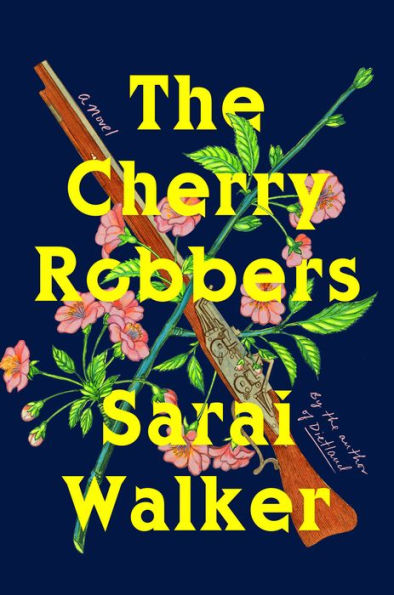
The Cherry Robbers, by Sarai Walker

Reclusive Sylvia Wren is a famous artist, now in her eighties, living in New Mexico and painting flowers that resemble women’s private parts. Her peaceful life is upended when a journalist discovers her long-buried secret: She is actually Iris Chapel, an heiress who has been missing for sixty years. Concerned that her story might be distorted or sensationalised, she begins to write it herself.

With that, we leave the frame story and plunge in the life of Iris Chapel, the fifth of the six Chapel sisters, born in the 1930s and all named after flowers. Their strict father is a gun baron, owner of Chapel Firearms, while their mother is a distant woman, obsessed by her own fears and her belief that the victims of those guns are haunting her. Alternating between screams and silence, Belinda also believes that the women of her family are cursed, and tries to keep her daughters from marrying

However, as the sisters begin to come of age in the 1950s, marriage seems to be the only way to get out of their restrictive home. Some of them long to live “normal” lives and head for that escape hatch, certain that the curse is just part of their mother’s madness. Iris comments:

It’s easier to say that women like my mother are crazy. Then you don’t have to listen to them. And so maybe in a way she became crazy. Maybe she could communicate only by screaming.

This novel was recommended to me when I was reading ghost stories around the solstice last month. I love the way Walker handles the spooky side of the story. People are haunted for sure, and sometimes ghosts are mentioned, but the story remains in a liminal space where the reader can believe in the ghosts or not. What is unmistakable is the underlying unease, a sense that something is dangerously wrong, and the way that unease intensifies as the story unfolds.

Iris alone believes her mother and tries to help her sisters. I loved the depiction of the communal life of the sisters, with their quarrels and tenderness, their jealousies and generosity. Like the plucky heroine beloved of gothic novels, Iris tries to be the compliant, self-sacrificing young woman her society demands, but says:

When you live in defiance of yourself, you can adapt to your circumstances, but remnants of who you are at your core remain. A bit of wildness that can’t be tamed.

With Iris as an engaging narrator, the first part of the story absorbed me. I found the  characters strong; the setting atmospheric, and the pacing excellent. However, the story went on too long and became repetitious. Also, coming back to the frame story at the end felt a little flat and predictable.

The use of Georgia O’Keeffe’s life and work to characterise Sylvia Wren disturbed me. Walker did acknowledge the artist in her note at the end, and she has a right to imitate O’Keeffe this way, since the artist is considered a public figure. If O’Keeffe were still alive would she object to this imitation? I don’t know, but somehow feel that this depiction is as jarring as commercials of Fred Astaire dancing with a vacuum cleaner. Similarly, using Sarah Winchester’s supposed fears as the centerpiece for Iris’s mother earned a raised eyebrow. I’m reminded of Milan Kundera’s Immortality where he delves into the morality of manipulating a person’s image and reputation after they are dead and cannot protest.

The title comes from D. H. Lawrence’s poem with its sensuality, blood and tears. While the metaphor of the cherry seems almost too direct, the poem brings more context to the uneasiness summoned by the image of a robber. I ended up liking the title and glad I read this book.

What do you look for in a ghost story?

Mrs. Dalloway, by Virginia Woolf

Reading this classic novel now, more than fifty years since I first encountered it as an undergrad, is quite a different experience. Back then I was confused and thrilled by Woolf’s modernist, experimental style that expanded forever my idea of what a novel could be.

Now I see it as a story of midlife, in several senses of the word. The story unfolds as a day in the lives of a handful of people in London going about their ordinary business, and we get thrown right into the middle of things. Clarissa Dalloway is preparing to give a party. Newly returned from India, Peter Walsh sets out to recapture the past by exploring London and visiting Clarissa, his first love. Richard Dalloway is off to lunch with old friend Hugh Whitbread at Lady Bruton’s. Septimus Smith, a damaged veteran of the Great War, and his wife Rezia are walking through the park, on their way to an appointment with a doctor.

Since Clarissa, Peter and others are in their early fifties, we have another sense of midlife. It’s a time of life when we look back nostalgically, but also when we measure ourselves—and others—assessing how we have changed with age, and calculating what we have made of our years. Have we measured up to our early promise?

Time comes up frequently, not just in the characters’ reflections on how they and each other have aged, their memories of the past, and the bustling busy lives of their present; but also in the more linear sense of the clocks sounding the hours of the day. Time in this novel is both infinite and finite.

Another sense of midlife underpins the story: the Bible’s “Media vita in morte sumus”—“In the midst of life we are in death.” Death comes up frequently, whether it’s Septimus thinking of suicide or Clarissa hearing old Mrs Hilbery at the party say “how it is certain we must die.” Clarissa herself has recently been ill which has turned her hair white and left a concern still about her heart.

In my youth the book’s theme that struck me most strongly centered on solitude versus society. Plunging into this novel, we have opportunities to see most of the characters alone—really see them; right into their jumbled, chaotic thoughts, sublime ideas, and snarky digs. We see Peter like his namesake in Kensington Gardens never having fully grown up, and Clarissa awash in memories of a golden childhood and gloriously loving her present life—until she’s brought low by self-doubt or sensing criticism from others.

We also see them with others, whether through intimate conversations or Clarissa’s crowded party. In some instances simply exchanging a look with someone else—a young woman in the park or an elderly woman in a window across the street—becomes a vital communication.

Clarissa believes that her strength is that she knows what other people are feeling. In fact, all the characters think they do, but they are mistaken. Richard is certain that Clarissa will know he loves her without his saying so. Peter thinks he and Clarissa read each other’s minds. The worst offenders are the two doctors to whom Septimus goes for treatment; they burst with confidence that they know what is wrong with him, but their pompous, one-size-fits-all solutions are worse than useless.

There’s a reason why so many books and essays and dissertations have been written about this novel. It is so rich—so full of life. You can look at it through the lens of class or gender; you can hold it up to Woolf’s own life; or consider the fragility of a world that is on the cusp of change—the book came out in 1925, so this year is its centennial.

For me in this reading it is the sense of time that demands my attention. Like these characters I strain to reckon the long years behind me: the golden times that I weave into stories for my grandchildren and the bitter griefs and regrets that I keep to myself. I consider what I will do with the few years that remain, knowing how much I value being alone and how much I enjoy being with others.

We are all born and we all die. That is what we have in common. What comes in between is our own unique story. By slicing one day out of the lives of this small group of people, Woolf gives us a glimpse of the extraordinary richness of the lives humming all around us.

If you’ve read Mrs. Dalloway, what did you think about it? If you’ve reread it, did your opinion change?

Note: My thanks to Tash for her discussion of the novel on her Woolfish! Substack and to all the commenters there as well for expanding my understanding of the novel.

The Real Mrs. Miniver, by Ysenda Maxtone Graham

The Real Mrs. Miniver, by Ysenda Maxtone Graham

We’ve seen the movie, of course, and thought it a sentimental film about a woman who is practically perfect in every way keeping her family together and holding the home front together during the Blitz—the bombing of London during WWII. The book the film is based on, a collection of columns from the London Times, was something else altogether: an idealised portrait of an ordinary upper middle class woman’s life in pre-WWII England.

Those columns were written by Joyce Maxtone Graham (née Anstruther) using the name Jan Struther, and she modeled the family on her own husband and three children. However, as we learn from this biography by her granddaughter, the loving Miniver family was a far cry from Joyce’s own. Her marriage to Tony Maxtone Graham, initially fun-loving and amusing, had dried up as he’d been taken hostage by golf, leaving Joyce to her articles and poems many of which were published in Punch among other periodicals.

Joyce had been a tomboy as a child, loathing the ceremonial tea parties and dance lessons, preferring to run and shoot with the boys. She and Tony initially shared a comic view of the world. I loved the way they shared the silly things they noticed during their days: pebbles, as she called them, like children turning out their pockets at the end of the day. As they drew further apart, Joyce fell deeply in love with Dolf Placzek, a penniless Jewish refugee from Austria gifted with intelligence and a strong appreciation for the arts.

The Mrs. Miniver columns depict a happy, loving marriage that was a far cry from what Joyce’s had become. Yet for many, those columns embodied an England that was being destroyed by the war and a reminder of what they were fighting for. Mrs. Miniver’s upper middle class life was comfortable, with a London house and a weekend cottage in Kent, a son at Eton, and servants to do the chores. The columns contain the small things she notices during the day, some pleasurable, some not—like the pebbles she and Tony used to exchange. While Mrs. Miniver could be critical of her social circle, she was alive to its charms.

Joyce—now Jan all the time—was shocked by the surprising success of the book and the reading tours and talks that followed. She came to be haunted by Mrs. Miniver. Many fans assumed they were the same person. She struggled to finding a firm place to stand.

Of all emotions, she perhaps felt the emotion of missing most acutely. At a party, she missed solitude. Abroad, she missed home. Cut off from her children, she longed to be with them again. When she was, she longed again for solitude. The raggle-tangle gypsy in her head beckoned her to escape.

Why read biographies? In my twenties I read lots of biographies of women writers and artists, looking for inspiration during a time when women were second-class citizens when it came to the arts. I was also looking for ideas for how to write while wrangling two babies and an ex who refused to contribute. Just keeping the heat on and some kind of food on the table was a miracle. Forget about finishing a story and sending it out.

These days I still look for inspiration from brave women and men as I struggle with how to live a moral life in an increasingly compromised and chaotic world. I’m especially drawn to women living during dark times. I’m also interested in the wide range of life choices people make. One thing that is so fascinating in this book is the contrast between the life of Mrs. Miniver—a model for womanhood at the time—and that of the woman who created her.


Sometimes with a biography, it is enough to see myself in a reckless tomboy unwilling to knuckle under to social norms or an almost accidental writer. Now if only I can catch the zeitgeist the way Jan Struthers did! Perhaps it’s better I don’t. Her story is yet another cautionary tale of how too much success and celebrity can wreck a person.

It’s been difficult lately to find books that hold my interest. My reading record is full of DNFs. This one, though, fascinated me and kept my attention right through to the end. Jan reinvented herself several times over, which I find wonderful. And she changed the course of history, inadvertently perhaps and not alone, but for sure. What kind of world would we be living in today if the U.S. had refused to join the Allies fighting Hitler and Mussolini in Europe and Africa?

I take courage from her story and the stories she wrote about the ordinary people of Britain as we fight today’s fascism.

Have you read a biography that inspired you?

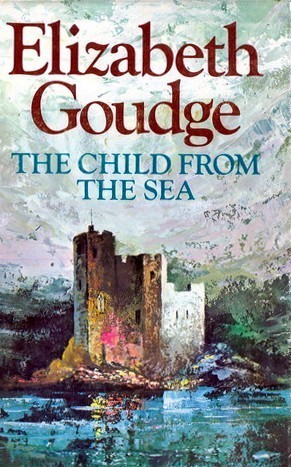
The Child from the Sea, by Elizabeth Goudge

Little is known of Lucy Walter whose son James was the oldest child of King Charles II. From those few facts, Goudge has spun an entrancing story of a vibrant girl whose great love for the prince—whose father ruled England, Scotland and Ireland as King Charles I—lasted a lifetime. We first meet Lucy as a child in Wales, where she lived with her family in Roch Castle and thought herself part buccaneer, roaming the countryside experiencing all of creation with a dazzling joy.

It was then she became aware of the birds. They were coming down from the sky like drifting autumn leaves, martins, chaffinches, goldfinches and linnets, finding their way to the bracken-sheltered hollows and the warm dry hedges and the safe crannies of the rocks. Lucy had watched the bird migrations before but she had never seen one halted like this, halted as the warning sounded along the shore.

She stood still, scarcely breathing, her arms out and her face turned up to the darkening sky, and they had no fear of her. A wing brushed her cheek and just for a moment some tired little being alighted on her hand, putting on one finger for ever the memory of a tiny claw that clung like a wedding ring. It was for her a moment of ecstasy, of marriage with all living creatures, of unity with life itself, and she whispered in Welsh, ‘Dear God, this happiness is too great for me!’

In London she glimpses the young prince from a bridge over the Thames, and they seem to have even in that brief moment a special connection, one that grows naturally over the years as they encounter each other, until they finally discover the wonder of first love. Though lost in their mutual fervor, Lucy insists on marriage first which, in this historical fiction, was performed by her beloved local parson before the marriage was consummated. It had to be kept secret because the political situation had become fraught.

However, this book is so much more than a love story. Charles’s father, Charles I, was under attack for his belief in the divine right of kings. He argued with Parliament by illegally levying taxes without their consent and alienated others during this time of religious disputes by marrying a Catholic and trying to enforce high-church Anglican practices. Charles I was successor to his father James I both of whom I encountered recently in Phillipa Gregory’s Earthly Joys.

The reader stays with Lucy as she tries to navigate these tumultuous times of civil unrest and debates over the power of the king and Parliament while staying true to her own Prince Charles. As we move between revolution and exile and betrayals, Lucy’s story illuminates themes of forgiveness, loyalty and enduring love. Given our own fraught times, her story is a welcome reminder of these virtues. They may not protect us from harm, but we can stay true to ourselves.

This final book from the beloved author of adult and children’s books abounds in such hard-won wisdom. I read it when it first came out in 1970 and at the time was absorbed in the romance of these two young people and of the Stuart kings about whom I’d read so much.

On this reading, though, I was looking for and found insight from Goudge, who was 70 at the time and had lived through both World Wars and the great changes and horrors of the Twentieth Century, as recounted in her memoir The Joy of the Snow. For example, the description of Elenor Gwinne, Lucy’s grandmother, the peace she had attained and how, struck me as a genuine example of wisdom one might come to in the course of a long life.

The other advantage of this late-in-life novel is that Goudge is writing in the fullness of her powers, as shown in the richness of the story, the interweaving of fact and fiction into a story that keeps the reader enchanted from first page to the last. We move from place to place but each one comes to life because we encounter them through Lucy’s eyes.

I was especially taken by the way Goudge uses description to evoke a response, everything from the smallest image to passages that capture your heart. A particularly thoughtful image is spoken by one of Charles’s friends: “ ‘ . . . loyalty is one of the most difficult of virtues, a flower with all its petals pointing in different directions.’ ” And a passage that thrilled me is:

The birds sang for joy of the growing light, and when Lucy opened her window to hear them, the air smelt of violets, though as yet she had found none under the dead leaves in the unicorn wood. But she found minute buttons of coral buds on the brambles and the green of dog’s mercury among the leaves, and when she left the wood and looked back from the far end of the field, she saw how the trees in the silvery sunshine were clothing themselves in pale amethyst and paler coral, in faint crimson and dun gold, one colour fading into the other as the colours do on the iridescent breast of a bird. 

Lucy never loses her thrilling response to the world, whether it’s a sailing vessel or a homely fire. She is no saint but is constantly reminded—and reminds us—that there are good people in the world and that even in the midst of danger we can keep a loving heart.

What historical fiction or nonfiction have you read that gives you courage in our dark times?

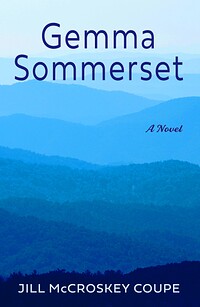
Gemma Sommerset, by Jill McCroskey Coupe

The story opens at a summer camp in the Blue Ridge mountains where fourteen-year-old  Gemma undergoes a transformative experience. In 1957 girls’ roles were strictly defined, especially in the South, but away from home and facing a surprising danger, she finds a new sense of herself. The problem then becomes what to do with that when she returns home.

Gemma is part of an in-between age group: too late to be part of the WWII generation and too soon for the Sixties with its peace-and-love. This new novel from Jill Coupe explores how throughout her life she balances her desire for adventure and accomplishment with society’s restraints and expectations.

She dreams of studying French in Paris but ends up in a traditional marriage, home with a baby while her husband continues up his professional path. I’m reminded of Philip Larkin’s poem “Afternoons” where he describes young mothers watching their children at a playground, ending with: “Something is pushing them / To the side of their own lives.” Gemma’s one joy is watching the sun rise each morning, its beauty a reward, its freshness a promise.

The wonderful editor Dave King once wrote about what he called the gentle genre: “straightforward tales of ordinary people in mostly every-day, low-key situations.  No psychotics, no wrenching twists, no gore, no vampires or werewolves or demons.” These stories were popular in the early part of the 20th century, from writers such as Jan Karon, Angela Thirkell, D. E. Stevenson, Elizabeth Cadell, R. F. Delderfield, and Wendell Berry.

The problem with writing such a story is how to create enough tension and suspense to propel the reader through to the end when you can’t throw in a gang war or vampire to liven things up. Dave King defines two ways to keep a gentle story going without letting it become either boring or saccharine. One is for the author to pay close and detailed attention to the characters so the reader will recognise that even small things hold deep meaning for them. The other is to set the story in a small town where you can’t avoid interactions with your neighbors, even if their opinions differ from yours.

In terms of the first method, we do get to know Gemma and the experiences that shape her and her refusal to be pushed to the side of her life. Since the story is told from her point of view, we learn about the other characters as she does. As for the second, her life revolves around her family so they, rather than the small city where she lives, become the community she defines herself within. Conflicts with her parents, husband, and daughters animate Gemma’s story as she strives to carve out a space where she can be herself while still caring for them. As Dave King says, gentle books—of which this is one—are “driven by love.”

Stories driven by love are a much-needed balm these days. Gemma Sommerset reminds me about the importance of family and community. We might disagree, but we can do so with love. So maybe Gemma’s not so far away from the Sixties generation as I thought.

What novel have you read lately that reminded you of what really matters?

Three Days in June, by Anne Tyler

I’ve been a fan of Anne Tyler’s novels from the get-go. She writes about my kind of people and the place I lived in for most of my life. I slip into her stories as though they’d been tailored just for me—and never more so than with this latest book.

Assistant head in one of those posh private schools Baltimore is known for, Gail is shocked one Friday morning when her boss discloses that she’s decided to retire, and the new head is bringing her own assistant with her. Gail’s response is to simply walk out of the school, leaving everything behind her.

She thinks that maybe she could go back to teaching math somewhere, but first she must deal with her daughter’s wedding on Saturday. The future mother-in-law has taken over arranging everything, and Gail feels obliged to leave her to it since the in-laws are paying for everything.

Her boss says Gail lacks people skills, but she does have a sharp eye and a tart tongue. I found myself snorting with laughter over her asides, laughing more at myself than at her. “I wondered why it was that I had so many irritating people in my life.” She reminds me of my grandmother when she was feeling cranky. She reminds me of myself.

It is Gail’s voice as narrator that truly carries the story and makes it impossible to put down. She may hide her emotions from others but she’s scrupulously open when it comes to her own thoughts. She says, “Sometimes when I find out what’s on other people’s minds I honestly wonder if we all live on totally separate planets.”

Just as she is settling into her day at home, the doorbell rings and it is her ex-husband Max, who’s brought along a cat he is fostering and thus cannot stay with his daughter; her fiancé is allergic. Thus begins three days of the two of them bumping up against each other, falling into familiar patterns and even developing new in-jokes.

The marriage of your only child rouses echoes of the past, in Gail’s case exacerbated by one of her former boyfriends turning up at the wedding. We gradually come to understand how Gail and her family got to where they are now and what choices they are going to have to make.

One of the things I’ve always loved about Anne Tyler’s books is her compassion for her characters, all of them. I truly felt that I knew Gail and commiserated with her as she tries to find her footing in a changing world. I’m charmed by this portrait of a marriage, odd and bumpy and interrupted as has been through the years.

Do you have a favorite Anne Tyler book?

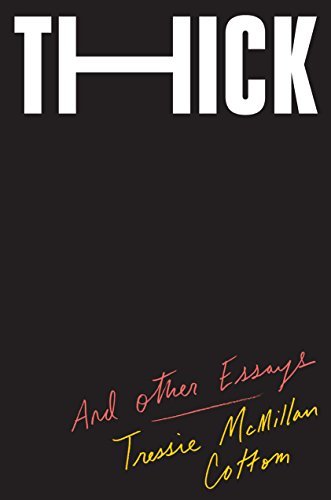
THICK and Other Essays, by Tressie McMillan Cottom

Reading this collection of essays has been like sitting down with a friend and asking, So tell me—what do you really think? Cottom draws on her academic training and her lived experience to create pieces that blur the line between sociology and personal essay. One editor said she was “too readable to be academic, too deep to be popular, too country black to be literary, and too naïve to show the rigor of my thinking in the complexity of my prose.”


If in her academic life she is chided for her popular success on social media and for using herself as a subject, she responds that “The personal essay had become the way that black women writers claim legitimacy in a public discourse that defines itself, in part, by how well it excludes black women.” Writing about your personal experience is a way in because your authority about your own self cannot be denied. Also, by its very form the personal essay invites empathy from readers.


I was, like many young women, expected to be small so that boys could expand and white girls could shine. When I would not or could not shrink, people made sure that I knew I had erred….[I was] thick where I should have been thin, more when I should have been less.

She writes about black women’s (and girl’s) problems, ones that are too often dismissed by others, in lucid prose that invites you into the conversation. But don’t be fooled by the casual tone. Yes she can be snarky and funny, but she can also pull out the statistics to support her statements and references to the work of other academics and deep thinkers. I often found myself setting the book aside between essays to follow the links in the endnotes for more detail.


I especially appreciate that she keeps probing at an issue. For example, in “Dying to Be Competent” she starts from our common desire to be able to manage our own lives, despite the fact that much of what happens to us is unpredictable and outside of our control. She goes on to tell a heart-wrenching story of trying to navigate the healthcare system, and the shock that despite her academic credentials and middle-class status markers, she has to fight for treatment and medication because the staff assume that she is incompetent and ignorant and thus can be ignored.


All this is presented in a cool tone and then buttressed by study after study about the high mortality rate of black women giving birth in the U.S., as well as by the example of what even celebrity tennis superstar Serena Williams had to go through to get a needed treatment, one that likely saved her life.


But Cottom doesn’t stop there. “Sociologists try to figure out how ideologies like race and gender and class are so sticky . . . The easiest answer is that racism  and sexism and class warfare are resilient and necessary for global capitalism.” A further analysis takes us to Patricia Hill Collins’s idea of “controlling images, those stereotypes that are so powerful they flatten all empirical status differences among a group of people to reduce them to the most docile, incompetent subjects in a social structure.” Such reduction is needed because “This moment of global inequality demands incompetent subjects.”


This is just one example from one essay. If I’ve made it sound like heavy going, believe me when I say that it is not. I read most of the essays twice, just for the sheer delight of following her argument. This is a book that has given me much to think about.


What book or podcast or blog has given you new insight into our culture?


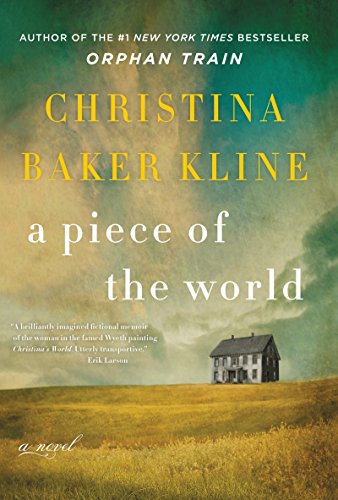
A Piece of the World, by Christina Baker Kline

Most people are familiar with Andrew Wyeth’s painting Christina’s World at New York’s Museum of Modern Art. However, little has been known about Christina Olson herself aside from the fact that she had a degenerative muscular disorder that eventually made her unable to walk. Another tidbit of knowledge has been that Wyeth often painted not only Christina and her brother, but also the house on the Olson farm in the small town of Cushing, Maine.

My interest in Andrew Wyeth’s work intensified when I visited a 2014 exhibition at the National Gallery of Art in Washington, D.C. Looking Out, Looking In concentrated on Wyeth’s paintings of windows. I already loved his famous Wind from the Sea, and became fascinated by his spare watercolors of other windows in the Olson house and others nearby. There are no people in these works, but their lives are somehow embedded in these spaces.

In his Director’s Note to the catalogue, Earl A. Powell III calls Wyeth’s window paintings “skillfully manipulated constructions deeply engaged with the visual complexities posed by the transparency, beauty, and formal structure of windows.” For my part, the theme named in the title remains a powerful one. Whether we are looking out or in, we see both the wide outside and the very personal interior. Also, I am deeply in love with houses, especially those which hold the story of my life.

In this novel, Kline has taken the woman whose image is so familiar and opened her life to us. In her own words, Christina recounts her childhood as a smart girl who wanted to become a teacher but had to leave school to help at home. She has a brief period of social life and a chance at love before her increasing disability keeps her tied to the farm while her friends went on to marry and have children. When one of her friends marries Wyeth, he and Betsy begin spending summers in Cushing, and he starts painting at the Olson’s.

It is Christina’s voice, though, that fascinates me. Amid the constant domestic toil, the brief joy of sweetpeas blooming, the interactions with her parents and brother, her growing friendship with Wyeth, her voice is genuine: stoic and reserved, occasionally ecstatic. I felt as though I lived through each day with her, each turn of the season.

I am wary of novels with real people as characters; it feels like an invasion of privacy to create a story of someone without their permission or knowledge. However, I loved Kline’s thoughtful understanding of what it might mean for a sensitive young woman to have to live such a restricted life—not just her physical restrictions, but also the small town, the confining house, the loneliness as friends and neighbors pull away. I had a tiny surprise: the Olsons were related to Nathaniel Hawthorne, as I am myself, making Christina perhaps a distant cousin.

The limitations of her life mean the story is thin on plot, and Wyeth himself is but a minor character. The real joy of this story for me is the immersion in this woman living a life I could so easily have fallen into. In the story, Christina says of the famous painting:

He did get one thing right: Sometimes a sanctuary, sometimes a prison, that house on the hill has always been my home. I’ve spent my life yearning toward it, wanting to escape it, paralyzed by its hold on me. (There are many ways to be crippled, I’ve learned over the years, many forms of paralysis.) My ancestors fled to Maine from Salem, but like anyone who tries to run away from the past, they brought it with them. Something inexorable seeds itself in the place of your origin. You can never escape the bonds of family history, no matter how far you travel. And the skeleton of a house can carry in its bones the marrow of all that came before.

Have you read a book inspired by a painting?

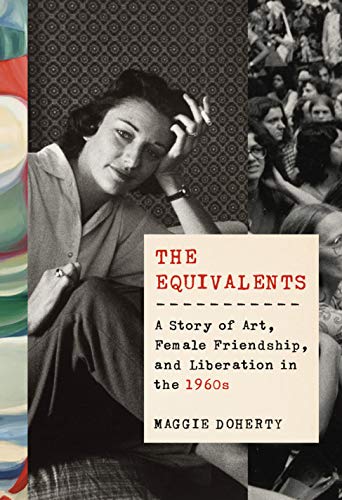
The Equivalents, by Maggie Doherty

Subtitled A Story of Art, Female Friendship, and Liberation in the 1960s, Doherty’s fascinating new book tells of a “messy experiment” at Radcliffe College. President Mary Ingraham Bunting became concerned with what happened to the graduates of this all-women college. Since at that time women were expected to marry and spend their time caring for their husbands and family, these educated women were expected to give up their academic or creative pursuits, or reduce them to hobbies, in order to become what Virginia Woolf called “the angel in the house.”

Remembering her own career as a microbiologist–and now college president–while raising a family, Bunting created the Radcliffe Institute for Independent Study in 1960. Fellowships provided a stipend, office space, and a like-minded community to help women advance their careers as scholars and artists while also caring for a family. For a two-year period, the Institute would provide a fellow the prerequisites for creative work, as described by Woolf in her famous essay “A Room of One’s Own.”

Doherty concentrates on a few of the first fellows: poets Anne Sexton and Maxine Kumin, writer Tillie Olsen, sculptor Marianna Pineda and painter Barbara Swan. They called themselves The Equivalents per the Institute’s requirement “that applicants have either a doctorate or ‘the equivalent’ in creative achievement.” Her extensive research underlies this engaging story of five very different women and their creative journeys. And the book is so much more: a cultural history of the time, an in-depth look at creativity—what enhances it and what destroys it—and an examination of privilege.

I confess that it is the latter that most interests me because, after all, even in the 1950s and 1960s, while White women in droves were immersing themselves in being housewives, Black and working class women were already working while trying to raise a family. I appreciate that in covering the nascent second wave of feminism, Doherty includes the Black women’s movement. While acknowledging it isn’t “her” experience, she does examine the very real problems Black women had with what became the  mostly middle- and upper-class White women’s movement.

Tillie Olsen’s story provides a needed corrective to Sexton’s upper-class privilege and that of the others’ somewhat lesser privilege. Olsen was “a first-generation, working-class American, an itinerant, and an agitator” who said outright that “the true struggle was the class struggle.” After early publication and literary acclaim, she had been side-tracked by the overwhelming labor of house, family, and dead-end job. Eventually the author of the best-seller Silences, she was alert to all the things that keep us from creating.

The way Doherty sensitively examines these women’s different struggles and achievements lifts this narrative above the ghoulish interest in Sexton’s suicide attempts and the tendency to concentrate on those artists who have been anointed as important—almost exclusively White males at the time, or the handful of women championed by them—to look at a broad range of circumstances and personalities.

She acknowledges the privilege but goes deeper. As Olsen said, “There’s nothing wrong with privilege except that not everybody has it.” This is as true today as it was in the 1960s. Fellowships, grants, prizes are wonderful but not everyone has the resources—time and money—to pursue and take advantage of them. As a single parent working two and sometimes three jobs to support my family, my own writing career had to be mostly put on hold for years.

I highly recommend this book to anyone who is interested in the creative life and what can inspire or hinder it. It’s also a wonderful portrait of that era and of these remarkable women.

Do you have a room of your own?