The Art Thief, by Michael Finkel

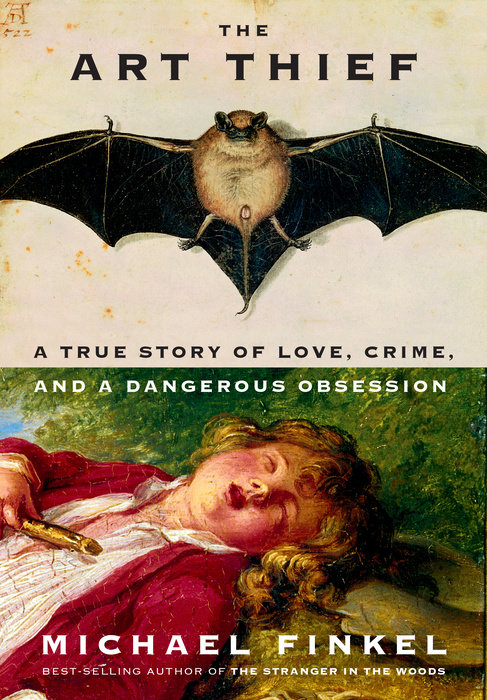
Why would a young man commit over 200 heists, stealing artworks and stuffing them into his attic bedroom? Finkel investigates the true story of Stéphane Breitwieser who stole nearly $2 billion worth of art—paintings, sculpture, tapestries, etc.—mostly from small museums that couldn’t afford a lot of security. Unlike other art thieves, he didn’t do it for the money. He claimed he did it to surround himself with beauty.

The first pieces he carefully displayed in his bedroom in the attic of his mother’s home in the French city of Mulhouse, but he couldn’t stop stealing and his loot began to pile up, as in any other hoarder’s lair. Breitwieser had no friends and didn’t work, but he did have a girlfriend who helped him pull off his heists.

Finkel’s earlier nonfiction book The Stranger in the Woods, about Chris Knight who spent 27 years living alone in a tent in the Maine woods, surprised me. Though curious to know a little more about Wright, I thought the story wouldn’t be substantial enough to fill a book—a feature article in a magazine, sure, but not a book. I was wrong. The depth of Finkel’s research, including in-person interviews with Knight and forays into the lives of the solitaries, kept me reading. I couldn’t help but catch his fascination with and curiosity about his subject.

Similarly here, Finkel keeps up the suspense to the last page. My book club all expressed their surprise at how spellbound they were by Finkel’s in-depth character study and by the artworks themselves.

We do have artists among us and all of us appreciate art. We’ve visited museums large and small, recognising sadly how scanty the security measures often are at the latter. How could they afford more? I remember many a small museum in Europe where, after paying a small fee at the door, I was free to wander about, no guards in the rooms and few other patrons.

We were also compelled by curiosity about Breitwieser himself. What kind of person would commit such selfish crimes? Not only did he endanger the art by taking it out of its controlled environment, but he hid it where only he and his girlfriend could enjoy it, denying the rest of us access. We were also interested in the two women who enabled him, the girlfriend who actively assisted him and his mother who pretended not to see what he was taking upstairs.

We called on the experts on law and psychology among us and speculated about his pathology. We all thought him such a strange person to act this way. But when we considered all the people these days who are greedily grabbing whatever attention, power, and money that they can, without the least regard for other people’s feelings, much less our lives and well-being—well, he’s not so strange after all. 

Also, while we deplored the thefts, we did feel a twinge of sympathy. A funny thing happened near the end of our discussion. One person admitted that every time they visit a museum she and her partner played a game of identifying which piece they wished they could take home with them. Several of us admitted to doing the same; I added that I usually tried to find a postcard of my chosen piece in the museum gift shop. We had a good laugh about how narrow the line is between our art appreciation and Breitwieser’s thefts. Yet it is a line none of us would ever consider crossing.

And therein lies the value of stories such as this. We’re not so different as we might think. Yet that difference is an important one.

What true crime story have you read that surprised you?

The Wonder, by Emma Donoghue

Like some of Donoghue’s other novels, such as Room and Haven,  this story again follows people confined in a tiny location. In 1850s Ireland Elizabeth (Lib) Wright, an English nurse, is sent to a rural area to stay with an 11-year-old girl who supposedly can survive without food. Anna and her parents say she has not eaten anything for four months, only water and—Anna says—manna from heaven.

A committee made up of villagers, including the doctor and priest, want to prove that the girl is truly not eating anything. Their motives are mixed, as we learn, but they are deeply influenced by the Catholic church and its stories of saints and miracles. To show their earnest motives, they hire both Lib Wright, who’s been trained in scientific nursing principles by Florence Nightingale, and a nun to take turns keeping watch over Anna.

Donoghue is too good a writer to let the women be flat symbols of science and religion. They are far more complex than that, and both waver into the liminal area between them. The story is told from Lib’s point of view, and she rails about the malign influence of the Catholic church and the way superstition and ambition play on the members of the committee.

Most of the story takes place in Anna’s small bedroom in the rough, rustic cottage where Lib requires the girl be isolated to ensure no one is slipping food to her. Even the parents must keep their distance except for a morning and evening greeting from her mother. Lib often clashes with the mother, such as insisting that pilgrims no longer crowd the cottage to see The Wonder and beg for her to bless them—before leaving a monetary offering of course.

Catholic doctrine and rituals guide the family’s days and nights. Anna prays constantly; her only books are religious texts. Lib herself is a sceptic and not religious at all. A veteran of the Crimean war and a short-lived marriage, she is determined to unmask the fraud quickly, so she can return to her hospital in England. Yet Anna, so smart and so sincere, begins to affect her during the long eight-hour shifts, just the two of them in the tiny room.

Among the other themes percolating through the story are ideas about food—it has not been that long since the potato famine in Ireland—and grief and the effects of isolation. I treasured the tiny hints of family, such as the destitute young cousin the family has taken in, and community where neighbors generously come up with scarce items such as extra mattresses and pillows.

Writers often talk about the ‘sagging middle’ where stories begin and end strongly but not much happens in the middle, leading to the reader giving up on the book. I gave up on this book several times. It seemed to drag on without much happening. Lib’s complaints about the Catholic church became repetitious as well, though perhaps that’s my fault, and  I’ve just read one too many books about the very real suffering of the Irish under the rule of a power-hungry church.

One solution to the ‘sagging middle’ is to include a turn in the very middle of the story. Sometimes called the fulcrum, hinge, or mirror moment, something happens that dramatically changes the protagonist and the course of the story. Not giving anything away, there is such a turn here which was interesting. However, I still struggled until the story picked up near the end.

I think what kept me going was my strong interest in that liminal moment in the 19th century when science challenged the church’s teaching. It seems important to revisit that time now when science is once again being thrown out in favor of gossip and superstition. And as a result, children are dying.

What period in the past gives you insight into today’s challenges?

Best Books I Read in 2025

As a writer, I learn something from every book I read. In no particular order, these are twelve of the best books I read in 2025. Please check the links to the blog archive for a fuller discussion of those I’ve reviewed.

Fiction

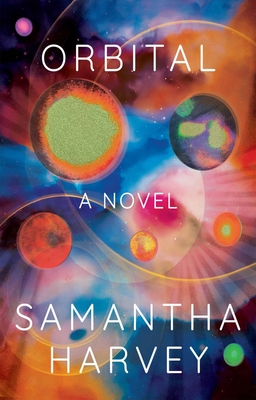
1. Orbital, by Samantha Harvey
Put six people from five countries into the International Space Station orbiting Earth and leave them there for several years. Now write about a single day, which encompasses sixteen orbits, meaning sixteen sunrises and sixteen sunsets. I immediately imagined around a dozen different stories that could come out of this premise. I never imagined Samantha Harvey’s Orbital.

2. The Painter of Silence, by Georgina Harding
In 1950s Romania a nurse named Safta recognises a new patient as her childhood companion. They’ve been separated by the war and the years and the changes wrought by Stalinist rule. Deaf and mute, Tinu only communicates through his art. This is the novel I have been waiting for. Hoping for. It is quiet and asks much of the reader as it unfolds.

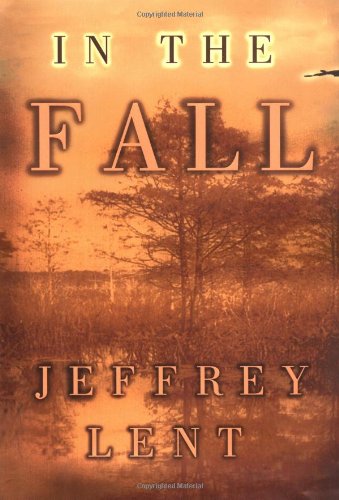
3. In the Fall, by Jeffrey Lent 
In Virginia during the last days of the Civil War, a wounded Union soldier becomes separated from his comrades and is found near death by an escaped slave who saves him. Norman Pelham and Leah Mebane become inseparable and, after he is demobilised and they marry, the two decide to walk to his home in Randolph, Vermont. This story of three generations of Pelhams made me forget everything else in order to finish it.

4. The Summer Book, by Tove Jansson
The twenty-two chapters that make up this brief novel combine surprisingly poignant discussions between two women, one very young and one very old, with closely observed details of the natural world  on a tiny island in the Gulf of Finland. The chapters are deceptively plain yet leave the reader aware that each seemingly normal summer adventure holds a deeper meaning. Jansson’s simple and direct language leaves a silence similar to the white space around a line of poetry, space where a reader can bring forward her own memories.

5. Mrs. Dalloway, by Virginia Woolf
Reading this classic novel now, more than fifty years since I first encountered it as an undergrad, is quite a different experience. Back then I was confused and thrilled by Woolf’s modernist, experimental style that expanded forever my idea of what a novel could be. Now I see it as a story of midlife, in several senses of the word.

6. Middlemarch, by George Eliot
What stood out to me on rereading this classic is the theme of what it means to live a good life. By that I mean a life of integrity, one we can be satisfied with when we lie on our deathbeds. In Middlemarch we have all these lives, all of these people intending to do the right thing yet derailed by temptations and compromises and the pressures of daily life. As we follow each storyline, we get to see various permutations of what a good life might look like—or not.

7. Birds of Paradise, by Paul Scott.
A reread of one of my favorite books, I found this story of William Conway looking back and trying to make sense of his life as good as I remembered. Conway revisits people and memories from his childhood in India during the Raj, his English education, and his suffering in a Japanese prison camp during WWII. So much is obscured in our lives, so much we don’t understand at the time.

8. Brother of the More Famous Jack, by Barbara Trapido
I looked for some light reads this year and this one really tickled me.

Nonfiction

1. A Woman in the Polar Night, by Christiane Ritter
In 1934, the painter Christiane Ritter leaves her comfortable life in Austria to join her husband Hermann for a year in Spitsbergen, an island in the Svalbard archipelago, which lies between mainland Norway and the North Pole. Ritter’s journal summons the experience of surviving such a punishing climate and its surprising rewards.

2. Spell Freedom: The Underground Schools That Built the Civil Rights Movement, by Elaine Weiss
This well-researched and engaging book tells the story of some of the less well-known leaders of the Civil Rights Movement, courageous people who came before the famous speeches and laid the foundations for the Movement’s success by creating the citizen schools that prepared Black Americans in the Jim Crow South to register to vote.

3. Ghostland: In Search of a Haunted Country, by Edward Parnell 
A fusion of travelogue, literary review, and memoir that reminded me of (and mentions) W. G. Sebald’s Rings of Saturn, it sent me off to read many of the books I didn’t already know. And I discovered a story that sent me to the heart of something that has haunted me for a while.

4. The Lost Words, by Robert MacFarlane and Jackie Morris
When the Oxford Junior Dictionary was updated, it was found that around forty common words had been dropped—all of them words to do with nature. In response, MacFarlane and Morris came together to create what they call a spell book to help young readers rediscover the natural world, believing that unless we experience and learn to love the world of nature around us, we will not work to save it. This is the most beautiful book I’ve seen in a long, long while.

What are the best books you read in 2025?

Wakenhyrst, by Michelle Paver

For the winter solstice I wanted to return to East Anglia and the fens, a time and a place when the veil between our world and another seems to thin. Paver’s novel fit my mood perfectly with its luminous and sometimes eerie descriptions of life in fen country.

Many Gothic novels use a frame story, usually told by an ordinary person, someone the reader can identify with. Then the inner story plunges into the darker twists and turns of human nature before ending with a return to the realistic world, reassuring perhaps, yet still haunted by a suspicion of unease.

Here the frame story takes place in 1966, starting with a magazine article. The first paragraph lands us right in the story.

Like a witch’s lair in a fairytale the ancient manor house crouches in its tangled garden. I can’t take my eyes off the ivy-choked window above the front door. It was from that window in 1913 that 16-year old Maud Sterne watched her father set off down the steps with an ice-pick, a geological hammer—and murder in his heart.

The article’s author describes a visit to the now elderly Maud, alone in her crumbling manor, Wake’s End, in Suffolk. He suggests that Edmund Sterne might have been innocent, adding, “We only have Maud’s word that he did it.” Then comes an exchange of letters between Maud and an academic culminating in her inviting him to Wake’s End.

From there we go into the larger story, beginning in 1906 with young Maud as our guide. The house is situated by Guthlaf’s Fen, one of the few fens that hasn’t been drained to create more farmland. Her father Edmund hates it and won’t allow any of the windows on that side of the house to be opened, but Maud loves it.

To her the fen was a forbidden realm of magical creatures and she longed for it with a hopeless passion. In summer the scent of meadowsweet drifted across the Lode and the reeds rang with the eep-eep of frogs. In winter Maud could hear the ice cracking on the Mere and the skies were alive with vast skeins of geese. One afternoon they’d flown right over the garden, and the beat of their winds had lifted Maud as if she were flying.

The sense of dread grows as Maud’s mother suffers multiple unsuccessful pregnancies. “ ‘Perhaps not every night,’ ” the doctor advises, but Edmund brushes him aside. Maud finds her father’s private journal where she learns of the foggy afternoon when Edmund walked by the church in the nearby hamlet of Wakenhyrst. “The church loomed, deep black against the charcoal sky. It seemed not a place of sanctuary, but the menacing relic  of a savage and haunted past.”

Then he tripped over the planks he’d ordered stripped from the chancel arch as part of the renovations. Seeing an eye peering up at him from the grass, he felt a strange sense of guilt and caught “a strong marshy whiff from the fen.”

It turns out that the planks hold a medieval painting that had been whitewashed by the Puritans, a Doom that depicts the Last Judgment, dominated by the gleeful devils torturing the damned. It is restored and mounted in a separate room in the church, yet the painting clings to his imagination until he begins to see devils everywhere.

With the unearthing of the Doom, he comes to believe that “Something has been let loose…” The old superstitions still have a hold, not only on the church-going residents of Wakenhyrst, but also on the manor house where servants tell Maud stories of the fens, and now they gradually take hold of Edmund himself.

Maud finds, though, that her father won’t give up his autocratic grip on the household and is frustrated in her attempts to educate herself. The sense of intrigue grows as she begins to unearth other secrets even as the claustrophobic atmosphere tightens around her.

What I liked about this story was its slow burn. It moves within that liminal space between the ancient mysteries and the modern world without completely spilling over into either horror or rational explanation. I found plenty of tension and suspense, but they are curiously muted by the proximity of reality; somehow that intensifies them.

Framed narratives like this one, with their multiple narrative voices, do increase suspense and also create a sense of unease through the blurring of reality and fiction. There are some daring moves on the author’s part, such as revealing so much in the first paragraph and then staying within that liminal space between the natural and supernatural worlds. I thought she succeeded and look forward to reading more of her work.

Can you recommend a good Gothic novel or perhaps a literary novel with some Gothic attributes?

The Box of Delights, by John Masefield

Changing trains on his way home for Christmas from his first term at school, Kay Harker meets an old man who asks Kay to help him lift his large case onto his back. “ ‘Only I do date from pagan times and age makes joints to creak.’ ” Once on the train Kay, who seems to be around eleven or twelve, is approached by two suspicious men dressed as clergymen who entice him into playing cards for money.

When Kay disembarks in Condicote, he finds that his wallet and watch are missing. He meets the old man again, now revealed as a Punch-and-Judy man, who asks him to pass on a warning that “the wolves are running” to a woman outside Bob’s bakery. Carolina Louise, Kay’s guardian while his parents are absent, agrees to the stop and also tells him that the four Jones children will be staying with them at Seekings over Christmas: Peter who is near his age, Jemima, Susan, and young Maria with her revolvers. “ ‘I shall shoot and I shall shock, as long as my name’s Maria,’ ” the girl says later. She might be my favorite character.

The old man, Cole Hawlings, comes to Seekings to give a Punch and Judy show for the children, which he follows with a magical adventure where one thing turns into another, such as when “[i]t seemed to the children that the ceiling above them opened into a forest in a tropical night: they could see giant trees, with the stars in their boughs and fireflies gleaming out.”

Later he entrusts Kay with the magical box of the title with a knob on the outside which enables him to “go small” or “go swift.” Also, each time Kay opens the box, he’s transported into the past where he might meet up with Herne the Hunter, the Lady of the Oak, fairies, or a Roman legion. However, the wolves—human and animal—are after the box and the action accelerates with the robbers “scrobbling” people left, right and center and chasing after the children.

A beloved Christmas favorite in England since 1935, The Box of Delights is now available in the U.S. from the New York Review of Books in a revised edition that restores sections cut from previous versions and has been corrected from the manuscript. John Masefield was a well-known poet (author of “Sea Fever,” my mother’s favorite poem) and poet laureate for England from 1930-1967.

After finishing this book, I learned that it’s the sequel to The Midnight Folk, which I haven’t read. This could be why I was so confused at the beginning. I couldn’t figure out who Carolina Louise was—another child?—or where all the parents were? Yet my discombobulation turned out to be good preparation for the wild proceedings to come; the book does come at you fast and furious, with kidnappings, chases, robberies, and terrifying escapes. We’re told as writers to teach our readers how to read our book. Mission accomplished, Mr. Masefield!

It seems clear that Masefield’s book influenced many later children’s stories: T.H. White’s Sword in the Stone (1938), Elizabeth Goudge’s The Well of the Star (1941), C. S. Lewis’s Narnia books such as The Lion, the Witch and the Wardrobe (1948), Susan Cooper’s The Dark Is Rising (1973), and probably even J. K. Rowling’s Harry Potter books. 

Today’s children might have trouble untangling the period slang, historical references, and folklore. Also, unlike the books mentioned above, the plot, if it exists at all, seems almost beside the point until we get towards the end. Instead, we fall from a fairly ordinary train journey into a series of increasingly odd adventures which are indeed delightful but can leave the reader feeling unmoored. Still, I hope children will try it; adults, too.

This is a book I will return to during the holiday season, as so many others do. I’ll probably skip around to favorite bits rather than read it straight through, but we’ll see.

Is there a book you like to reread in December?

Reprise: Diamond in the Window, by Jane Langton

In one of my book clubs, we decide on a theme for the month and then each talk about the book we read. Our choices inspire great conversations and often end up on each other’s to-be-read lists. Our last theme was a favorite childhood book, so of course I chose this one which I wrote about in the early days of my blog. Here’s my earlier post about it. Note: the previous week I’d written about March, by Geraldine Brooks.

…………………………………

Before leaving the Transcendentalists, I wanted to reread this young adult book where I first heard about them.  I found it one cold, rainy day at Whippoorwill Girl Scout camp where—having escaped from the prescribed activities—I was poking around some bookshelves in a dark corner of the hall.  Behind some mildewed Readers Digest Condensed Books, I found one with corners of the cover frayed by mice and the pages brown-spotted with damp.  I hid behind a chair to read it and got through the first few chapters before being discovered by one of the leaders and told to put it back.

It took me almost two years to find the book again and finish it.  I couldn’t remember the title or the author’s name, only the story, and after a while I began to believe that I had dreamed it.  When I finally came across it on my local library’s shelves, I couldn’t believe it.  It was as though a fantasy had suddenly become real.

Ned and Nora live in a Gothic monstrosity of a house in Concord, Massachusetts, with their aunt and uncle.  Aunt Lily teaches piano lessons to support the family because Uncle Freddy—who used to be a famous scholar—has lost his mind and spends his days arguing with marble busts of Thoreau and Emerson.  The children have a run-in with a couple of town worthies who consider the house and the family a blot on their sacred soil and threaten to take it for unpaid taxes and burn it down.

The children discover a mysterious room at the top of the house with some dusty toys and two twin beds.  Confronting Aunt Lily, they learn that Lily and Freddy’s youngest sister and brother had gone missing from that room as children, followed by Lily’s sweetheart, Prince Krishna.  Ned and Nora decide to sleep in the room themselves.  However, in their dreams, they are plunged into magical adventures, adventures which turn dangerous.

There are a few books I read as a child whose images have become so ingrained in my thoughts that they have become part of my private mythology.  This is one of them.  It wasn’t until I was grown and had read Emerson and Thoreau for myself that I recognised that each adventure embodies one of the Transcendentalist ideas and images, such as the rough wooden harp they found while climbing in an elm tree, an aeolian harp, although it is not named in the book.  The wind blowing across the harp strings translated the voices of nature into sounds they could understand:  “ ‘These trees and stones are audible to me,’ ” as Uncle Freddy quoted Emerson.

The adventure that I think about most often, though, is the one where they go into a mirror and find two statues of each of them, a little older than their current age.  Ned and Nora separate, each choosing one of their statues.  Behind that one stand two more.  Their choices eventually lead them to statues of themselves as adults, at which point they are able to see if they have chosen wisely.  Unlike real life, though, they are able to go back and make different choices.

What was one of your favorite books as a child?

The Painter of Silence, by Georgina Harding

A sick and emaciated man collapses on the steps of a Romanian hospital in the town of Iași. He is deaf and mute and (we learn) has been since birth so is unable to communicate with anyone. A nurse named Safta recognises him as Augustin—Tinu for short—who shared her childhood on her parents’ estate Poiana. Although Tinu was the cook’s son and Safta the cherished daughter, they had a special bond. She encourages him to draw, as he did as a child, but at first he refuses.

It is the early 1950s and Stalin’s Russian holds the country in its grey and relentless grip. Yet, in trying to get through to Tinu, Safta begins to talk of their golden childhood, something she has refused to even think about for years.

She talks and talks, as do others who, unlike her, seem freed by knowing that he does not hear what they are saying. The theme of communication winds through the book. There is much that we, like Tinu, must intuit. Safta, too, must discern how best to help Tinu when he is released from the hospital.

Place and the social environment are important aspects of the story. The settings are described only briefly, yet come alive in the imagination. Here is the Poiana of their childhood:

The house at Poiana was imposing at first glance. There was its whiteness, the long neoclassical front, the pedimented porch and ranks of green-shuttered windows. It looked larger than it was because it was only one room deep. If a person came up the drive and looked in he might see right through the glimmer of glass to the garden beyond.

It was a place that light passed through, the light of successive windows thrown onto fine parquet floors in rooms that opened one on  to another, the doors of the rooms always open – save when great and irritated effort was made to close them during the coldest stretches of winter – since this was a house which people moved through freely, like the light: family, servants, visitors, villagers, who came on errands or to make a request or seek advice, the children of the house and the children of the servants. 

This is the novel I have been waiting for. Hoping for. It is quiet and asks much of the reader as it unfolds.

It is not that the language is gorgeous, though each sentence is remarkable in its elegant simplicity. It is not that the plot is thrilling, though terrible things happen and people must learn to live with them and with their own actions. It is not that the characters entertain us or steal our hearts, though we cannot help but walk with them as they move through a world that has changed beyond recognition. Yet it is a balm.

World Wars I and II destroyed a way of life that had seemed as though it would last forever. In England, it was the Victorian/Edwardian age, the age of empire; in Romania, it was the age of its birth as a relatively democratic constitutional monarchy. Romania had only become a country in 1859, gaining independence from the Ottoman Empire in 1878. Siding with the Entente Powers in WWI, Romania grew and prospered during the inter-war period, a time of wealth and privilege for the great families and stability for those who served them. Initially neutral in WWII, Romania eventually allied with Germany and Austria-Hungary to protect themselves from Russia.

That war (WWII) is mostly offstage in Harding’s story. Tinu notices the refugees and later the troops before he is himself apprehended. He does not understand why these things are happening, why everything keeps changing. Far away in Iași Safta resolutely puts one foot in front of another, keeping her head down, working as a nurse. It is only when Tinu turns up that she begins to allow memories of her childhood to emerge and to reckon with all she has lost.

We may not all be suffering through a world war or see our country invaded by Stalin’s Russia, but we all understand loss. Eventually, we all experience what Jane Smiley called the Age of Grief. We all have lost paradises of some sort or another and have things we cannot speak of, except perhaps to someone who cannot hear.

I have always felt our civilisation to be tenuous and had nightmares about its eventual rupture. Perhaps that is a legacy of growing up in the shadow of the bombs that destroyed Hiroshima and Nagasaki. Perhaps all of us, no matter when we were born, carry a secret store of anxiety. Harding’s story places a gentle hand on that wound and reassures me that I’m not alone. It asks me to remember what has been lost, cherish what is beautiful, and watch out for one other.

Have you read a novel that you didn’t know you were looking for?

The Liar’s Dictionary, by Eley Williams

In 21st century London, Mallory works as a low-paid intern at Swansby’s, helping prepare their dictionary to be digitised. As the sole employee, she also must fend off threatening anonymous calls from a man angry about the dictionary’s newly inclusive definition of marriage.

When owner David Swansby finds a mountweazel—a non-existent word sometimes added to catch plagiarists—he  assigns Mallory to go through every single entry to verify that it is a real word. Mallory’s girlfriend Pip, a barista, decides to help, resulting in a fun version of Fictionary.

The absurdity of such a tedious task is increased by the fact that the last volume of Swansby’s Encyclopaedic Dictionary was never finished; all the men working there went off to war in 1914 and the printing presses were melted down. Now David Swansby wants to preserve his family’s work by putting the existing volumes online and closing down his great-grandfather’s company.

Alternating with Mallory’s story is that of Peter Winceworth, a laborer in the trenches of Swansby’s in 1899. Socially inept, Peter is the butt of jokes from his co-workers. He has affected a lisp since his youth, perhaps out of boredom or to annoy his father, and now clings to it as his secret way of showing contempt for his tormentors. Of course, he has been assigned to the “S” section of the dictionary.

He has another secret way to assert himself: He has begun to insert his own words into the dictionary. Some are fun sniglets—words that don’t appear in any dictionary, but should—while others are more personal, such as “winceworthliness, (n.), the value of idle pursuit.”

As a confirmed logophile, I enjoyed the audacious and whimsical use of language here. The etymologies and definitions, both real and fake, are like candy to me, and the whole enterprise of determining real words from fake raises interesting questions. For example, when Swansby explains to Mallory that a mountweazel is “a made-up word”:

“All words are made up,” I said.

“That is true,” David Swansby replied, “and also not a useful contribution.”

The term refers to a fictitious entry in the 1975 New Columbia Encyclopedia about Lillian Virginia Mountweazel, a fountain designer turned photographer, deliberately placed as a copyright trap. Continuing the joke, there is actually a Lillian Virginia Mountweazel Research Collection which displays photos attributed to her, though a footnote acknowledges that “All the materials presented here as her works are authentic pieces created by other photographers, repurposed or collaged from media that are in the public domain.”

There are also some Easter-egg tributes to Lillian in this book. Don’t be put off by the mock-pompous preface about creating an ideal dictionary. Once past that and into the A-Z chapters, the story becomes a sprightly tale about two characters who hide themselves: Mallory who wants people to think she’s straight and Peter who shields his heart with lisps and lies. There’s occasional wordplay in the text as well, such as this from Peter on a park bench.

The best benchside exoticisms January could offer were all on show—the starling, the dandelion, the blown seeds and the birds skeining against the grey clouds, hazing it and mazing it, a featherlight kaleidoscope noon-damp and knowing the sky was never truly grey, just filled with a thousand years of birds’ paths, and wishful seeds . . .

Such language can overwhelm a story yet here it just seems part of the fun. The story itself is light, a mere trifle, despite a few dark moments. I’m eager now to read the author’s two short story collections.

What is your favorite made-up word?

In the Fall, by Jeffrey Lent

In Virginia during the last days of the Civil War, a wounded Union soldier becomes separated from his comrades and is found near death by an escaped slave who saves him. Norman Pelham and Leah Mebane become inseparable and, after he is demobilised and they marry, the two decide to walk to his home in Randolph, Vermont. As they pass through nearby Bethel, his fellow veterans—already home for several months—watch for him.

So they saw him pass along the road that Indian-summer morning with the sugarbush maples flaring on the hillsides and the hilltop sheep pastures overgrown with young cherry and maple. Word ran along the road ahead of him so near all his neighbors and townspeople saw him walking in the long easy stride of one who counted walking in months and years not miles, a rucksack cut from an issue blanket strapped to his back and by his side a girl near his own height in a sunfaded blue dress and carrying her own cardboard suitcase bound with rough twine.

Norman’s father has died while he was fighting, leaving the farm to him. His mother and two sisters, while abolitionists, are so shocked and troubled by Leah that they move into town, leaving the young couple to begin their new lives on the farm. Fired by their fierce love for each other, they ignore the scorn of their neighbors by keeping to themselves and plunging into the hard work of making a living from a hill farm.

Thus begins this saga of three generations of Pelhams, haunted by their troubled legacy of what Leah left behind and by America’s ongoing racial tensions.

This debut novel was a huge bestseller when it was released in 2000. I told the friend who recommended it to me that I didn’t know whether to bless her or curse her because I found it thoroughly addictive reading—the prose so luscious that I read slowly to savor it and could hardly bear to set it aside until I’d finished all 565 pages.

Lent takes his time with the story, enclosing me in the worlds of nineteenth-century farm life and early twentieth-century bootlegging, in New England’s mountains and North Carolina’s tobacco and cotton fields. I especially enjoyed the very specific details about tools and descriptions of places and processes in these time periods; they added so much richness to the fabric of the story. I could tell how fully the author inhabited each moment of the story as he wrote.

The partridge went up, a sudden burst of speckled animation that hit a long going-away glide down the mountain and he passed the splendid moment where his mind left him and was all out ahead of him, pinned down only on the flying bird as the gun came up. Then there was a pinwheel of feathers and both dogs broke past him and he was back.

A few things surprised me. For example, some significant events are skipped over in a sentence or two while others that seem lightweight unfold with great leisure. A possible reason could be that this is a story about men, so the female characters’ stories—aside from aspects that influence the men’s stories—are just not that important. Or maybe the reason is that we are in the men’s point of view and they simply don’t understand the women’s experiences. Maybe it’s something else altogether.

Much as I eventually loved the book, I almost stopped after the first couple of pages. Why? Because I don’t like when a chunk of text from later in the book is stuck in front as a prologue. It feels like an attempt to motivate the reader to plow through hundreds of pages until we finally meet these people and find out who they are, instead of just trusting the story. I’m not opposed to all prologues; some are great. But this book doesn’t need a prologue; Chapter One begins with a splendid hook. Once I got there, I was caught by the prose and the lovely grounding in time and place and character and theme.

I truly did not want this book to end. I keep opening it up in random places and looking closely at a single paragraph, trying to see how Lent works his magic. I read it aloud. Sometimes I copy it, writing in longhand, to get the feel of the sentences in my fingers. It really is beautifully done. I’m eager to read some of his later books.

Have you read a novel where it felt like falling into a dream from which you never want to wake up?

Before the Ruins, by Victoria Gosling

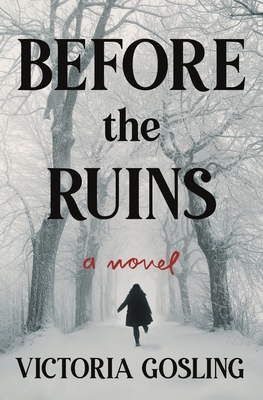
“The year Peter went missing was the year of the floods.” Thus begins this tale from Andrea (Andy) set in the present-day but reaching back twenty years to the summer of 1996 when she and her friends have finished their final exams. A bored teenager with few prospects, Andy enriches her life by coming up with games to play with her three best friends: Peter, Marcus and Em. The guardrails come off when Andy’s alcoholic mother predicts the apocalypse is about to occur—if the world is ending, their actions have no consequences—and the four friends take over an empty manor house near Marlborough in Wiltshire.


Learning that a valuable diamond necklace had been stolen at the manor fifty years earlier and never recovered, they embark on a new game of playing detective. Em acquires a cheap copy of the necklace—a tourist item in town—and they take turns hiding it, a game that has the added relish of perhaps actually finding the real necklace and changing their lives. Another teen, the suspiciously charismatic David, turns up one day, claiming to be a friend of the absent owners and quickly becomes a part of the group.  


Yet there’s an ominous push-pull within the group as they practice deceiving one another. Relationships fray; secrets and lies erode trust; betrayals lurk in the shadows. The story builds gradually, moving between the search for Peter in the present and unpacking the events of the past, turning them this way and that, looking at them anew.

Memory is a house, a castle with many rooms. Some of the rooms are deeper inside, honeycombed away. Each has a thousand keys – an image, a smell, a sound. Behind each door are a thousand other doors.

I was drawn to this novel because I like the narrator of the audiobook, Kristin Atherton, and because a reviewer compared it to Tana French’s work. My favorite is The Likeness of which I said, “French captures so well the fun of being part of a tight group of friends, when you’re young, and it’s all happening for the first time, and everything seems unbearably sweet.” Gosling’s story comes at youthful friendship from another angle, capturing its mystery and beauty, but also its fragility and fear.


To sleep on? Or to wake? This was the question facing me. To sleep, or to wake and face the reckoning, to find out what had been lost.

I thought Before the Ruins would be another in a long line of gothic mysteries about a narrator revisiting formative events in the past, secrets that come to light, etc. However, I underestimated the book. It rewards deeper investigation, from the pun in the title (before) to the use of diamonds as a MacGuffin to the sly use of imagery (floods, treasure, playing games, losing your nerve at the prospect of a leap).


Caught up in the story I noticed little else, but on reflection I wish we could have gotten to know the characters other than Andy a bit better. The way they are presented makes sense since we are getting the story through her point of view which comes with her own blinders; only near the end do their actions indicate more complexity. I would also have welcomed more description of the manor itself.


As a writer, several things in this book impressed me: the complexity of the narrative with multiple storylines and reveal after reveal; Gosling’s willingness to let the slow burn unfold in sentence after delicious sentence; and the way she hits the reader flat out near the end, signaling that whatever you thought the theme was, it’s so much more. No spoilers here, but be prepared to discover layers upon unexpected layers of this story.


Have you read a novel that turned out to be much more than you expected?