The Strand Magazine, Issue LXXV 2025

A new story by Graham Greene? And a new one from Ian Fleming, too? Wow! I had to send for this issue.

Greene’s story is a departure from his usual explorations of moral ambiguity in the worlds of diplomats and spies, which he knew from having been recruited by MI6, as well as the Catholic faith and imperialism. “Reading at Night” is an entertainment indeed: a ghost” story, reminiscent of classic British ghost stories such as those described in Ghostland, by Edward Parnell.

A man who is traveling on the Côte d’Azur stays in a borrowed house has a nervous disposition, traumatised by a boyhood reading of Dracula. He picks up an anthology of stories to read himself to sleep, but unfortunately the one he lights on . . . Well, Greene shares the story with us and it’s disturbing and mysterious. When our man becomes too terrified to read any more, he puts the book aside and turns out the light. Then . . .

I found myself going back to look for what Donald Maass calls promise words: words that tell you what to expect in the story. I found plenty that helped create the ominous atmosphere, the sense of being outside of the natural world, and the suspense.

Ian Fleming’s “The Shameful Dream” is not about James Bond, but rather a story of psychological suspense as a successful literary editor, Caffrey Bone, drives toward the home of the Chief. Lord Ower has invited Bone for the evening at The Towers and to spend the night. Gradually, though, we learn the reasons why he wishes the invitation had been sent to someone—anyone—other than himself. Plenty of promise words in this sentence alone:

Bone stared moodily ahead at the rain and the dripping hedgerows and at the shaft of the headlights probing the wet tarmac of the secondary road which would bring him in due course to The Towers.

I had heard of The Strand Magazine in its British incarnation. From 1891-1950 it published short fiction and general interest articles and was perhaps best known for being the first in the U.K. to publish Arthur Conan Doyle’s Sherlock Holmes stories and some of Agatha Christie’s. I somehow missed that it was revived in 1998 in the U.S. The magazine features stories from emerging crime and mystery writers in addition to stories by established writers. These are genres that I often turn to, and I thoroughly enjoyed this entire issue.

Aside from the stories by Greene and Fleming, there are two by writers I’m familiar with—Denise Mina and C.J. Box—and two by authors new to me—Mike Adamson and John M. Floyd. All are excellent. What a box of wonders! To top it off there’s a fascinating talk with Amor Towles, author of A Gentleman in Moscow and The Lincoln Highway, and pages of reviews of additional mysteries and thrillers.

Sometimes it seems as though there are too many magazines and too little time, but The Strand is one I now intend to make time for.

Have you read a magazine full of short stories lately? Tell me about it.

Three Days in June, by Anne Tyler

I’ve been a fan of Anne Tyler’s novels from the get-go. She writes about my kind of people and the place I lived in for most of my life. I slip into her stories as though they’d been tailored just for me—and never more so than with this latest book.

Assistant head in one of those posh private schools Baltimore is known for, Gail is shocked one Friday morning when her boss discloses that she’s decided to retire, and the new head is bringing her own assistant with her. Gail’s response is to simply walk out of the school, leaving everything behind her.

She thinks that maybe she could go back to teaching math somewhere, but first she must deal with her daughter’s wedding on Saturday. The future mother-in-law has taken over arranging everything, and Gail feels obliged to leave her to it since the in-laws are paying for everything.

Her boss says Gail lacks people skills, but she does have a sharp eye and a tart tongue. I found myself snorting with laughter over her asides, laughing more at myself than at her. “I wondered why it was that I had so many irritating people in my life.” She reminds me of my grandmother when she was feeling cranky. She reminds me of myself.

It is Gail’s voice as narrator that truly carries the story and makes it impossible to put down. She may hide her emotions from others but she’s scrupulously open when it comes to her own thoughts. She says, “Sometimes when I find out what’s on other people’s minds I honestly wonder if we all live on totally separate planets.”

Just as she is settling into her day at home, the doorbell rings and it is her ex-husband Max, who’s brought along a cat he is fostering and thus cannot stay with his daughter; her fiancé is allergic. Thus begins three days of the two of them bumping up against each other, falling into familiar patterns and even developing new in-jokes.

The marriage of your only child rouses echoes of the past, in Gail’s case exacerbated by one of her former boyfriends turning up at the wedding. We gradually come to understand how Gail and her family got to where they are now and what choices they are going to have to make.

One of the things I’ve always loved about Anne Tyler’s books is her compassion for her characters, all of them. I truly felt that I knew Gail and commiserated with her as she tries to find her footing in a changing world. I’m charmed by this portrait of a marriage, odd and bumpy and interrupted as has been through the years.

Do you have a favorite Anne Tyler book?

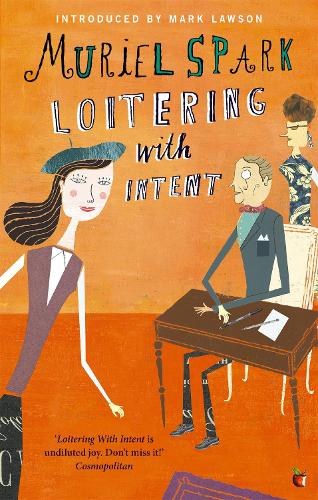
Loitering with Intent, by Muriel Spark

We meet Fleur Talbot sitting in a graveyard in Kensington writing a poem, when a young policeman approaches her. It’s 1949. Young Fleur, eager to collect experiences that she can use in her writing, rejoices in “how wonderful it feels to be an artist and a woman in the twentieth century.” She makes friends everywhere “almost by predestination.” When the friendship pales, she says, “You didn’t think of discarding them just because you didn’t altogether like them.”

Her friend Dottie—one of many hilarious and perfect names in this book—is ”a Catholic, greatly addicted to the cult of the Virgin Mary about whose favors she fooled herself quite a bit.” She seems unconcerned that Fleur is having an affair with her lackluster husband Leslie. Fleur says she loves him “off and on, when he doesn’t interfere with my poetry and so forth. In fact I’ve started a novel which requires a lot of poetic concentration, . . . So perhaps it will be more off than on with Leslie.”

Light-hearted Fleur gaily sidesteps small matters like having money for rent and other necessities while she finishes her first novel, Warrender Chase. When a friend finds her a job at the Autobiographical Association, helping its posh members write their memoirs, she is eager to observe them. The Association is the brainchild of  Baronet Sir Quentin Oliver. He set it up so that the memoirs will not to be published for 70 years to avoid offending anyone named in them.

There we meet a truly quirky crew. The one who most delights me is Sir Quentin’s elderly and outrageous mother Edwina. She comes out with the most inconvenient truths and loses control of her bladder at will, much to Sir Quentin’s embarrassment. The two tangle constantly, and it is ruthless Edwina who usually comes out the winner.

Almost immediately Fleur becomes suspicious of Sir Quentin’s intent, eventually calling him a “psychological Jack the Ripper.” However, she believes in writing about terrible sins ”with a light and heartless hand. It seems to me a sort of hypocrisy for a writer to pretend to be undergoing tragic experiences when obviously one is sitting in relative comfort with a pen and paper.”

She’s surprised to find that Sir Quentin seems to become more and more like her protagonist Warrrender Chase. Then the lives in the memoirs she’s typing up begin to mirror other characters in her novel, leading Sir Quentin to threaten to sue her publisher to stop publication of her novel. She claims that her novel came first, but this slippery novel keeps you wondering who is making up what, and how on earth it will all work out.

It may be offbeat and joyful, but the novel offers plenty of plot twists—a stolen manuscript, suspicious deaths—and for those who care to look deeper, some interesting things to say about a writer’s purpose and methods, not to mention their sources of inspiration. Underlying the witty story is a Modernist conundrum about whether people give rise to literary characters or vice versa. How do we construct the selves we present to the world or to ourselves?  

Or you can ignore all that and just enjoy the sparkling dialogue. The unexpected lurks around every corner, and you never know when Edwina will let loose a “fluxive precipitation.”

What Muriel Spark novels have you read?

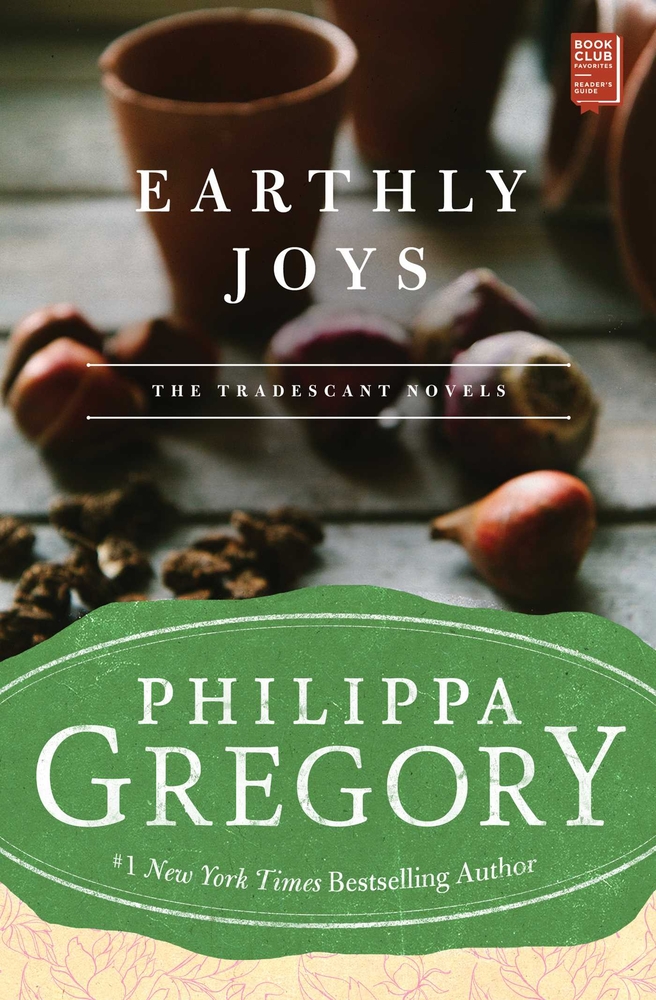
Earthly Joys, by Phillipa Gregory

We meet John Tradescant, gardener to Sir Robert Cecil, as he discusses the state of the gardens with his master in preparation for the visit of the new king: James I. Since Queen Elizabeth died without heirs, James—son of Mary, Queen of Scots and already King of Scotland—has ascended to the throne of England. The story is told by John himself, who is based on the real John Tradescant the Elder, the most celebrated horticulturalist and naturalist of his age.

As a gardener, John has no power in politics; he keeps his gaze focused on the plants and trees that he loves. However, knowing that “he could keep a secret, that he was a man without guile, with solid loyalty,” Cecil uses this principled and practical man as a sounding board, confiding that he has been working in secret to prepare James Stuart to rule in England. James brings two great advantages: he already has two sons and a daughter, and he is Protestant. Thus, it’s assumed he will end the turmoil over the succession and the bitter and deadly religious wars.

John is asked to design magnificent gardens at Hatfield, Windsor, and others. In his work for Cecil and later other lords and James’s successor Charles I, John is sent abroad in search of rare plants. His finds are described with such care that I could see, smell and feel them: the smoothness of a horse chestnut seed, the rainbow sheen of tulips, the scent of cherry blossoms. It turns out that he loves traveling and finding exotic varieties of plants and rarities, much to the dismay of his wife and son, left at home.

This book was recommended to me for its evocation of Tudor and Stuart era gardens, making it an appropriate read for this blossoming midsummer. I was also intrigued by my memory of Gregory’s amazing nonfiction book Normal Women that spoke to the range and depth of her research into the period. What I didn’t consider was how much the concerns of people in 17th century England would echo ours today.

As they discuss the new king, John tells Cecil, “When you have a lord or king . . .  you have to be sure that he knows what he’s doing. Because he’s going to be the one who decides what you do . . . Once you’re his man, you’re stuck with him  . . . He has to be a man of judgment, because if he gets it wrong then he is ruined, and you with him.”

And James is not a man of judgment. He immediately begins plundering the treasury Elizabeth amassed to protect England, squandering it on his own pleasures and rewards to his friends, while ignoring the discontent, poverty and starvation of his subjects. A favorite emerges in his hedonistic court: the Duke of Buckingham: young, beautiful, and self-indulgent. After Cecil’s death, Buckingham brings John to work for him as gardener and personal servant, even taking him into battle.

Civil war is brewing, as the people protest. Parliament is furious when the King takes over their power to impose taxes and sends them home as no longer needed. The King then gets needed income by selling baronetcies and other dignities. Many begin to question the traditional concept of the divinity of kings, seeing James as not someone ordained by God, but rather as simply a man and a repulsive, dishonest one at that.

John, however, is loyal, too loyal according to his wife. John is challenged not just by her, but also by his increasingly radical son who argues that people should be free to obey their own principles, not be ordered what to think by kings and lords. While John’s obdurate loyalty to his masters—even when he thinks they are wrong—can be frustrating for a reader today, it reflects the culture of the time, which was only just beginning to hear the whispers of the individualism we take for granted today.

Another aspect that is true to the time but troubling today is the quantity of foreign plants that John introduces to England. Many have become common to English gardens and forests today, but I couldn’t help thinking about the dangers of invasive species: plants and creatures that originally seemed innocent or useful but have become a nightmare.

While politics and philosophy struck surprisingly close to home for me, they took second place to the gardens. I luxuriated in descriptions of planning everything from orderly knot gardens to seemingly natural meadow gardens. I felt I was laboring along with John and his wife and son to build these joyful works of art. 

Are you a gardener?

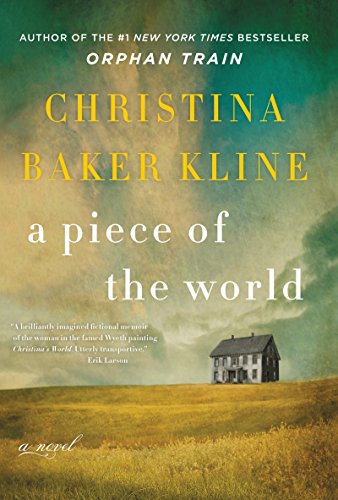
A Piece of the World, by Christina Baker Kline

Most people are familiar with Andrew Wyeth’s painting Christina’s World at New York’s Museum of Modern Art. However, little has been known about Christina Olson herself aside from the fact that she had a degenerative muscular disorder that eventually made her unable to walk. Another tidbit of knowledge has been that Wyeth often painted not only Christina and her brother, but also the house on the Olson farm in the small town of Cushing, Maine.

My interest in Andrew Wyeth’s work intensified when I visited a 2014 exhibition at the National Gallery of Art in Washington, D.C. Looking Out, Looking In concentrated on Wyeth’s paintings of windows. I already loved his famous Wind from the Sea, and became fascinated by his spare watercolors of other windows in the Olson house and others nearby. There are no people in these works, but their lives are somehow embedded in these spaces.

In his Director’s Note to the catalogue, Earl A. Powell III calls Wyeth’s window paintings “skillfully manipulated constructions deeply engaged with the visual complexities posed by the transparency, beauty, and formal structure of windows.” For my part, the theme named in the title remains a powerful one. Whether we are looking out or in, we see both the wide outside and the very personal interior. Also, I am deeply in love with houses, especially those which hold the story of my life.

In this novel, Kline has taken the woman whose image is so familiar and opened her life to us. In her own words, Christina recounts her childhood as a smart girl who wanted to become a teacher but had to leave school to help at home. She has a brief period of social life and a chance at love before her increasing disability keeps her tied to the farm while her friends went on to marry and have children. When one of her friends marries Wyeth, he and Betsy begin spending summers in Cushing, and he starts painting at the Olson’s.

It is Christina’s voice, though, that fascinates me. Amid the constant domestic toil, the brief joy of sweetpeas blooming, the interactions with her parents and brother, her growing friendship with Wyeth, her voice is genuine: stoic and reserved, occasionally ecstatic. I felt as though I lived through each day with her, each turn of the season.

I am wary of novels with real people as characters; it feels like an invasion of privacy to create a story of someone without their permission or knowledge. However, I loved Kline’s thoughtful understanding of what it might mean for a sensitive young woman to have to live such a restricted life—not just her physical restrictions, but also the small town, the confining house, the loneliness as friends and neighbors pull away. I had a tiny surprise: the Olsons were related to Nathaniel Hawthorne, as I am myself, making Christina perhaps a distant cousin.

The limitations of her life mean the story is thin on plot, and Wyeth himself is but a minor character. The real joy of this story for me is the immersion in this woman living a life I could so easily have fallen into. In the story, Christina says of the famous painting:

He did get one thing right: Sometimes a sanctuary, sometimes a prison, that house on the hill has always been my home. I’ve spent my life yearning toward it, wanting to escape it, paralyzed by its hold on me. (There are many ways to be crippled, I’ve learned over the years, many forms of paralysis.) My ancestors fled to Maine from Salem, but like anyone who tries to run away from the past, they brought it with them. Something inexorable seeds itself in the place of your origin. You can never escape the bonds of family history, no matter how far you travel. And the skeleton of a house can carry in its bones the marrow of all that came before.

Have you read a book inspired by a painting?

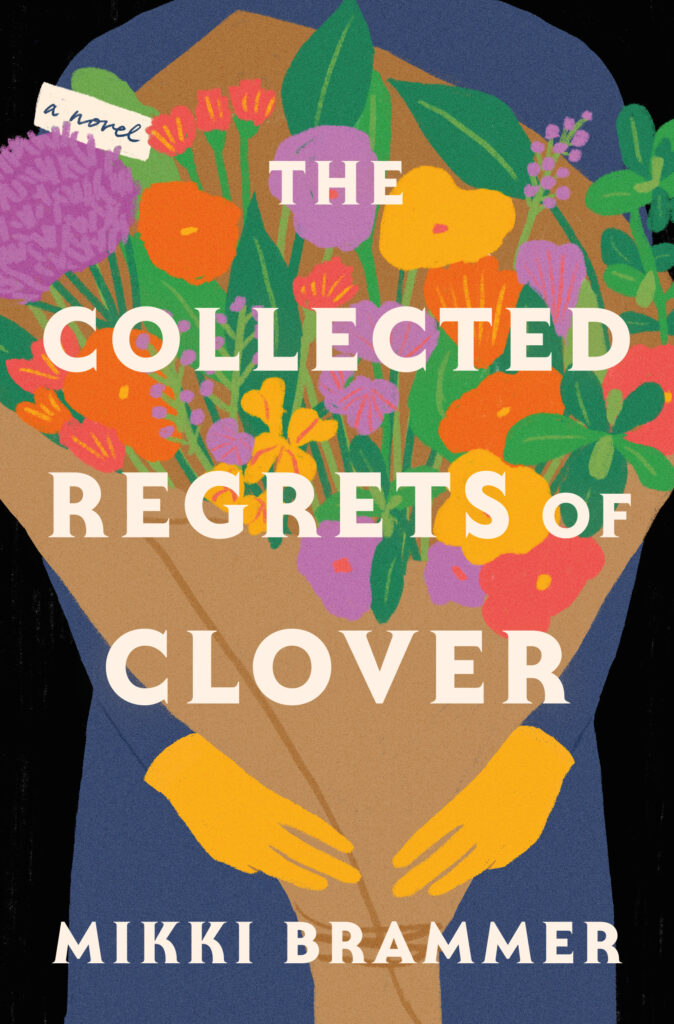
The Collected Regrets of Clover, by Mikki Brammer

Clover, a quirky, awkward, and introverted 36-year-old, is fine living alone. She observes friendships and romances in films and the uncurtained window of the apartment across the street, but she has little need of them herself. It’s too hard to explain to people that what she knows best is death—death and the dying.

At five, Clover witnessed her kindergarten teacher’s death. Then, only a year later, her parents died in an accident while on vacation while traveling, leaving her to be brought up by her grandfather in New York City. She still lives in his West Village apartment, although he, too, died some years ago while she was traveling. Partly out of guilt at not being there for him, she became a death doula.

I’d never heard of a death doula, but apparently it’s a thing. Clover holds the hands of the dying, listens to their stories, helps them sort out their affairs. We all seek to understand the great mystery of death, don’t we? For Clover, the clues lie in their last words, which she writes in three journals that she has titled “Regrets,” “Advice,” and “Confessions.” She also likes to attend death cafés, where people gather to discuss death and share their experiences. Even there she’s only an observer. Her only real friend is Leo, her elderly black neighbor, who had been her grandfather’s best friend.

Things start to change when she meets Sebastian at a death café. He says he’s afraid of death and asks her to spend time with his dying grandmother. Ninety-one-year-old Claudia turns out to be a firecracker, a former journalist, whose one regret inspires Clover to go in search of the man from Claudia’s past. At the same time, Sebastian keeps turning up and—to her horror—eventually asks her out. When a friendly woman her age moves into the apartment downstairs, Clover tries to avoid having to meet her, but fails. Sylvie’s kindness and normalcy throw Clover’s isolation into relief and begin to wear down her resistance.

This intricate and surprising story manages to sidestep sentimentality and cliché. We are deep in Clover’s point of view as she reflects on her past decisions, her relationships, and the choices she has made. The author has blended these flashbacks into the story beautifully; also Clover’s introspective moments are handled well.  

I found this a lovely story, quiet and deep. Clover’s inexperience with social customs felt unforced and real, as did her compassion for and insight into those who are at the end of their lives. She shares a few tidbits from her three journals; I would love to read more.

Have you ever read a story about a death doula?

How to Love Your Daughter, by Mila Blum

Translated from Hebrew by Daniella Zamir

As this short introspective novel opens, Yoella has come from Israel to Groningen in the Netherlands to stand outside her daughter Leah’s home. She does not approach the door. Instead she looks in at a window to see Leah with her husband and two children. It has been ten years since she has seen her beloved daughter, during which men would occasionally call her to say her daughter was safe but hiking in Nepal or some such place without phone connectivity. She has only just learned that it was all a lie. Leah, now 28, has been here all this time.

And because I was watching my daughter and her family without their knowledge, I was vulnerable to witnessing what wasn’t mine to witness.

Such a rift begins to seem impossible as Yoella describes her immense love for baby Leah. We are entirely in her mind, absorbing her memories and insights, with only a rare piece of dialogue or gesture recounted to indicate what Leah and Meir’s perspectives might be.

My love for my baby daughter came easily. Her father was also in love with her; we talked about her every night after she fell asleep, thanked each other for the gift that was our girl. Everything that I had been denied I gave to her, and then some. And she loved me too.
 

In a quiet, mesmerizing voice, Yoella moves back and forth in time, describing Leah’s perfect childhood—a star at school and in her ballet classes—and the tight bond between the two of them. Yoella’s husband Meir is older and busy with his work, yet he, too, adores the child. The two of them seem to have a special understanding.

The fractures appear as she begins to reveal tidbits from her own troubled childhood and the silences in her relationship with Meir. Woven into her thoughts are brief insights about mothers and daughters from the stories she’s reading by authors such as Anne Enright, Margaret Atwood, and Alice Munro.

I think we are supposed to be in suspense about the cause of their rift until near the end of the book. However, the suffocating nature of this woman’s all-consuming love for her daughter, made me want to run away from her almost from the beginning, and I’m not even related to her. She’s the kind of mother who follows her daughter everywhere, kisses her on the lips even as she’s leaving home at 18, and prefers to cuddle close and sleep in her daughter’s bed rather than her husband’s. She makes me appreciate my own mother’s distance.

The writing is lovely and the chapters very short; Yoella doesn’t linger in any fragment of memory for long. It becomes an interesting psychological portrait, as she reveals—perhaps without meaning to—the way she manipulates Leah, and the lies and evasions she uses to paper over the cracks in her life.

The mother-daughter relationship is an endless source of interesting variations. That this one came to feel to me like a horror story probably says more about me than the book. It certainly made me reflect on my life with my own mother and with my children. There are so many ways we can go wrong, so many ways we can inadvertently injure these vulnerable beings we are responsible for. Yoella says we are all “… survivors, everyone was given either too much or too little, life is always a long journey of healing from childhood.”

What story about mothers and daughters has moved you?

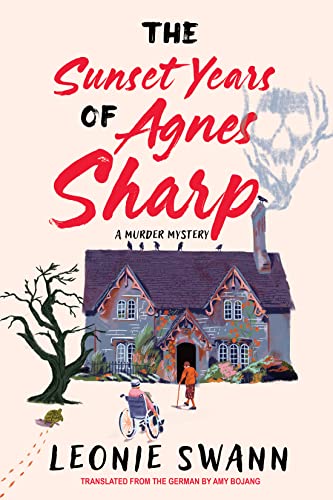
The Sunset Years of Agnes Sharp, by Leonie Swann

There’s a body in the woodshed at Sunset Hall, Agnes’s home that she’s turned into co-housing for other elderly folks. They include Bernadette who’s blind, wheelchair-bound Winston, flighty Edwina who practices yoga and bakes impossible biscuits, and Marshall who sometimes goes off into la-la land. And of course Hettie the tortoise.

Agnes already has a lot on her plate: finding her false teeth, the occasional ringing in her ears that renders her temporarily deaf, and having to take the stairs when the doorbell rings because the stairlift is broken. The door turns out to be the police to tell them about the fatal shooting of a neighbor, Mildred Puck. The murder may be a solution to one of Agnes’s problems.  To add to the confusion, a new resident arrives: Charlie who has a fabulous wardrobe, a mind as yet untinged with dementia, and a dog named Brexit. Then Marshall brings in his grandson Nathan without prior authorization. The television gets moved to the basement, but not because of the grandson.

A lot of quirky characters, but it’s easy to keep them straight in this fun mystery. The way they have to navigate their disabilities adds a bit of shading to the story, along with a lot of unexpected suspense. I quickly became attached to these pensioners, and their surprisingly shadowy pasts.

I’ve been thinking about a post I read recently by Leigh Stein. She discusses John Truby’s idea that a story should have a designing principle, some way of organising the story as a whole. It can be the way it uses timesuch as the film Titanic which unfolds in real timeor the perspective from which it’s toldsuch as Darling Girl, by Liz Michalski a story of Peter Pan from the point of view of Wendy’s granddaughter.

The designing principle is like a plot twist but in the story as a whole, in the story’s premise. In this cosy mystery, the first twist is that the amateur detectives are elderly. We’ve seen that before, from Miss Marple to the Thursday Club mysteries. So the second twist is that almost all of them are disabled in some way that affects the plot. And then the third twist is that they all have unexpected pasts.

I enjoyed this mystery a lot, though it took me a while to work out what rules had been established by the residents for their co-housing situation at Sunset Hall. This is what Ray Rhamey calls an information question rather than a story question. Withholding information about the world of the story creates irritation rather than the suspense we get from true story questions (what’s going to happen next?). Aren’t you wondering why the corpse is in the woodshed? That’s a story question all right. This is a small quibble, and not something that I have to worry about as I chase down the rest of the series.  

Have you read a story where a tortoise plays an important role?

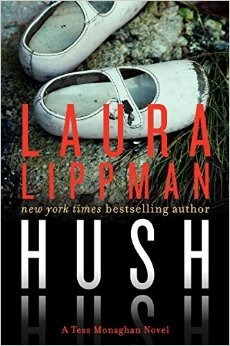
Hush Hush, by Laura Lippman

I was thrilled when this twelfth book in Lippman’s Tess Monaghan series came out in 2015. I decided to save it for a moment when I really needed it, a moment that came this week. Hush Hush is everything I hoped it would be and more. Lippman is in top form, digging into the darkness of family life—and its joys too.

After the death of her baby, Melisandre Harris Dawes was found not guilty of murder by reason of insanity (postpartum psychosis). She spent some time in rehab and then moved to South Africa and then England. Her husband Stephen had full custody of the two older girls, Alanna and Ruby. Now, twelve years later, Melisandre has returned to Baltimore to reclaim her daughters—now teenagers—and her reputation.

A stunning woman, imbued with the glamour and confidence of old-style Baltimore wealth, Melisandre expects to impose her will on everyone around her. She has hired a filmmaker to create a documentary about her trial, supposedly to expand public understanding of the verdict. Interviews for this documentary crop up between chapters, adding new insights for the reader. Mindful of her notoriety, she has contacted her old flame, lawyer Tyner Gray, for help.

Through Tyner—Tess’s friend, mentor and husband of her beloved aunt—Tess has been hired by Melisandre to look into her security. It’s not work Tess and her new partner, ex-policeman Sandy Sanchez usually do, but Tess is feeling the financial pinch of being a parent. The interweaving of the investigation with Tess’s home life—deepening relationship with Crow, adoration of their three-year-old daughter Carla Scout, and the inevitable complicated scheduling of their work and day care—furnish an extra level of depth to the story.

The theme of mothers and daughters is one of those universal themes that always draws my attention. The subtheme of questioning what constitutes good parenting adds complexity and further deepens my interest. Both Tess and Melisandre receive anonymous notes criticising their parenting, though most parents (me included) don’t need outside critics in order to question themselves. I’ve been faced with more than one toddler meltdown in a busy grocery store and could thoroughly identify with Tess’s reaction. Carla Scout is not the first three-year-old with Big Feelings whom I’ve encountered.

The mystery itself is satisfyingly twisty. Alanna’s rebellion against, well, everything and Ruby’s tendency to search out secrets and hold them close complicate the story, as does their young stepmother’s struggle to care for her own new baby. Sandy Sanchez adds a gravitas to the story and another point of view. Lippman does a good job of showing how his strengths align with Tess’s. As events escalate, each character adds to the richness of the story.

The story felt especially poignant for me because I left Baltimore a few years ago after a lifetime there. On the trail with Tess, crisscrossing the city, even visiting some of my formerly regular spots left me a little homesick.

I’ve read and enjoyed Lippman’s standalone novels since Hush Hush came out. If you search my blog you’ll find seven other Lippman novels I’ve reviewed. I am still hoping for another Tess story.

What’s your favorite Laura Lippman book? Do you have a favorite spot in Baltimore?

Brother of the More Famous Jack, by Barbara Trapido

What a delight this novel is! I wrote a couple of weeks ago about “pleasure buttons:” the aspects of fiction that provide a pleasurable experience for readers. The missing one in that discussion turns out to be wit.

In Trapido’s debut novel, 18-year-old Katherine is eager to explore the world outside her mother’s petit-bourgeois bungalow, but is at first hesitant and only too aware of her own naïveté. It’s telling that in times of stress she turns to her favorite novel: Jane Austen’s Emma.

Lacking Emma’s self-assurance, Katherine assumes she’s blown her interview with the philosophy professor Jacob Goldman. She’s chosen philosophy as a shortcut to worldly wisdom, and does not realise that he’s thoroughly enchanted with her original bent of mind. He sees through her youthful lack of confidence to the potential rogue adventurer lurking underneath.

She then gets picked up by the much older John Millet, charmed by his aesthetic knowledge, not recognising that however much he flirts with her, what really turns him on are young men.  John carries her off for a weekend which turns out to be with the Goldman family: Jacob, a very pregnant Jane, and their many children.

The house, as it presents itself from the road, is like a house one might see on a jigsaw puzzle box, seasonally infested with tall hollyhocks. the kind one put together on a tea tray while recovering from the measles.

There’s the family you’re born with and the family you choose, and Katherine finds her real home with the eccentric and outrageous Goldman clan, quite aside from falling head over heels with oldest son Roger. They all adore her right back—even Roger, for a while anyway. In Jane, she finds her true parent.

[Jane] stands hugely in strong farmer’s wellingtons into which she has tucked some very old corduroy trousers. She has these tied together under a man’s shirt with pajama cords because the zip won’t come together over the bulge. Bits of hair are falling out of her dark brown plait.”

This hilarious, madcap novel is full of quips like the title. However, running alongside is a pungent critique of class in Britain, anti-Semitism, and women’s roles. First published in 1982, it might seem dated to modern readers, particularly the debate over women’s issues, such as motherhood vs work, and who does the dishes. However, recent events, such as the current push in the U.S. by a minority of radical evangelists to remove women from the workforce and keep them in the kitchen or making babies, make it newly relevant. It’s a good reminder that women’s gains toward equality have only come about recently and still encounter panic-stricken backlash.

Even the most revolting characters, such as macho Michele “a backward-looking romantic with right-wing views and left-wing friends” come across as hilarious when seen through Katherine’s amused and loving eyes, and then turn around and redeem themselves unexpectedly. It shouldn’t work; I should be horrified by some of the things these characters get up to.

Somehow, though, Katherine’s eagerness for adventure and the sheer number of fantastical goings-on lead to a suspension, not only of disbelief but of censure. I was swept up in a witty fairy tale and willing to go along with Katherine. Toward the end of the novel, a bit of sanity returns as Katherine, older and wiser, begins to see through the smokescreen of antic fun.

The story was not so much laugh-out-loud funny as snort-and-snicker witty, making it the sort of comedy I most relish. I thorough enjoyed this delightful novel and can’t wait to explore some of Trapido’s later works.

What novel has most amused you lately?