Best Books I Read in 2021

As a writer, I learn something from every book I read. In no particular order, these are the ten best books I read in 2021. Please check the links to the blog archive for a fuller discussion of those I’ve reviewed.

1. The Winter Soldier, by Daniel Mason
While this is a story about WWI, it is not about trenches and battles. It is a small, human story powered by big ideas, not just the romance/reality of war itself and the emergence of what we now call PTSD as a recognised illness, but also the unlikely connections that save us, the small mistakes that have large consequences, hubris, guilt, atonement. It is a brilliant evocation of this moment when everything about the world changed.

2. This Is Happiness, by Niall Williams
At 17, Noel Crowe goes to live with his grandparents in the small rural village of Faha in County Clare, Ireland. Sixty years later he remembers the events of that remarkable season which started on Easter Sunday when the rain stopped. I have not enjoyed a novel this much in a long time. It took me a little while to adjust to the pace, somewhat slower than we might be used to, but appropriate for this tale of a time measured in a horse’s clopping hooves or a bicycle ride. There is conflict and suspense, too, as in any story, and mysteries to be explored.

3. Deacon King Kong, by James McBride
The story opens with Sportcoat, a deacon at Five Ends Baptist Church who is perpetually drunk on the local moonshine called King Kong, entering a courtyard at the Cause Houses, a Brooklyn housing project. He takes out a rusty handgun and shoots Deems, a young drug dealer whom Sportcoat used to coach on the project’s baseball team. While some reviewers have considered this story a farce, to me it seemed utterly real. The characters are much like people I have known, and their world—so vividly portrayed— one I am familiar with.

4. The Fire This Time, by Jesmyn Ward
I read this collection of essays and poems three times over before I allowed the library to repossess it. Subtitled A New Generation Speaks about Race, it provides a nuanced portrait of racism and race in the U.S. today. The book’s title is a play on Baldwin’s The Fire Next Time, which in turn takes its title from an old spiritual: “God gave Noah the rainbow sign / No more water, the fire next time.”

5. Notes to the Mental Hospital Timekeeper, by Tim Mayo
Mayo’s most recent collection of poems helps me find a way through this difficult time. From his work as a teacher and mental health worker, he brings us encounters with the delusional and with our own pasts. Because it is sometimes hard to tell if the poem is written in the persona of a patient or a staff person, Mayo narrows the distance between the two, finding our common humanity.

6. The Madness of Crowds, by Louise Penny
Penny latest novel of Inspector Armand Gamache and the village of Three Pines in Quebec is simply extraordinary. More than any other book I’ve read, it captures this unprecedented time, while still being an engrossing mystery.

7. North River, by Pete Hamill
James Delaney is a 47-year-old doctor practicing in Depression-era New York, living alone in a house gifted him by a grateful patient. All he has left is his work and, after the carnage of the Great War where he served as a medic, he is determined to save what lives he can and comfort the dying as best he can. Then one morning he returns from the hospital to find a baby in the entryway. I loved this novel. For once, I could simply relax into the life of single person, one who is complicated and flawed but whose basic moral code is evident.

8. The Possible Pleasures, by Lynn Valente
In these poems Valente’s language is simple, yet her images are startling and fresh. In addition, exquisite care has been taken with the ordering of the poems. It’s no surprise that the prestigious Finishing Line Press chose to publish this chapbook. It embeds simple truths in experiences we can recognise and phrases that catch us by surprise.

9. Klara and the Sun, by Kazuo Ishiguro
Klara is an Artificial Friend who, in the first part of this new novel from Ishiguro, is chosen and taken home by 14-year-old Josie as a companion. The use of AFs harks back to the use of governesses, servants, and slaves to do the emotional work some parents, such as Josie’s mother, are too busy for. This theme of service and its evil twin power—the effects on both the servant and served—is one Ishiguro has explored before, notably in The Remains of the Day.

10. We Are as Gods, by Kate Daloz
The story of Vermont’s Myrtle Hill commune provides the narrative backbone of this nonfiction book. Daloz follows the group from its idealistic beginnings through the gradual disenchantment, conveying their stories realistically yet with sympathy. The book combines the focus on Myrtle Hill and its neighbors with a wide-ranging summary of the counter-culture of the period, the growth and brief life of the commune movement, and the gradual recognition among the commune members that no one is actually self-sufficient. We all, including their original Vermont neighbors, rely on our community.

What were the best books you read last year?
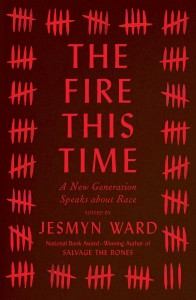
The Fire This Time, by Jesmyn Ward

fire

This collection of essays and poems, subtitled A New Generation Speaks about Race, together provides a nuanced portrait of racism and race in the U.S. today. It is divided into three parts: Legacy, Reckoning and Jubilee—past, present and future.

Ward, who collected the pieces, supplies the introduction and a piece on what she learned from DNA testing, noting how hard it is for people to discover the genealogy of the black side of their family. Two pieces look at the legacy of black writers, Rachel Ghansah comparing her grandfather’s life to James Baldwin’s and Honorèe Jeffers questioning Phillis Wheatley’s history as it is presented to us.

The book’s title is a play on Baldwin’s The Fire Next Time, which in turn takes its title from an old spiritual: “God gave Noah the rainbow sign / No more water, the fire next time.”

Some pieces convey personal experiences, such as Garnette Cadogan’s essay comparing his experiences walking in his native Kingston, Jamaica with walking the streets of New Orleans and later those of New York. Never having been given “The Talk,” he had to work out for himself how to camouflage himself—preppie clothes and his college sweatshirt; never a hoodie or jeans and tee shirt—and the rules to follow to keep white people from being afraid of him or police from stopping him.

Many of the pieces respond to the relentless killing of black people by police and armed vigilantes, such as Claudia Rankin’s “The Condition of Black Life Is One of Mourning” and Isabel Wilkerson’s “Where Do We Go from Here?” Emily Raboteau describes going with her family to see the recently reopened High Bridge in New York City that connects Harlem and the Bronx. There she discovers a mural that leads her on a tour of discovery around the city to find all the murals that, combining love and activism, educate adults and children on how to protect themselves from police brutality and structural racism.

I was especially intrigued by Kevin Young’s funny and piercing “Blacker Than Thou” where he talks about white people wearing blackface or actually “passing” as black, such as Rachel Dolezal. “But if you are white but truly feel black, then why do you have to look like it?” Blackness, he says, is not about skin color but about culture. He says of black people, “Any solidarity with each other is about something shared, a secret joy, a song, not about some stereotypical qualities that may be reproducible, imitable, even marketable.”

Of Dolezal, he says, “She wears the mask not to hide but to gain authority over the very thing she claims she wants to be.” Her claim is of a piece with her other stories that paint her as a victim. And, as with blackface and other examples of passing, it says more about how those white people view blackness.

Poems by Jericho Brown, Kima Jones, Clint Smith add texture and imagery, always a more intense experience for me. And I loved seeing Natasha Tretheway’s familiar “Theories of Time and Space” opening the Jubilee section.

I learned a lot from this cornucopia of voices. I still have a lot to learn.

What have you read lately that made you cry and laugh and thunder with rage, and most of all made you think?

Autumnal Tints, by Henry David Thoreau

tints

I had to laugh when I started this long essay. Thoreau begins by saying how surprised Europeans and even many Americans are when they first see the spectacular foliage of a New England autumn. Today, we in New England are besieged by RVs and SUVs with out-of-state plates clogging our roads and highways as leaf-peepers from all over chase peak foliage.

My hilarity soon turned to admiration as Thoreau takes us through the season’s offerings, from the purple grasses of late August to the scarlet oaks of late October. His lovely descriptions include what natural science information he has and sometimes lead to larger thoughts.

How they are mixed up, of all species, Oak and Maple and Chestnut and Birch! But Nature is not cluttered with them; she is a perfect husbandman; she stores them all. Consider what a vast crop is thus annually shed on the earth! This, more than any mere grain or seed, is the great harvest of the year. The trees are now repaying the earth with interest what they have taken from it. They are discounting. They are about to add a leaf’s thickness to the depth of the soil.

How many flutterings before they rest quietly in their graves! They that soared so loftily, how contentedly they return to dust again, and are laid low, resigned to lie and decay at the foot of the tree, and afford nourishment to new generations of their kind, as well as to flutter on high! They teach us how to die. One wonders if the time will ever come when men, with their boasted faith in immortality, will lie down as gracefully and as ripe,–with such an Indian-summer serenity will shed their bodies, as they do their hair and nails.

Some sections made me sad, such as the one on elm trees. I have a slight memory of great rows of elm trees from my early childhood before they were decimated by Dutch Elm Disease.

Other sections are thrilling, such as this excerpt from the section on red maples:

How beautiful, when a whole tree is like one great scarlet fruit full of ripe juices, every leaf, from lowest limb to topmost spire, all aglow, especially if you look toward the sun! . . . If such a phenomenon occurred but once, it would be handed down by tradition to posterity, and get into the mythology at last.

I also recognise his personal relationship with certain trees.

I notice a small one, half a mile off across a meadow, against the green wood-side there, a far brighter red than the blossoms of any tree in summer, and more conspicuous. I have observed this tree for several autumns invariably changing earlier than its fellows, just as one tree ripens its fruit earlier than another. It might serve to mark the season, perhaps. I should be sorry, if it were cut down.

One of my favorite maples was cut down last winter and I am missing it greatly just now. However, there are many other trees to wander among and admire, so I will go and do that now. I hope you will join me in appreciating this brilliant season and Thoreau’s appreciative essay.

What trees are you walking among?

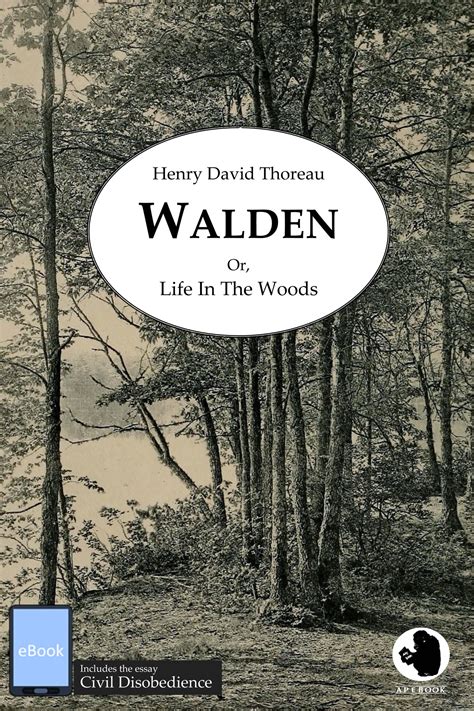
Walden, by Henry David Thoreau

walden

I have read Walden a few times since I first encountered it in high school. Back then I was charmed as so many are by the idea of going to the woods to live, and thrilled by his bits of philosophy. Despite a heavy load of schoolwork, I still spent as much time as I could outside, among the trees, so it’s no surprise that I adopted as my lifelong personal motto “To be awake is to be alive.”

Later readings brought more informed insight. I learned how close his retreat was to town, for example, and paid more attention to his many visitors. I found that he had pulled together parts of his other essays which explained the resulting crazy quilt structure. The first chapter, though, remains a bit of a slog.

On this reading what struck me most was the chapter titled “The Ponds.” It’s mostly about Walden, of course, but he also briefly describes other nearby ponds: Goose Pond, Flint’s Pond (also known as Sandy Pond), White Pond, and Fair Haven.

When I first read the book as a teenager I lived by and loved the Chesapeake Bay, so I was not terribly impressed by his pond. However, all these decades later, it turns out that I have spent a good part of my life in a small cabin by a pond in Massachusetts. Now I can appreciate his beautifully observed descriptions of the water and woods.

“Walden is blue at one time and green at another, even from the same point of view. Lying between the earth and the heavens, it partakes of the color of both.” Being surrounded, like my pond, by pine and oak woods and blueberry bushes makes it seem like “an amphitheater for some kind of sylvan spectacle.” I recognise his descriptions of the “blue flag (Iris versicolor)” growing along the shore and the hummingbirds in June. He speaks of the transparency of the water and of the stones along the shore, recounting stories of how they came to be formed.

As a naturalist, he traces the pond’s rise and fall, its fluctuating temperature, and its various colors. He also worked as a surveyor and his map of Walden could still be used today. He names the kinds of fish and waterfowl, and detects traces of ancient paths “worn by the feet of aboriginal hunters, and still from time to time unwittingly trodden by the present occupants of the land.” He says of being out on his boat “In such transparent and seemingly bottomless water, reflecting the clouds, I seemed to be floating through the air as in a balloon.”

There is something about a pond, a humble one like mine and his, that invites contemplation. Often I set my books and papers aside just to watch the way the light glints on the water or to listen to the rustle of leaves and pine boughs and the sparkling bird calls. Many evenings I have left the lamp off, preferring instead to watch the way the light fades behind the far woods, the water and sky holding the last of the light, the dark band of trees between.

A field of water betrays the spirit that is in the air. It is continually receiving new life and motion from above. It is intermediate in its nature between land and sky. On land only the grass and trees wave, but the water itself is rippled by the wind. I see where the breeze dashes across it by the streaks or flakes of light.

He speaks of fishing during the midnight hours “from a boat by moonlight, serenaded by owls and foxes, and hearing, from time to time, the creaking note of some unknown bird close at hand.” And of “communicating by a long flaxen line with mysterious nocturnal fishes which had their dwelling forty feet below.”

It was very queer, especially in dark nights, when your thoughts had wandered to vast and cosmogonal themes and other spheres, to feel this faint jerk, which came to interrupt your dreams and link you to Nature again. It seemed as if I might next cast my line upward into the air, as well as downward into this element, which was scarcely more dense. Thus I caught two fishes as it were with one hook.

In the second chapter “Where I Lived and What I Lived For” he says

For the first week, whenever I looked out on the pond it impressed me like a tarn high up on the side of a mountain . . . and, as the sun arose, I saw it throwing off its nightly clothing of mist, and here and there, by degrees, its soft ripples or its smooth reflecting surface was revealed, while the mists, like ghosts, were stealthily withdrawing in every direction into the woods, as at the breaking up of some nocturnal conventicle.

I too have watched the way the mist drifts across the surface or sometimes rises in columns. I’ve heard a loon calling in the twilight and watched otters play by the bank.

He tells of an old man who lived by the pond before the revolution who told him that there was an iron chest at the bottom of the pond. Similarly, we have stories of the pond next to mine where somewhere near the center there is a piano resting on the bottom. We have searched for it, but never found it.

Thoreau says, “A lake is the landscape’s most beautiful and expressive feature. It is the earth’s eye; looking into which the beholder measures the depth of his own nature.” Just as I return again and again to my pond with its mysterious depths and sparkling surface, so too I treasure books like this where I can find something new each time I return.

How has your reading of this book changed over the years?

“To Die One’s Own Death,” by Jacqueline Rose

lrb

London Review of Books Vol. 42 No. 22 · 19 November 2020

Written during the first wave of the pandemic with its soaring death rates made worse by the fumbling response of corrupt governments, and amid accelerating climate catastrophes, Rose’s essay, subtitled “Jacqueline Rose on Freud and his daughter”, looks at how we cope with these repeated blows. If we shut down emotionally and intellectually, “does that leave room to grieve, not just for those who have been lost, but for the broken pieces and muddled fragments that make us who we are?”

Rose takes us back to a similar moment in time: 25 January 1920 when Freud’s favourite daughter, Sophie Halberstadt-Freud, died in the last wave of the Spanish flu. A devastated Austria had lost the war; Freud himself had lost his earlier enthusiasm for his homeland’s role in the war and now supported the breakup of the Austrian Empire. With his family starving, and himself unable even to get to his dying daughter because there were no trains, Freud’s situation was eerily similar to what many experienced during our own pandemic: “the lack of state provision, the missing medical supplies, the dearth of equipment and isolation from human touch have made it feel to many for the first time that death is something of which a person – the one dying, and those closest to her or him – can be robbed.”

He turned to writing, adding the lengthy Chapter Six to Beyond the Pleasure Principle which was published later in 1920. In this chapter, he first presents the idea of a death drive in conflict with our drive for self-preservation, the life drive, deriving it from what “he had first identified in soldiers returning from battle who found themselves reliving their worst experiences in night-time and waking dreams.” He compares this repetition compulsion to his other patients and their resistance to therapy, concluding that “The urge of all organic life is to restore an earlier state of things.”

He carries this idea further to postulate an internal human need to craft our own track to the end of life, regardless of any limit for self-preservation, saying “The organism wishes to die only in its own fashion.” Thus, for victims of wars and pandemics and natural catastrophes, the randomness of their deaths robs them “of the essence of life.”

Rose’s essay continues, supplementing Freud’s ideas from another paper written during WWI, “The Phylogenetic Fantasy,” with current research on inherited trauma to look at how anxiety travels through generations, an anxiety that is a “response to an imperilled world, but also . . . a reaction to the tyranny of the powers that come to meet it.”

There is much more to this essay, and I recommend it to anyone who is looking for new insight into our current state of being. However, I was struck by the idea of an urge to restore an earlier state of things and its relevance to the stories we tell.

Books such as Robert McKee’s Story, Christopher Vogler’s The Writer’s Journey, Lisa Cron’s Wired for Story, and Larry Brooks’s Story Engineering describe a basic structure dating back to the Western world’s earliest stories. This ur-story begins with a normal world—troubled but getting by—that is disrupted in some way. Hence novelist John Gardner’s famous saying about all stories being either about going on a journey or a stranger coming to town: the two ways a world is disrupted.

The story then is about the attempts, usually by the main character, to restore their original normal world. But there is no going back, any more than there is for the soldiers reliving their nightmares. Instead, the main character must address not only the events around them but also their internal troubles, now no longer balanced but demanding change. By the end of the story, they are indeed changed, as Gawain returns to Arthur’s Court humbled and contrite after his encounter with the Green Knight, as Elizabeth Bennet enters her marriage realising that she must look beyond her first hasty judgments in order to discover real goodness.

The urge to restore an earlier state of things also makes me think of the nostalgia for a previous age that so many today have succumbed to. Not only do our stories tell us that such a return is impossible, but the image of that previous age is false, usually edited to be more attractive than it actually was. While often that false image has been deliberately created for political purposes, it is also true that our own minds chip away at our memories, according to recent research, subtly changing them each time we recall an incident.

We cannot go back to the time before the pandemic, and how we remember it may not even be reliable. We have been changed by this experience, in ways we may not yet recognise, and we are not yet at the end of it. Eventually, I believe, we will turn to stories to understand, help us grieve, and put the broken pieces back together.

What are you reading or listening to that is helping you better understand this extraordinary time?

Best Books I read in 2020

Best Books I read in 2020

As a writer, I learn something from every book I read. In no particular order, these are the ten best books I read in 2020. In general, this year I gravitated toward books that either comforted me or gave me courage. Please check the links to the blog archive for a fuller discussion of each book.

1. Horizon, by Barry Lopez
In this profound and generous book, Lopez looks back over some of the travels that have shaped his understanding and philosophy. We go from Oregon to Antarctica, from Nunavut to Tasmania, from Eastern Equatorial Africa to Xi’an in China. The horizon he explores is physically and metaphorically the line where our known world gives way to air, to the space we still know almost nothing about. That liminal space is where exciting things can happen. The quest for knowledge and understanding—along with compassion—are what I value most in human beings.

2. Visitation, by Jenny Erpenbeck
The main character of Erpenbeck’s novel is a plot of land by a lake in Brandenburg, and the homes built there, especially a fabulously detailed home built by an architect in the 1930s. The succession of people who live in this house and next door mirror the changes in East Germany during the ensuing decades. Though short, this novel is surprisingly intense. It made me think about what inheritances are passed on and what are lost, about the so-brief time that we inhabit this world that is our home, and how the earth itself, though changed, persists. Our cares and worries, even in this terrible time, will pass.

3. Drive Your Plow over the Bones of the Dead, by Olga Tokarczuk
This unusual and fascinating novel explores the border between poetry and prose, story and fairy tale. The quirky voice of the narrator is firmly established with the first sentence and sustained throughout the book. Living alone in an isolated community in western Poland, Janina is an older woman who manages her vocation of astrology, the translations of William Blake’s poetry that she and a friend are doing, and the griefs that accumulate over the years. The story sometimes feels like a fable, sometimes a prose poem, sometimes a wrenching view of age and isolation, sometimes a paean to friendship.

4. A Woman of No Importance, by Sonia Purnell
Subtitled The Untold Story of the American Spy Who Helped Win World War II, this is a fascinating read. If you thought, as I initially did, that the subtitle is a bit hyperbolic, rest assured that it is not. Born in 1906 to a wealthy and prestigious family, Virginia Hall grew up in Baltimore but preferred adventure to marriage. During WWII, she became one of the first British spies—and the first female—in France where she organised Resistance units and provided critical intelligence to the Allies.

5. Abigail, by Magda Szabó
Originally published in 1970, it is the story of 15-year-old Gina who in 1943 is exiled from Budapest by her beloved father, sent to boarding school near Hungary’s eastern border. Headstrong, a little spoiled, Gina rebels, finding creative ways to break the rules at the strict academy. While having many characteristics of a traditional coming-of-age story, and echoes of books like Jane Eyre, Gina’s story is unusually perceptive and complex.

6. Blackberries, Blackberries, by Crystal Wilkinson
These stories feature Black women in rural Kentucky, young and old, each with her individual take on the world, her own idea of herself. In every story, Wilkinson demonstrates the writer’s mantra that the personal is universal. These may be Black women in Appalachia, but I saw myself in each of them. Reading their stories has been a gift, and I look forward to reading more of her work.

7. Gellhorn, by Caroline Moorehead
Moorehead’s biography brings the brilliant war correspondent to life, enhanced by the hundreds of letters Gellhorn wrote during her life, openly detailing personal and professional undertakings as well as her own thoughts and feelings. The biography is subtitled A Twentieth-Century Life. Indeed, although she was always out ahead of others, few things could be more emblematic of that turbulent century than the life of this remarkable woman who challenged customary women’s roles, stuck to her own moral code, and worked relentlessly at her chosen métier.

8. The Water Dancer, by Ta-Nehisi Coates
This first novel from Coates is the story of Hiram Walker, a young slave in Virginia whose been assigned to be the personal servant for his half-brother: the white, legitimate son of the plantation owner. The writing, as you would expect from Coates, is gorgeous. I loved the first part of the book, but after that, the story seemed to bog down. Still, this coming-of-age story of a man’s journey to freedom is one of the best books I’ve read recently. I loved the unusual and nuanced way the story embodies the themes of family and memory.

9. Grace Notes, by Brian Doyle
These days I’m turning to books not so much for escape as for courage and comfort, and welcome anything that might help replenish my stores of both. For me, that often means returning to one of my favorite authors. In addition to writing unforgettable stories and essays, Brian Doyle, who died much too young in 2017, was a teacher, magazine editor, husband, father. In this collection of short essays, while not shying away from the darkness, Doyle reminds us of what is good in the world.

10. Anything Is Possible, by Elizabeth Strout
A book by Strout is a balm just now, when we are so traumatised by grief and fear and anger. Yes, she takes us into the terrible crimes human beings, even those in quiet Midwestern towns, visit upon one another, yet she also shows us the complicated people that we are. Without dwelling on the ugliness, Strout evokes in us the emotions of these characters, their trials, their loneliness, and sometimes their quiet redemption.

What were the best books you read last year?
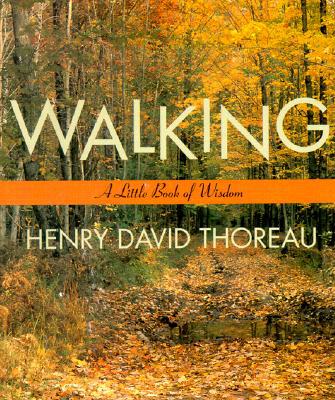
Walking, by Henry David Thoreau

walking

Thoreau first gave this talk in 1851 at the Concord Lyceum and continued to work on it afterwards. It was published in the Atlantic Monthly after he died in 1862.

My second book of poetry Terrarium is about the influence of place on our lives and personality—the place we grew up, our place in the family, perhaps the place we’ve always wanted to visit. Lately I’ve been thinking a lot about the categories of physical places in my life, a three-legged stool: home, society and the wild. With the pandemic, society is reduced almost completely to faces on the computer, leaving me pondering home and the wild and how we do or do not move among them.

First, let me be clear: wild is a relative term. There is no virgin wilderness here in North America, and never was except perhaps when the first people tramped across the Bering Land Bridge from Siberia. There is untended land, here in New England some of it was once farmland, laboriously carved out of the forest, abandoned when the economy collapsed leaving remnants of stone walls in the woods. There are lightly managed forests, with walking trails and sometimes efforts to remove invasive species. These suffice for my experience of the wild.

Now we have learned through new research that there is more going on in the woods than we realised, that trees communicate with each other and form their own society. Richard Powers’s bestseller The Overstory explores these ideas further through several sets of characters.

The fairy tales we hear as children are often about venturing into the wild—Into the Woods, as Stephen Sondheim put it—and discovering our own talents and values as we encounter its dangers. The journey becomes a metaphorical basis for nearly all of our stories, the hero’s journey described by Joseph Campbell.

And then there’s coming home. For many people, the immediate shock of the pandemic’s stay-home orders was to actually be at home all the time, not spending most daylight hours at work or school or the myriad activities that fill some children’s schedules, not going out in the evenings to a restaurant or concert or pub.

For all the decades I was working a day job, the thought of being at home all day seemed like nirvana. I had worked hard to make my home a place where I wanted to be, that fostered my favorite activities and soothed my soul, yet spent most of my days in offices and laboratories. When I retired a few years ago from that job to write, I feared that being home all the time would not be the paradise I’d expected. Reader, it was. And is. Though I recognise that my personality is particularly well-suited to this life.

I also walk. A lot. Aside from the obvious health benefits of exercise, recent studies have shown the positive effects—mental, physical and emotional—of spending time in nature.

So, belatedly, we come to Thoreau. Most famous for his two years in the woods by Walden Pond, he was fascinated by natural history, anticipating what we now call ecology and environmentalism.

He begins this essay:

I wish to speak a word for Nature, for absolute Freedom and Wildness, as contrasted with a freedom and culture merely civil,—to regard man as an inhabitant, or a part and parcel of Nature, rather than a member of society.

Where he wins my heart comes a little later when he says:

I confess that I am astonished at the power of endurance, to say nothing of the moral insensibility, of my neighbors who confine themselves to shops and offices the whole day for weeks and months, aye, and years almost together . . . I wonder that about this time, or say between four and five o’clock in the afternoon, too late for the morning papers and too early for the evening ones, there is not a general explosion heard up and down the street . . .

He’s not just extolling the opportunity for exercise, but having the time to “walk like a camel, which is said to be the only beast which ruminates when walking.” Also, as a Transcendentalist, he considers what we can learn from nature, extolling even swamps and bogs as jewels.

I will leave you to enjoy the rest of this delightful and thought-provoking essay for yourselves. It’s readily available online. It’s time for me to take a walk.

Where are your favorite places to walk?

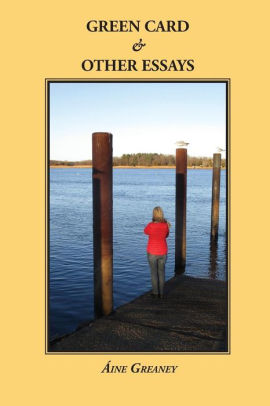
Green Card & Other Essays, by Áine Greaney

green

I’ve been thinking a lot lately about what it means to be home. Many people are working from home these days. All the years I worked in offices I desperately wanted to work from home. Even now I remember each and every snow day when I was allowed to work remotely as a sacred and blessed time.

I know there are many who struggle with this new reality, extraverts who miss the interaction with others. And it’s true that I valued being able to step down the hall and get Laura or Jonathan’s input on some task. Still, this being at home to me is nirvana, to be able every day to be in this space that I designed for myself.

But home is more than this house, this place we’ve carefully adapted to our needs. It is also the places where we suddenly and unexpectedly know we are where we belong. For me, that was the first time I crossed the Tappen Zee bridge into New England. And again that early morning landing in England, a March morning, frosty and cold. Faced with a standard transmission car with the gear shift on the opposite side and traffic patterns that challenged my orientation, still, for all that, I knew suddenly that I had come home. I was in the right place. Many return visits over the years have only confirmed that initial sense of belonging.

For Greaney, that’s not the point. These brief essays fold us into the experience of leaving one not-unloved-home for another, of trying to find your way in an alien culture where you don’t recognise most of the references and your accent is legitimate fodder for jokes.

Immigration is much in the news these days, but it’s important to notice, as Greaney points out, that there are plenty of immigrants who are welcomed without question. When someone who has been complaining about immigrants says to her “Oh, not you . . . We weren’t talking about you,” Greaney appropriately responds, “’English speaking? White?’”

Interactions like this show up the racism inherent in today’s discussions about immigration. A white friend of mine who emigrated from South Africa, likes to challenge people by saying, accurately enough, “I’m African-American.”

Greaney explores the lingering strangeness. Not just the bizarre experience of St. Patrick’s Day celebrations in the U.S., but also seeing what U.S. prom night is like versus a quiet 1970s mass after Leaving Cert exams, commuting among pumpkin and alfalfa fields, wondering if the New England Methodist church down the road might hold a way forward for a Catholic girl.

One of the most affecting essays in this collection calls on Colm Tóibín’s Brooklyn where

. . . once Elilís Lacey (the daughter) steps aboard that ship, there are two separate and mutually invisible narratives—the tale of Eilís in Brooklyn and that of her widowed mother and stay-at-home sister back in Enniscorthy. Between those stories is an emotional firewall that blocks all knowledge of the other’s experience and, by extension each other’s respective wounds and losses.

Any of us who have left our first home for a new and different world can identify with this dual storyline, this firewall: a parent who cannot or will not imagine our new lives. Excitement and terror and sadness swirled together to forge determination.

These are beautiful essays: short, intense, emotionally precise, moving. I loved the essay about the gifts her father slips to her as she is leaving to return to the U.S. “’You’ll need this over yonder,’” her says, and Greaney pulls us around to see, yes, oh yes, they are needed.

What does the idea of “home” mean to you?

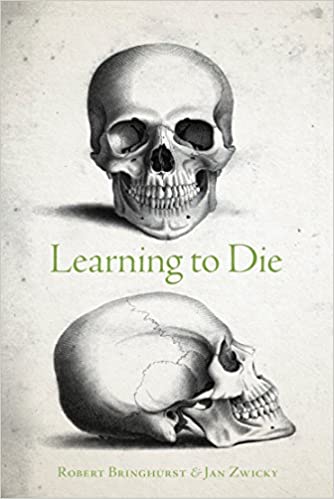
Learning to Die, by Robert Bringhurst and Jan Zwicky

learning

While the title of this slim volume sounds tailor-made for this pandemic with its hundreds of millions of deaths, the subtitle clarifies its theme: Wisdom in the Age of Climate Crisis. Its two essays and Afterword give us perspective on the environmental catastrophe through which we are living.

These are not attempts to quote scientific studies to persuade us of the seriousness of our Anthropocene Era, though statistics are given and backed by numerous endnoted sources. Instead, the two essays address our inner selves and how we relate to the world, while the Afterword refutes a recent book which proclaims that there is no problem because more progress will save us.

In “The Mind of the Wild” Bringhurst reminds us that life survived and regenerated after each previous global extinction event, though it wasn’t the same life as before. I can’t help but think again about our current time, when it appears our post-COVID 19 world will not ever be quite what it was before.

Bringhurst goes on to say that after the coming catastrophe, it will be the wild—defined as “everything that grows and breeds and functions without supervision or imposed control”—that “will rescue life on earth, if anything does, because nothing else can.” Humans may not survive; any that do will find their culture eviscerated.

He refers to an 1858 speech by the physicist Michael Faraday, who in a lecture on electricity said, “I am no poet, but if you think for yourselves, as I proceed, the facts will form a poem in your mind. ” He goes on:

Letting the facts form a poem in your mind is an exercise in a certain kind of thinking: letting something happen instead of forcing it to happen, and simultaneously letting yourself be enlarged. Letting the facts form a poem in your mind is a way to practise thinking like an ecosystem, thinking like a planet, thinking like a world. But in order to let the facts form a poem in your mind, you have to have some facts to start with.

And of course you must have a mind in good working order. Increasingly we have been learning that one of the best ways to get our minds in order is to go out into the natural world, the wild. Bringhurst says that there we “enter a larger, possibly stricter, moral sphere” and encourages us to bring that “heightened sense of morality” home with us.

There is much more to this moving and persuasive essay. It is reinforced and expanded by “A Ship from Delos” by Zwicky. The title comes from Plato’s account of the death of Socrates, which was delayed by the custom of not allowing any executions during the annual voyage to Delos to honor Apollo. The sight of the ship returning tells Socrates that his life will end the next day.

Zwicky says that “Humans collectively are now in Socrates’ position: the ship with the black sails has been sighted.” Building on Bringhurst’s appeal to our moral selves, she proposes the virtues that Socrates embodied, starting with awareness (attended by the humility to recognise what we don’t know).

Here it is the recognition of our own mortality, which she describes beautifully as “to look at the world openly and to see it, and one’s own actions, and the actions of others, for what they are: gestures that vanish in the air like music.” She goes through the other virtues, showing how cultivating them will serve us well as we enter our extinction event, both by perhaps postponing it a little and by giving us tools to handle it.

For the Socratic virtue usually translated as piety, she substitutes contemplative practice, saying:

At the heart of contemplative practice of any sort is attention. As [Simone] Weil observes, prayer is nothing other than absolutely unmixed attention . . . The more we attend to the world, the less we find ourselves wishing to control it.

I recommend this small book to anyone who wishes to go deeper into an understanding of who we are and who we are becoming as our culture rocks and is remade during this time of great change.

What writers help you to adjust and find your best life during difficult times?

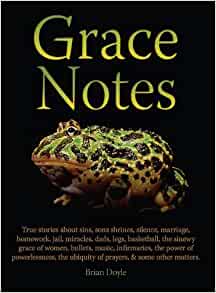
Grace Notes, by Brian Doyle

grace notes

These days I’m turning to books not so much for escape as for courage and comfort, and welcome anything that might help replenish my stores of both. For me, that often means returning to one of my favorite authors. In addition to writing unforgettable stories and essays, Brian Doyle, who died much too young in 2017, was a teacher, magazine editor, husband, father.

In this collection of short essays—a form he excelled in—Doyle reminds us of what is good in the world. At the same time, he doesn’t shy away from the darkness; in “The Sin” he describes losing his temper with his son, grabbing his shirt collar and roaring at him, frightening them both. He doesn’t avoid his own responsibility or pretend it didn’t happen. Instead, he confronts himself, “ashamed to the bottom of my bones.”

Then he goes big: “I do not know how sins can be forgiven.” As he ponders that question, and the further one of who must do the asking and who the forgiving, he is led to consider the grace alluded to in the book’s title.

Doyle is a Catholic and makes clear in his Prologue that many of these essays “use . . . Catholicism as a prism, a way of being, an approach”. Yet he keeps these works accessible for those of us who do not ascribe to that or perhaps any religion by using terms we can all believe in. Like Mary Oliver, whose work he much admires (and vice versa), he links prayer to attentiveness. And when he talks of grace, he speaks not of the Catholic God but of the experiences we all yearn for: the unearned gifts, the moments of being, the love that descends on us.

I call his essays unforgettable because each pierces me in ways I cannot describe. I often use his essays in my writing classes and, reading aloud an essay I’ve read fifty times, still, as I near the end, my voice trembles and tears start in my eyes.

How does he do it? In just two or three pages he builds a world that fills my heart.

Partly it’s his word choice, the unexpected verb or adjective that surprises and transports me. And there are the startling images he uses. Both can be seen in this excerpt from “Cool Things”:

. . . the way the young mother at the bus-stop has her infant swaddled and huddled against her chest like a blinking extra heart, and the way a very large woman wears the tiniest miniskirt with a careless airy pride that makes me so happy I can hardly squeak . . .

A blinking heart. Airy. Squeak. They shock us, these revelations; they draw us in to the world of the story by linking it in new ways to the world we know.

Partly his essays are unforgettable because he does go big. He doesn’t hesitate to take on huge ideas, universal themes, and look at them in new ways, connecting them to our ordinary, our extraordinary lives. For instance, in “On Miraculousness” he uses an exquisitely described encounter with a little girl who is terribly crippled, out on the beach with her family, to—implicitly—look at the question of why bad things happen to good people.

Another technique he uses is to take on the voice of someone else, easing into it with the slightest of transitions, but giving us this genuine voice, this glimpse of the world through someone else’s eyes. For instance, here is the beginning of “A Child is Not a Furniture”:

One time when I lived in Chicago I spent an hour talking to a woman who was wearing a dress of the brightest red I have ever seen in all my born days and I have lived fifty years. This was on the Cicero Avenue bus at three in the morning. She said she was returning to the apartment where she lived with her husband. I inquired after children and she said,

My husband and I trying to welcome children but as yet we have not been blessed. I would like to have five children. I am myself one of five. My husband however an only child of complex circumstances. He have misgivings and forebodings.

Most of all, though, what makes Brian Doyle’s work so profound is that, as dancers say, he leaves it all on the stage. He doesn’t hold anything back. He lets us into all his secrets, shows us his warts and his wonder, his deep appreciation for our flawed and amazing time on earth.

He is missed.

What books are you turning to for comfort and courage?